
Life and Travel in India Being Recollections of a Journey Before the Days of Railroads
Anna Harriette Leonowens
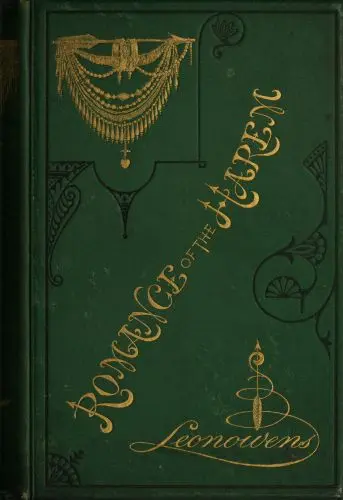
THE CLASSIC COLLECTION · 1873
"The Romance of the Harem" by Anna Harriette Leonowens is a historical account written in the late 19th century. The work provides a vivid portrayal of life in the Siamese royal harem, exploring themes of love, sacrifice, and the complex dynamics of power and gender within a fascinating cultural context. Drawing from her personal experiences and observations, Leonowens sheds light on the lives of the women who navigate their fates under the constraints of the royal court. At the start of the narrative, the foundation is laid with an introduction to Siam, referred to by its people as "Muang Thai," and its rich culture. The opening chapter elaborates on the country's history, its connections to Buddhism and its social structures, while also setting the stage for the personal stories that follow. The focus then shifts to specific characters within the harem, particularly a young girl named Tuptim, who experiences both the allure and the burdens of life in the palace. The chapter establishes a poignant tone, hinting at the trials and tribulations Tuptim will face within the harem's walls, as well as the overarching themes of love, loss, and the quest for freedom that drive the narrative forward.
Introduction adapted from the source catalogue; source summaries may be automatically generated.
Free to read · English · 85,790 words · No account needed
MAKE TIME FOR A GOOD BOOK
On by default. Untick to stop anonymous reading totals. Each page counts after 10 seconds in view. How this works.
Anonymous counting is on unless you have switched it off.
"Take the reins, and ride over it, then," said the priest, meditatively. "What says the Dharma padam?"[8]
"Stop the chariot valiantly; arrest the horses of desire. When thou hast comprehended that which is made, thou wilt understand that which is not made,--the uncreate. Some do not know that we must all come to an end here; but some do know it, and with them all conflicts cease. He who lives for pleasure only, his passions uncontrolled, immoderate in his enjoyments, idle and weak, him will the tempter overcome, as the wind overcomes a worm-eaten tree."
"If we could live a thousand years, it would be worth our while to struggle after the pleasures of this world. Death comes too soon. There are many beginnings, but no ending to life. Let us practise the four virtues, my brother; they alone are real, satisfactory, the true illuminators of the mind; without this inward illumination, what is life but darkness, storms, wild, unconscious tumult, the ceaseless tumbling of the fierce tides of passion; and death, but exhaustion?"
"Alas!" cried the young man, in a voice full of emotion; "is life indeed such an empty void? Is there no compensation anywhere?"
The priest opened wide his half-closed eyes, looked full into Dhamaphat's face, and remarked: "Thou art strangely disturbed to-night, my brother. Is it not well with thee?"
Dhamaphat made no reply.
There was sympathy, and a touch of tender feeling in the voice of the priest, as he bent close to his young pupil, and said: "What is thy suffering? Speak freely to me, and I will aid thee to the utmost of my ability." Saying this, the priest arose, and passed his hand slowly over the clefts in the wall. Instantly the moon withdrew her light.
At this moment the night-owl suddenly gave a harsh and prolonged cry.
"That bird answers to thy thoughts," said the priest.
Dhamaphat shuddered; he believed that in the cry of the bird he heard an echo of his own wild desire to frustrate his father's plans.
Then in a few stirring words he told the priest of his love for the Rajpoot's daughter, of her present situation, and of his desire to help her and her father to escape.
At the words, "Rajpoot's daughter," the old man started, and there passed over his face, unseen, an expression of regret mingled with desire, with which a thirsty man sees afar off, out of his possible reach, a cup of cold water, for which he is dying, but which is not for him. Then, as suddenly, he sat down, and resumed his calm exterior.
Your reading position is saved on this browser. Take it to another device with a library code. Reading pages adapt to text, rather than matching a printed edition.
Anna Harriette Leonowens
Anna Harriette Leonowens
BEHIND THE BOOK
This eBook is for the use of anyone anywhere in the United States and most other parts of the world at no cost and with almost no restrictions whatsoever. You may copy it, give it away or re-use it under the terms of the Project Gutenberg License included with this eBook or online at www.gutenberg.org. If you are not located in the United States, you will have to check the laws of the country where you are located before using this eBook. Read the source licence.
The original source file, including credits and licence, is retained by this library. Request an original-format copy at no charge. Please include the book title and Project Gutenberg identifier #56028.
KEEP YOUR CURIOSITY GOING
Cécile Tormay

Moritz Busch
Coulson Kernahan
John L. Ransom

Maurice Baring
Frances Wright