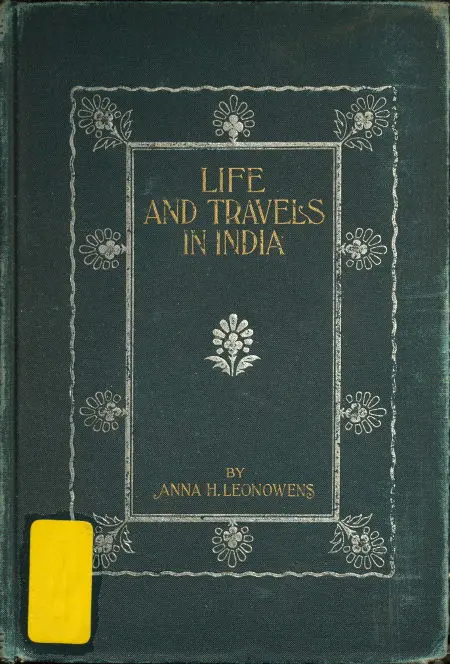
Life and Travel in India Being Recollections of a Journey Before the Days of Railroads
Anna Harriette Leonowens
THE CLASSIC COLLECTION · 1873
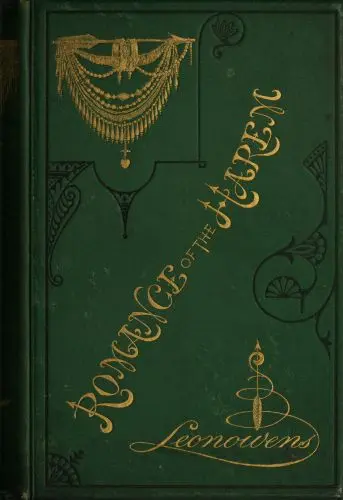
"The Romance of the Harem" by Anna Harriette Leonowens is a historical account written in the late 19th century. The work provides a vivid portrayal of life in the Siamese royal harem, exploring themes of love, sacrifice, and the complex dynamics of power and gender within a fascinating cultural context. Drawing from her personal experiences and observations, Leonowens sheds light on the lives of the women who navigate their fates under the constraints of the royal court. At the start of the narrative, the foundation is laid with an introduction to Siam, referred to by its people as "Muang Thai," and its rich culture. The opening chapter elaborates on the country's history, its connections to Buddhism and its social structures, while also setting the stage for the personal stories that follow. The focus then shifts to specific characters within the harem, particularly a young girl named Tuptim, who experiences both the allure and the burdens of life in the palace. The chapter establishes a poignant tone, hinting at the trials and tribulations Tuptim will face within the harem's walls, as well as the overarching themes of love, loss, and the quest for freedom that drive the narrative forward.
Introduction adapted from the source catalogue; source summaries may be automatically generated.
Free to read · English · 85,790 words · No account needed
MAKE TIME FOR A GOOD BOOK
On by default. Untick to stop anonymous reading totals. Each page counts after 10 seconds in view. How this works.
Anonymous counting is on unless you have switched it off.
The crumbling old door of the cell was partly open; no light was visible; and, as Dhamaphat stood there hesitating whether he would enter, a low, faint, tremulous sound came out of the darkness within, and floated upward on the silence of night like the voice of some celestial chorister. It was the Buddhist's evening hymn, or chant, and the familiar words--
"Nama Buddsa phakava thouraha,
Sama Boodhsa thatsa Phutthang
Purisa thamma sârâthi
Sangkhang saranang ga cha mi," etc.,
freely translated,
"O thou, who art thyself the light,
Boundless in knowledge, beautiful as day,
Irradiate my heart, my life, my night,
Nor let me ever from thy presence stray!"--
touched his better nature and melted his heart. He stooped forward, and listened to it lovingly as it rose higher and higher, growing more and more exultant till it caught his trembling spirit, and bore it away beyond the confines of this world face to face with a Divine Ineffable Presence full of harmony and beauty.
His anger and his grief were forgotten.
So Dhamaphat turned his face to the sky. One moment he stood erect in an absolute halo of light, the next he was combatting darkly with the blind shadows of love and hate, cause and effect, merit and demerit, the endless evolutions of the "wheel" of an irresistible law into which all things are cast.
He felt something cold pass over his hand; he started, and became aware that the good priest had finished his devotions. He tapped gently, and was told to enter, which he did hesitatingly.
In the middle of the cell sat the priest, who seemed, even in his old age, full of the vigor of manhood; his legs were crossed, his arms folded, and his eyes cast down; he did not even raise them at the entrance of the young man; he was in that semi-stupor commonly called contemplation. In one corner a narrow plank, quite bare, and a wooden pillow served for his bed; beside it an old fan, a pot for water, an earthen vessel for rice, some rude old instruments and books; beyond these the cell was bare, damp, cold, slimy, and unhealthy. It was without any light, save where the moonlight fell in ghastly lights and shadows through the slits in the wall.
"My father," said the young man, as he reverently prostrated himself before the priest, who half opened his dull eyes, and said: "S'amana phinong" (peace, brother).
"Alas!" replied Dhamaphat; "in this life there is no peace, no rest, no freedom from suffering; the endless revolutions of the wheel only crush out life, to reproduce it again in another form."
Your reading position is saved on this browser. Take it to another device with a library code. Reading pages adapt to text, rather than matching a printed edition.
Anna Harriette Leonowens
Anna Harriette Leonowens
BEHIND THE BOOK
This eBook is for the use of anyone anywhere in the United States and most other parts of the world at no cost and with almost no restrictions whatsoever. You may copy it, give it away or re-use it under the terms of the Project Gutenberg License included with this eBook or online at www.gutenberg.org. If you are not located in the United States, you will have to check the laws of the country where you are located before using this eBook. Read the source licence.
The original source file, including credits and licence, is retained by this library. Request an original-format copy at no charge. Please include the book title and Project Gutenberg identifier #56028.
KEEP YOUR CURIOSITY GOING
Cécile Tormay

Moritz Busch
Coulson Kernahan
John L. Ransom

Maurice Baring
Frances Wright