
Barren Ground
Ellen Anderson Gholson Glasgow
THE CLASSIC COLLECTION · 1909
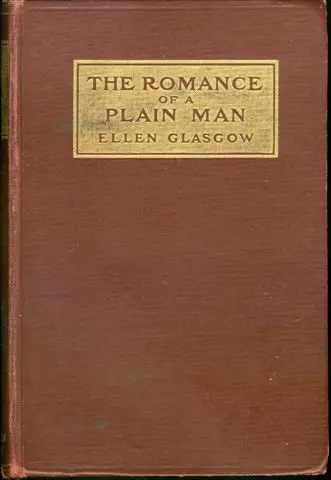
"The Romance of a Plain Man" by Ellen Glasgow is a novel written in the early 20th century. The story launches the reader into the life of Ben Starr, a young boy from a struggling family in Richmond, as he navigates the challenges of his humble environment and the complexities of childhood, family, and societal class. Through Ben's perspective, the book explores themes of innocence, aspiration, and the longing for beauty and belonging in a world marked by poverty and hardship. The opening portion ushers us into Ben's world during a stormy October evening, where he engages in playful conversation with his father, showcasing their simple family life. As rain lashes against their home, the family dynamics are revealed, highlighting Ben's youthful curiosity and innocence. Soon, a mysterious woman and her daughter, Sally, interrupt their evening, introducing the complexities of social class distinctions that will shape Ben's experiences as he grows. Sally's disdainful use of the term "common" to describe Ben plants the seeds of his yearning to rise above his circumstances, setting the stage for his struggles with identity and aspiration. As the story unfolds, we glimpse the early indicators of how Ben's environment will impact his journey throughout the narrative.
Introduction adapted from the source catalogue; source summaries may be automatically generated.
Free to read · English · 126,677 words · No account needed
MAKE TIME FOR A GOOD BOOK
On by default. Untick to stop anonymous reading totals. Each page counts after 10 seconds in view. How this works.
Anonymous counting is on unless you have switched it off.
"Shall we sit down and talk a little over there under the smilax?" she asked, "or would you rather dance? If you'd like to dance," she added with a sparkle in her face, "I am not afraid."
"Well, I am," I retorted, "I shall never dance again."
"How serious that sounds--but since you've made the resolution I hope you'll keep it. I like things to be kept."
"There's no chance of my breaking it. I never made but one other solemn
vow in my life."
"And you've kept that?"
"I am keeping it now."
She sat down, arranging her white draperies under the festoons of smilax, her left hand, from which a big feather fan drooped, resting on her knees, her small, white-slippered foot moving to the sound of the waltz.
"Was it a vow not to grow any more?" she asked with a soft laugh.
"It was," I leaned toward her and the fragrance of the white rose, drooping a little in her wreath of plaits, filled my nostrils, "that I would not stay common."
Her lashes, which had been lowered, were raised suddenly, and I met her eyes. "O Ben Starr, Ben Starr," she said, "how well you have kept it!"
"Do you remember the stormy night when you would not let me take your wet cap because I was a common boy?".
"How hateful I must have been!"
"On that night I determined that I would not grow up to be a common man. That was why I ran away, that was why I went into the tobacco factory, that was why I started to learn Johnson's Dictionary by heart--why I drudged over my Latin, why I went into stocks, why--"
Her eyes had not left my face, but unfurling the big feather fan, she waved it slowly between us. I, who had, in the words of Dr. Theophilus, "no small wits in my head," who could stand, dumb and a clown, in a ballroom, who could even trip up my partner, had found words that could arrest the gaze of the woman before me. To talk at all I must talk of big things, and it was of big things that I now spoke--of poverty, of struggle, of failure, of aspiration. My mind, like my body, was not rounded to the lighter graces, the rippling surface, that society requires. In my everyday clothes, among men, I was at no loss for words, but the high collar and the correctly tied cravat I wore seemed to strangle my throat, until those starry eyes, seeking big things also, had looked into mine. Then I forgot my fruitless efforts at conversation, I forgot the height of my collar, the stiffness of my shirt, the size of my hands and my feet. I forgot that I was a plain man, and remembered only that I was a man. The merely social, the trivial, the commonplace, dropped from my thoughts. My dignity,--the dignity that George Bolingbroke had called that of size,--was restored to me; and beyond the rosy lights and the disturbing music, we stood a man and a woman together. Our consciousness had left the surface of life. We had become acutely aware of each other and aware, too, of the silence in which our eyes wavered and met.
Your reading position is saved on this browser. Take it to another device with a library code. Reading pages adapt to text, rather than matching a printed edition.
Ellen Anderson Gholson Glasgow

Ellen Anderson Gholson Glasgow

Ellen Anderson Gholson Glasgow

Ellen Anderson Gholson Glasgow
BEHIND THE BOOK
This eBook is for the use of anyone anywhere in the United States and most other parts of the world at no cost and with almost no restrictions whatsoever. You may copy it, give it away or re-use it under the terms of the Project Gutenberg License included with this eBook or online at www.gutenberg.org. If you are not located in the United States, you will have to check the laws of the country where you are located before using this eBook. Read the source licence.
The original source file, including credits and licence, is retained by this library. Request an original-format copy at no charge. Please include the book title and Project Gutenberg identifier #30299.
KEEP YOUR CURIOSITY GOING
Coulson Kernahan

Maurice Baring
Frances Wright
Cécile Tormay

Frederic Jesup Stimson

W. H. P. (William Henry Pope) Jarvis