
Barren Ground
Ellen Anderson Gholson Glasgow
THE CLASSIC COLLECTION · 1909
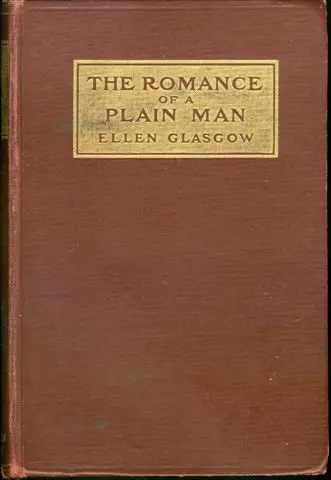
"The Romance of a Plain Man" by Ellen Glasgow is a novel written in the early 20th century. The story launches the reader into the life of Ben Starr, a young boy from a struggling family in Richmond, as he navigates the challenges of his humble environment and the complexities of childhood, family, and societal class. Through Ben's perspective, the book explores themes of innocence, aspiration, and the longing for beauty and belonging in a world marked by poverty and hardship. The opening portion ushers us into Ben's world during a stormy October evening, where he engages in playful conversation with his father, showcasing their simple family life. As rain lashes against their home, the family dynamics are revealed, highlighting Ben's youthful curiosity and innocence. Soon, a mysterious woman and her daughter, Sally, interrupt their evening, introducing the complexities of social class distinctions that will shape Ben's experiences as he grows. Sally's disdainful use of the term "common" to describe Ben plants the seeds of his yearning to rise above his circumstances, setting the stage for his struggles with identity and aspiration. As the story unfolds, we glimpse the early indicators of how Ben's environment will impact his journey throughout the narrative.
Introduction adapted from the source catalogue; source summaries may be automatically generated.
Free to read · English · 126,677 words · No account needed
MAKE TIME FOR A GOOD BOOK
On by default. Untick to stop anonymous reading totals. Each page counts after 10 seconds in view. How this works.
Anonymous counting is on unless you have switched it off.
"She'll be a stunner, if she doesn't get too big," he observed. "I don't like big girls--do you?"
Then as I made no rejoinder, he added after a moment, "Do you think her mouth spoils her? Aunt Hatty calls her mouth coarse."
"Coarse?" I echoed angrily. "What does she mean by coarse?"
"Oh, too red and too full. She says a lady's mouth ought to be a
delicate bow."
"I never saw a delicate bow--"
"No more did I--but I'd call Sally a regular stunner now, mouth and all. Sally!" he broke out suddenly, and stepped out on the porch. "I'll go riding with you some day," he said, "if you want me."
She laughed up at him. "But I don't want you."
"You wanted me bad enough a year ago."
"That was a year ago."
Running hurriedly down the steps, he stood talking to her beside the bed of scarlet geraniums, while I felt a burning embarrassment pervade my body to the very palms of my hands.
"Where's the other fellow, George?" called the General, suddenly.
"What's become of him?"
As he turned his head in my direction, I left the hall, and came out upon the porch, acutely conscious, all the time, that there was too much of me, that my hands and feet got in my way, that I ought to have put on a different shirt in the afternoon.
Sally was stooping over to snip off the head of a geranium, and when she looked up the next instant, with her hair blown back from her forehead, her starry, expectant gaze rested full on my own.
"Why, it's the boy I used to know," she exclaimed, moving toward me. "Boy, how do you do?" She put out her hand, and as I took it in mine, I saw for the first time that she was a large girl for her age, and would be a large woman. Her figure was already ripening under her thin white gown, but her hands and feet were still those of a child, and moulded, I saw, with that peculiar delicacy, which, I had learned from the doctor, was the distinguishing characteristic of the Virginian aristocracy.
"It is a long time since--since I saw you," she remarked in a cordial
voice.
"It's been eight years," I answered. "I wonder that you remember me."
"Oh, I never forget. And besides, if I didn't see you for eight years more, I should still recognise you by your eyes. There aren't many boys," she said merrily, "who have eyes like a blue-eyed collie's."
Your reading position is saved on this browser. Take it to another device with a library code. Reading pages adapt to text, rather than matching a printed edition.
Ellen Anderson Gholson Glasgow

Ellen Anderson Gholson Glasgow

Ellen Anderson Gholson Glasgow

Ellen Anderson Gholson Glasgow
BEHIND THE BOOK
This eBook is for the use of anyone anywhere in the United States and most other parts of the world at no cost and with almost no restrictions whatsoever. You may copy it, give it away or re-use it under the terms of the Project Gutenberg License included with this eBook or online at www.gutenberg.org. If you are not located in the United States, you will have to check the laws of the country where you are located before using this eBook. Read the source licence.
The original source file, including credits and licence, is retained by this library. Request an original-format copy at no charge. Please include the book title and Project Gutenberg identifier #30299.
KEEP YOUR CURIOSITY GOING
Coulson Kernahan

Maurice Baring
Frances Wright
Cécile Tormay

Frederic Jesup Stimson

W. H. P. (William Henry Pope) Jarvis