
Barren Ground
Ellen Anderson Gholson Glasgow
THE CLASSIC COLLECTION · 1909
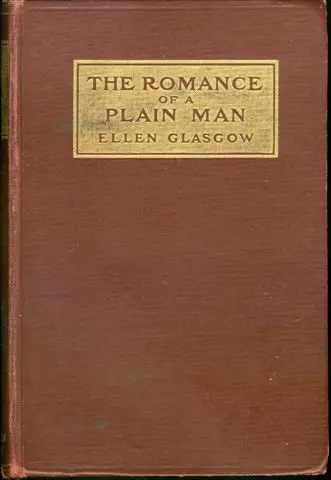
"The Romance of a Plain Man" by Ellen Glasgow is a novel written in the early 20th century. The story launches the reader into the life of Ben Starr, a young boy from a struggling family in Richmond, as he navigates the challenges of his humble environment and the complexities of childhood, family, and societal class. Through Ben's perspective, the book explores themes of innocence, aspiration, and the longing for beauty and belonging in a world marked by poverty and hardship. The opening portion ushers us into Ben's world during a stormy October evening, where he engages in playful conversation with his father, showcasing their simple family life. As rain lashes against their home, the family dynamics are revealed, highlighting Ben's youthful curiosity and innocence. Soon, a mysterious woman and her daughter, Sally, interrupt their evening, introducing the complexities of social class distinctions that will shape Ben's experiences as he grows. Sally's disdainful use of the term "common" to describe Ben plants the seeds of his yearning to rise above his circumstances, setting the stage for his struggles with identity and aspiration. As the story unfolds, we glimpse the early indicators of how Ben's environment will impact his journey throughout the narrative.
Introduction adapted from the source catalogue; source summaries may be automatically generated.
Free to read · English · 126,677 words · No account needed
MAKE TIME FOR A GOOD BOOK
On by default. Untick to stop anonymous reading totals. Each page counts after 10 seconds in view. How this works.
Anonymous counting is on unless you have switched it off.
"I want the plum cake you promised me, Aunt Mirabella," she cried; "and oh! I hope you've stuffed it full of plums!" Then her glance fell upon me and I saw her thick black eyebrows arch merrily over her sparkling grey eyes. "It's my boy! My dear common boy!" she exclaimed, with a rush toward me. For the first time I noticed then that she was dressed in mourning, and that her black clothes intensified the dark brightness of her look. "Oh, I am glad to see you," she added, seizing my hand.
I gazed up at her, wounded rather than pleased. "I shan't be a common
boy always," I answered.
"Do you mind my calling you one? If you do, I won't," she said, and without waiting a minute, "What are you doing here? I thought you lived over on Church Hill."
"I don't now. Ma died and I ran away."
"My mother died, too," she returned softly, "and then grandmama."
For a moment there was a pause. Then I said with a kind of stubborn
pride, "I ran away."
The sadness passed from her and she turned on me in a glow of animation. "Oh, I should just love dearly to run away!" she exclaimed.
"You couldn't. You're a girl."
"I could, too, if I chose."
"Then why don't you choose?"
"Because of Aunt Mitty and Aunt Matoaca. They haven't anybody but me."
"I left my father," I replied proudly, "and I didn't care one single bit. That's the trouble with girls. They're always caring."
"Well, I'm not caring for you," she retorted with crushing effect, shaking back the soft cloud of hair on her shoulders.
"Boys don't care," I rejoined with indifference, taking up my market
basket.
She detained me with a glance. "There's one thing they care
about--dreadfully," she said.
"No, there ain't."
Without replying in words she went over to the stove, and standing on tiptoe, gingerly removed a hot plum cake, small and round and shaped like a muffin, from the smoking oven.
"I reckon they care about plum cake," she remarked tauntingly, and as she held it toward me it smelt divinely.
But my pride was in arms, for I remembered the cup of milk she had refused disdainfully more than three years ago in our little kitchen.
"No, they don't," I replied with a stoicism that might have added lustre
to a nobler cause.
Your reading position is saved on this browser. Take it to another device with a library code. Reading pages adapt to text, rather than matching a printed edition.
Ellen Anderson Gholson Glasgow

Ellen Anderson Gholson Glasgow

Ellen Anderson Gholson Glasgow

Ellen Anderson Gholson Glasgow
BEHIND THE BOOK
This eBook is for the use of anyone anywhere in the United States and most other parts of the world at no cost and with almost no restrictions whatsoever. You may copy it, give it away or re-use it under the terms of the Project Gutenberg License included with this eBook or online at www.gutenberg.org. If you are not located in the United States, you will have to check the laws of the country where you are located before using this eBook. Read the source licence.
The original source file, including credits and licence, is retained by this library. Request an original-format copy at no charge. Please include the book title and Project Gutenberg identifier #30299.
KEEP YOUR CURIOSITY GOING
Coulson Kernahan

Maurice Baring
Frances Wright
Cécile Tormay

Frederic Jesup Stimson

W. H. P. (William Henry Pope) Jarvis