
Barren Ground
Ellen Anderson Gholson Glasgow
THE CLASSIC COLLECTION · 1909
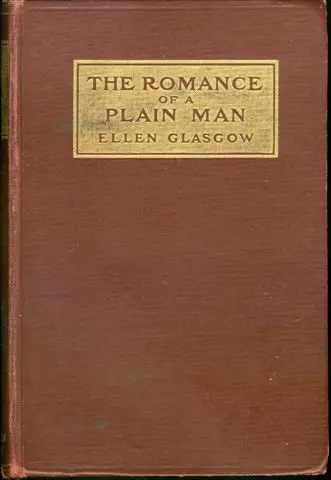
"The Romance of a Plain Man" by Ellen Glasgow is a novel written in the early 20th century. The story launches the reader into the life of Ben Starr, a young boy from a struggling family in Richmond, as he navigates the challenges of his humble environment and the complexities of childhood, family, and societal class. Through Ben's perspective, the book explores themes of innocence, aspiration, and the longing for beauty and belonging in a world marked by poverty and hardship. The opening portion ushers us into Ben's world during a stormy October evening, where he engages in playful conversation with his father, showcasing their simple family life. As rain lashes against their home, the family dynamics are revealed, highlighting Ben's youthful curiosity and innocence. Soon, a mysterious woman and her daughter, Sally, interrupt their evening, introducing the complexities of social class distinctions that will shape Ben's experiences as he grows. Sally's disdainful use of the term "common" to describe Ben plants the seeds of his yearning to rise above his circumstances, setting the stage for his struggles with identity and aspiration. As the story unfolds, we glimpse the early indicators of how Ben's environment will impact his journey throughout the narrative.
Introduction adapted from the source catalogue; source summaries may be automatically generated.
Free to read · English · 126,677 words · No account needed
MAKE TIME FOR A GOOD BOOK
On by default. Untick to stop anonymous reading totals. Each page counts after 10 seconds in view. How this works.
Anonymous counting is on unless you have switched it off.
"I give Sally everything under heaven I can think of, but she doesn't
appear to want it."
"Keep on giving, it's the only way. You'll see her begin to pick up presently before you know it. They ain't rational, my boy, that's the whole truth about 'em, they ain't rational. If Miss Matoaca had belonged to a rational sex, do you think she'd have killed herself trying to get on an equality with us? You can't make a pullet into a rooster by teaching it to crow, as my old mammy used to say." For a minute he was silent, and appeared to be meditating. "I tell you what I'll do, Ben," he said at last, with a flash of inspiration, "I'll go in with you and see if I can't cheer up Sally a bit."
When we reached my door, he let the reins fall over the back of his old horse, and getting out, hobbled, with my assistance, upstairs, and into Sally's sitting-room, where we found George Bolingbroke, looking depressed and sullen.
She was charmingly dressed, as usual, and as the General entered, she came forward to meet him with the gracious manner which some one had told me was a part, not of her Bland, but of her Fairfax inheritance. "That's a pretty tea-gown you've got on," observed the great man, in the playful tone in which he might have remarked to a baby that it was wearing a beautiful bib. "You haven't been paying much attention to fripperies of late, Ben tells me. Have you seen any hats? I don't know anything better for a woman's low spirits, my dear, than a trip to New York to buy a hat."
She laughed merrily, while her eyes met George Bolingbroke's over the
General's head.
"I bought six hats last month," she replied.
"And you didn't feel any better?"
"Not permanently. Then Ben got me a diamond bracelet." She held out her arm, with the bracelet on her wrist, which looked thin and transparent.
The General bent his bald head over the trinket, which he examined as attentively as if it had been a report of the Great South Midland and Atlantic Railroad.
"Ben's got good taste," he observed; "that's a pretty bracelet."
"Yes, it's a pretty bracelet."
"But that didn't make you feel any brighter?"
"Oh, I'm well," she responded, laughing. "I've just been telling George I'm so well I'm going to a ball with him."
"To a ball," I said; "are you strong enough for that, Sally?"
"I'm quite strong, I'm well, I feel wildly gay."
"It's the best thing for her," remarked the General. "Don't stop her,
Ben, let her go."
Your reading position is saved on this browser. Take it to another device with a library code. Reading pages adapt to text, rather than matching a printed edition.
Ellen Anderson Gholson Glasgow

Ellen Anderson Gholson Glasgow

Ellen Anderson Gholson Glasgow

Ellen Anderson Gholson Glasgow
BEHIND THE BOOK
This eBook is for the use of anyone anywhere in the United States and most other parts of the world at no cost and with almost no restrictions whatsoever. You may copy it, give it away or re-use it under the terms of the Project Gutenberg License included with this eBook or online at www.gutenberg.org. If you are not located in the United States, you will have to check the laws of the country where you are located before using this eBook. Read the source licence.
The original source file, including credits and licence, is retained by this library. Request an original-format copy at no charge. Please include the book title and Project Gutenberg identifier #30299.
KEEP YOUR CURIOSITY GOING
Coulson Kernahan

Maurice Baring
Frances Wright
Cécile Tormay

Frederic Jesup Stimson

W. H. P. (William Henry Pope) Jarvis