
Barren Ground
Ellen Anderson Gholson Glasgow
THE CLASSIC COLLECTION · 1909
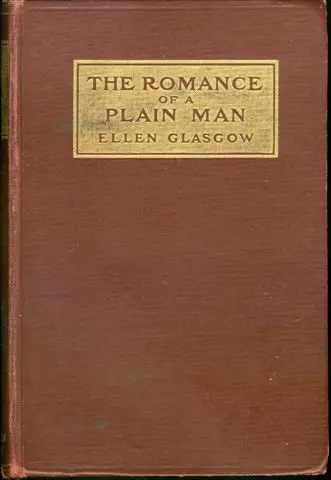
"The Romance of a Plain Man" by Ellen Glasgow is a novel written in the early 20th century. The story launches the reader into the life of Ben Starr, a young boy from a struggling family in Richmond, as he navigates the challenges of his humble environment and the complexities of childhood, family, and societal class. Through Ben's perspective, the book explores themes of innocence, aspiration, and the longing for beauty and belonging in a world marked by poverty and hardship. The opening portion ushers us into Ben's world during a stormy October evening, where he engages in playful conversation with his father, showcasing their simple family life. As rain lashes against their home, the family dynamics are revealed, highlighting Ben's youthful curiosity and innocence. Soon, a mysterious woman and her daughter, Sally, interrupt their evening, introducing the complexities of social class distinctions that will shape Ben's experiences as he grows. Sally's disdainful use of the term "common" to describe Ben plants the seeds of his yearning to rise above his circumstances, setting the stage for his struggles with identity and aspiration. As the story unfolds, we glimpse the early indicators of how Ben's environment will impact his journey throughout the narrative.
Introduction adapted from the source catalogue; source summaries may be automatically generated.
Free to read · English · 126,677 words · No account needed
MAKE TIME FOR A GOOD BOOK
On by default. Untick to stop anonymous reading totals. Each page counts after 10 seconds in view. How this works.
Anonymous counting is on unless you have switched it off.
The hours went by, and still I walked up and down between the black oak bookcases, driven by some demon of torture to follow the same line in the Turkish rug, to turn always at the same point, to measure always the same number of steps.
"Well, she got her money--they all got their money," I said at last. "I am the only one who is ruined--no, not the only one--there is Sally and there is the child. I'd feel easier," I added, echoing the words of the old woman aloud, "I'd feel easier if I were the only one."
A clock somewhere in the city struck the hour of midnight, and while the sound was still in the air, the door opened softly and Sally came into the room. She had slipped on a wrapper over her nightdress, and her hair, flattened and warmed by the pillow, hung in a single braid over her bosom. There were deep circles under her eyes, which shone the more brilliantly because of the heavy shadows.
"What is the matter, Ben? Why don't you come upstairs?"
"I couldn't sleep--I am thinking," I answered, almost roughly, oppressed
by my weight of misery.
"Would you rather be alone? Shall I go away again?"
"Yes, I'd rather be alone."
She went silently to the door, stood there a minute, and then ran back with her arms outstretched.
"Oh, Ben, Ben, why are you so hard? Why are you so cruel?"
"Cruel? Hard? To you, Sally?"
"You treat me as if--as if I'd married you for your money and you've made me hate and despise it. I wish--I almost wish we hadn't a penny."
I laughed the bitter, mirthless laugh that had broken from me at dinner.
"As a matter of fact we haven't--not a single penny that we can honestly
call our own."
She drew back instantly, her head held high under the branching electric
jet in the ceiling.
"Well, I'm glad of it," she responded defiantly.
"You don't in the least understand what it means, Sally. It isn't merely giving up a few luxuries, it is actually going without the necessities. It is practically beginning again."
"I am glad of it," she repeated, and there was no regret in her voice.
"Oh, can't you understand?"
"Tell me and I will try."
"I've lost everything. I'm ruined."
"There is nothing left?"
"There is honour," I said bitterly, "a couple of hundred thousand
dollars of debt, and a little West Virginia railroad too poor to go
bankrupt."
"Then we must start from the very bottom?"
"From the very bottom. Nothing that you are likely to imagine can be worse than the facts--and I've brought you to it."
Your reading position is saved on this browser. Take it to another device with a library code. Reading pages adapt to text, rather than matching a printed edition.
Ellen Anderson Gholson Glasgow

Ellen Anderson Gholson Glasgow

Ellen Anderson Gholson Glasgow

Ellen Anderson Gholson Glasgow
BEHIND THE BOOK
This eBook is for the use of anyone anywhere in the United States and most other parts of the world at no cost and with almost no restrictions whatsoever. You may copy it, give it away or re-use it under the terms of the Project Gutenberg License included with this eBook or online at www.gutenberg.org. If you are not located in the United States, you will have to check the laws of the country where you are located before using this eBook. Read the source licence.
The original source file, including credits and licence, is retained by this library. Request an original-format copy at no charge. Please include the book title and Project Gutenberg identifier #30299.
KEEP YOUR CURIOSITY GOING
Coulson Kernahan

Maurice Baring
Frances Wright
Cécile Tormay

Frederic Jesup Stimson

W. H. P. (William Henry Pope) Jarvis