
Barren Ground
Ellen Anderson Gholson Glasgow
THE CLASSIC COLLECTION · 1909
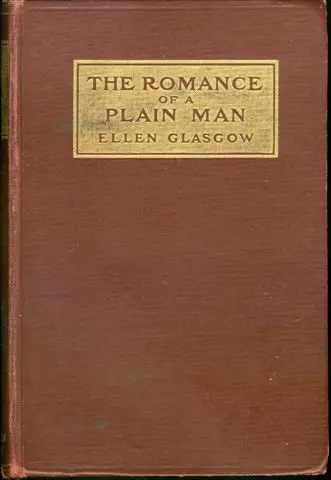
"The Romance of a Plain Man" by Ellen Glasgow is a novel written in the early 20th century. The story launches the reader into the life of Ben Starr, a young boy from a struggling family in Richmond, as he navigates the challenges of his humble environment and the complexities of childhood, family, and societal class. Through Ben's perspective, the book explores themes of innocence, aspiration, and the longing for beauty and belonging in a world marked by poverty and hardship. The opening portion ushers us into Ben's world during a stormy October evening, where he engages in playful conversation with his father, showcasing their simple family life. As rain lashes against their home, the family dynamics are revealed, highlighting Ben's youthful curiosity and innocence. Soon, a mysterious woman and her daughter, Sally, interrupt their evening, introducing the complexities of social class distinctions that will shape Ben's experiences as he grows. Sally's disdainful use of the term "common" to describe Ben plants the seeds of his yearning to rise above his circumstances, setting the stage for his struggles with identity and aspiration. As the story unfolds, we glimpse the early indicators of how Ben's environment will impact his journey throughout the narrative.
Introduction adapted from the source catalogue; source summaries may be automatically generated.
Free to read · English · 126,677 words · No account needed
MAKE TIME FOR A GOOD BOOK
On by default. Untick to stop anonymous reading totals. Each page counts after 10 seconds in view. How this works.
Anonymous counting is on unless you have switched it off.
"You've already done too much, General, but I've made sure that you shan't suffer by it. I've simply gone down, that's all, and I've got to stay there till I can get on my feet. The bank will close temporarily, I suppose, but when it starts again, it will have to start with another man. I shall look out for a smaller job."
"If you come back to the road, I'll find a place for you--but it won't be like being a bank president, you know."
"Well, when the time comes, I'll let you know," I added, when the buggy stopped before my door, and I handed him the reins.
"Listen to me, my boy," he called back, as he drove off and I went up the brown stone steps, "and take a julep."
But the support I needed was not that of whiskey, and though I swallowed a dozen juleps, the thought of Sally's face when I broke the news would suffer no blessed obscurity.
"Shall I tell her now, or after dinner?" I asked, while I drew out my latch-key; and then when she met me at the head of the staircase, with her shining eyes, I grew cowardly again, and said, "Not now--not now. To-night I will tell her."
At night, when we sat opposite to each other, with a silver bowl of jonquils between us, she began talking idly about the marriage of Bonny Page, inspired, I felt, by a valiant determination to save the situation in the eyes of the servants at least. The small yellow candle shades, made to resemble flowers, shone like suns in a mist before my eyes; and all the time that my thoughts worked over the approaching hour, I heard, like a muffled undertone, the soft, regular footfalls of old Esdras, the butler, on the velvet carpet.
"I'll tell her after the servants have gone, and the house is quiet--when she has taken off her dinner gown--when she may turn on her pillow and cry it out. I'll say simply, 'Sally, I am ruined. I haven't a penny left of my own. Even the horses and the carriages and the furniture are not mine!' No, that is a brutal way. It will be better to put it like this"--"What did you say, dear?" I asked, speaking aloud.
"Only that Bonny Page is to have six bridesmaids, but the wedding will be quiet, because they have lost money."
"They've lost money?"
"Everybody has lost money--everybody, the General says. Ben, do you know," she added, "I've never cared truly about money in my heart."
Your reading position is saved on this browser. Take it to another device with a library code. Reading pages adapt to text, rather than matching a printed edition.
Ellen Anderson Gholson Glasgow

Ellen Anderson Gholson Glasgow

Ellen Anderson Gholson Glasgow

Ellen Anderson Gholson Glasgow
BEHIND THE BOOK
This eBook is for the use of anyone anywhere in the United States and most other parts of the world at no cost and with almost no restrictions whatsoever. You may copy it, give it away or re-use it under the terms of the Project Gutenberg License included with this eBook or online at www.gutenberg.org. If you are not located in the United States, you will have to check the laws of the country where you are located before using this eBook. Read the source licence.
The original source file, including credits and licence, is retained by this library. Request an original-format copy at no charge. Please include the book title and Project Gutenberg identifier #30299.
KEEP YOUR CURIOSITY GOING
Coulson Kernahan

Maurice Baring
Frances Wright
Cécile Tormay

Frederic Jesup Stimson

W. H. P. (William Henry Pope) Jarvis