
Barren Ground
Ellen Anderson Gholson Glasgow
THE CLASSIC COLLECTION · 1909
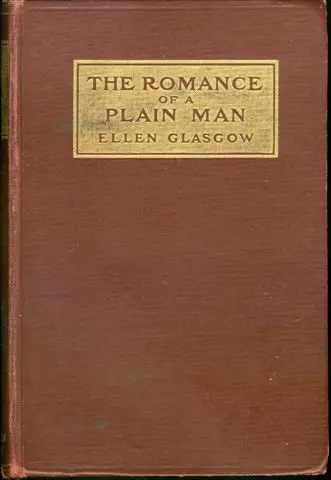
"The Romance of a Plain Man" by Ellen Glasgow is a novel written in the early 20th century. The story launches the reader into the life of Ben Starr, a young boy from a struggling family in Richmond, as he navigates the challenges of his humble environment and the complexities of childhood, family, and societal class. Through Ben's perspective, the book explores themes of innocence, aspiration, and the longing for beauty and belonging in a world marked by poverty and hardship. The opening portion ushers us into Ben's world during a stormy October evening, where he engages in playful conversation with his father, showcasing their simple family life. As rain lashes against their home, the family dynamics are revealed, highlighting Ben's youthful curiosity and innocence. Soon, a mysterious woman and her daughter, Sally, interrupt their evening, introducing the complexities of social class distinctions that will shape Ben's experiences as he grows. Sally's disdainful use of the term "common" to describe Ben plants the seeds of his yearning to rise above his circumstances, setting the stage for his struggles with identity and aspiration. As the story unfolds, we glimpse the early indicators of how Ben's environment will impact his journey throughout the narrative.
Introduction adapted from the source catalogue; source summaries may be automatically generated.
Free to read · English · 126,677 words · No account needed
MAKE TIME FOR A GOOD BOOK
On by default. Untick to stop anonymous reading totals. Each page counts after 10 seconds in view. How this works.
Anonymous counting is on unless you have switched it off.
"Twelve in all. General Bolingbroke and Mr. Bolingbroke, Mrs. Fitzhugh, Governor Blenner, Miss Page," she went on reading the cards, "Mr. Mason, Miss Watson, Colonel Henry, Mrs. Preston, Mrs. Tyler--"
"That will do. I'll know them when I see them. Do you like it, Jessy?"
"Yes, I like it. Isn't my dress lovely?"
"Very, but don't get spoiled. You see Sally has had this all her life,
and she isn't spoiled."
"I don't believe she could be," she responded, for her admiration for Sally was the most human thing I had ever discovered about her, "and she's so beautiful--more beautiful, I think, than Bonny Page, though of course nobody would agree with me."
"Well, she's perfect, and she always was and always will be," I
returned.
"You're a great man, aren't you?" she asked suddenly, turning away from
the table.
"Why, no. What in the world put that into your head?"
"Well, the General told Mr. Cottrel you were a genius, and Mr. Cottrel said you were the first genius he had ever heard of who measured six feet two in his stockings."
"Of course I'm not a genius. They were joking."
"You're rich anyway, and that's just as good."
I was about to make some sharp rejoinder, irritated by her insistence on the distinction of wealth, when the sound of Sally's step fell on my ears, and a moment later she came down the brilliantly lighted staircase, her long black lace train rippling behind her. As she moved among the lamps and azaleas, I thought I had never seen her more radiant--not even on the night of her first party when she wore the white rose in her wreath of plaits. Her hair was arranged to-night in the same simple fashion, her mouth was as vivid, her grey eyes held the same mingling of light with darkness. But there was a deeper serenity in her face, brought there by the untroubled happiness of her marriage, and her figure had grown fuller and nobler, as if it had moulded itself to the larger and finer purposes of life.
"The house is charming, Jessy is lovely, and you, Ben, are magnificent," she said, her eyebrows arching merrily as she slipped her hand in my arm. "And it's a good dinner, too," she went on; "the terrapin is perfect. I sent into the country for the game, and the man from Washington came down with the decorations and the ices. Best of all, I made the salad myself, so be sure to eat it. We'll begin to be gay now, shan't we? Are you sure we have money enough for a ball?"
"We've money enough for anything that you want, Sally."
Your reading position is saved on this browser. Take it to another device with a library code. Reading pages adapt to text, rather than matching a printed edition.
Ellen Anderson Gholson Glasgow

Ellen Anderson Gholson Glasgow

Ellen Anderson Gholson Glasgow

Ellen Anderson Gholson Glasgow
BEHIND THE BOOK
This eBook is for the use of anyone anywhere in the United States and most other parts of the world at no cost and with almost no restrictions whatsoever. You may copy it, give it away or re-use it under the terms of the Project Gutenberg License included with this eBook or online at www.gutenberg.org. If you are not located in the United States, you will have to check the laws of the country where you are located before using this eBook. Read the source licence.
The original source file, including credits and licence, is retained by this library. Request an original-format copy at no charge. Please include the book title and Project Gutenberg identifier #30299.
KEEP YOUR CURIOSITY GOING
Coulson Kernahan

Maurice Baring
Frances Wright
Cécile Tormay

Frederic Jesup Stimson

W. H. P. (William Henry Pope) Jarvis