
Barren Ground
Ellen Anderson Gholson Glasgow
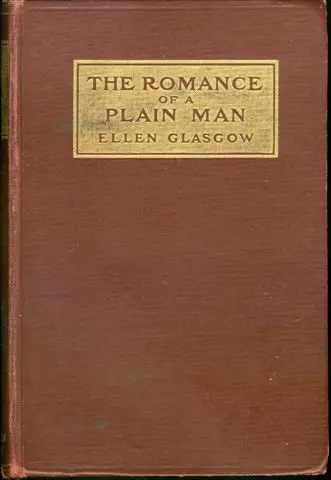
THE CLASSIC COLLECTION · 1909
"The Romance of a Plain Man" by Ellen Glasgow is a novel written in the early 20th century. The story launches the reader into the life of Ben Starr, a young boy from a struggling family in Richmond, as he navigates the challenges of his humble environment and the complexities of childhood, family, and societal class. Through Ben's perspective, the book explores themes of innocence, aspiration, and the longing for beauty and belonging in a world marked by poverty and hardship. The opening portion ushers us into Ben's world during a stormy October evening, where he engages in playful conversation with his father, showcasing their simple family life. As rain lashes against their home, the family dynamics are revealed, highlighting Ben's youthful curiosity and innocence. Soon, a mysterious woman and her daughter, Sally, interrupt their evening, introducing the complexities of social class distinctions that will shape Ben's experiences as he grows. Sally's disdainful use of the term "common" to describe Ben plants the seeds of his yearning to rise above his circumstances, setting the stage for his struggles with identity and aspiration. As the story unfolds, we glimpse the early indicators of how Ben's environment will impact his journey throughout the narrative.
Introduction adapted from the source catalogue; source summaries may be automatically generated.
Free to read · English · 126,677 words · No account needed
MAKE TIME FOR A GOOD BOOK
On by default. Untick to stop anonymous reading totals. Each page counts after 10 seconds in view. How this works.
Anonymous counting is on unless you have switched it off.
"Ask Bonny how she had the courage to take that five-foot jump."
"I took it with my teeth set and my eyes shut," said Bonny.
"Well, that's how I took Ben, with my teeth set and my eyes shut tight."
"And I came down with a laugh," added Bonny.
"So did I--I came down with a laugh. Oh, you dears, how lovely the house looks! Here are all the bridal roses that I missed and you've remembered."
"There're blue roses in your room," said Bonny; "I mean on the chintz
and on the paper."
"How can I help being happy, when I have blue roses, Bonny? Aren't blue roses an emblem of the impossible achieved?"
Bonny's dancing black eyes were on me, and I read in them plainly the thought, "Yes, I'm going to be nice to you because Sally has married you, and Sally's my cousin--even if I can't understand how she came to do it."
No, she couldn't understand, and she never would, this I read also. The man that she saw and the man that Sally knew were two different persons, drawing life from two different sources of sympathy. To her I was still, and would always be, the "magnificent animal,"--a creature of good muscle and sinew, with an honest eye, doubtless, and clean hands, but lacking in the finer qualities of person and manner that must appeal to her taste. Where Sally beheld power, and admired, Bonny Page saw only roughness, and wondered.
Presently, they led her away, and I heard their merry voices floating down from the bedrooms above. The pink light of the candles on the dinner table in the room beyond, the vague, sweet scent of the roses, and the warmth of the wood fire burning on the andirons, seemed to grow faint and distant, for I was very tired with the fatigue of a man whose muscles are cramped from want of exercise. I felt all at once that I had stepped from the open world into a place that was too small for me. I was a rich man at last, I was the husband, too, of the princess of the enchanted garden, and yet in the midst of the perfume and the soft lights and the laughter floating down from above, I saw myself, by some freak of memory, as I had crouched homeless in the straw under a deserted stall in the Old Market. Would the thought of the boy I had been haunt forever the man I had become? Did my past add a keener happiness to my present, or hang always like a threatening shadow above it? There was a part in my life which these girls could not understand, which even Sally, whom I loved, could never share with me. How could they or she comprehend hunger, who had never gone without for a moment? Or sympathise with the lust of battle when they had never encountered an obstacle? Already I heard the call of the streets, and my blood responded to it in the midst of the scented atmosphere. These things were for Sally, but for me was the joy of the struggle, the passion to achieve that I might return, with my spoils and pile them higher and higher before her feet. The grasping was what I loved, not the possession; the instant of triumph, not the fruits of the conquest. Love throbbed in my heart, but my mind, as if freeing itself from a restraint, followed the Great South Midland and Atlantic, covering that night under the stars nearly twenty thousand miles of road. The elemental man in me chafed under the social curb, and I longed at that instant to bear the woman I had won out into the rough joys of the world. My muscles would soon grow flabby in this scented warmth. The fighter would war with the dreamer, and I would regret the short, fierce battle with my competitors in the business of life.
Your reading position is saved on this browser. Take it to another device with a library code. Reading pages adapt to text, rather than matching a printed edition.
Ellen Anderson Gholson Glasgow

Ellen Anderson Gholson Glasgow

Ellen Anderson Gholson Glasgow

Ellen Anderson Gholson Glasgow
BEHIND THE BOOK
This eBook is for the use of anyone anywhere in the United States and most other parts of the world at no cost and with almost no restrictions whatsoever. You may copy it, give it away or re-use it under the terms of the Project Gutenberg License included with this eBook or online at www.gutenberg.org. If you are not located in the United States, you will have to check the laws of the country where you are located before using this eBook. Read the source licence.
The original source file, including credits and licence, is retained by this library. Request an original-format copy at no charge. Please include the book title and Project Gutenberg identifier #30299.
KEEP YOUR CURIOSITY GOING
Coulson Kernahan

Maurice Baring
Frances Wright
Cécile Tormay

Frederic Jesup Stimson

W. H. P. (William Henry Pope) Jarvis