
Barren Ground
Ellen Anderson Gholson Glasgow
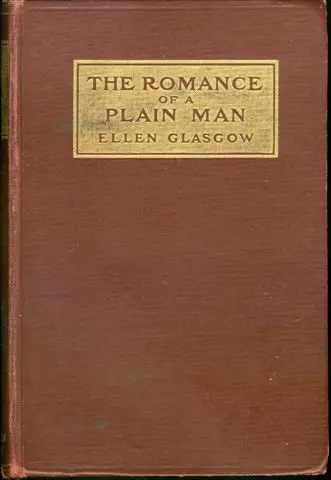
THE CLASSIC COLLECTION · 1909
"The Romance of a Plain Man" by Ellen Glasgow is a novel written in the early 20th century. The story launches the reader into the life of Ben Starr, a young boy from a struggling family in Richmond, as he navigates the challenges of his humble environment and the complexities of childhood, family, and societal class. Through Ben's perspective, the book explores themes of innocence, aspiration, and the longing for beauty and belonging in a world marked by poverty and hardship. The opening portion ushers us into Ben's world during a stormy October evening, where he engages in playful conversation with his father, showcasing their simple family life. As rain lashes against their home, the family dynamics are revealed, highlighting Ben's youthful curiosity and innocence. Soon, a mysterious woman and her daughter, Sally, interrupt their evening, introducing the complexities of social class distinctions that will shape Ben's experiences as he grows. Sally's disdainful use of the term "common" to describe Ben plants the seeds of his yearning to rise above his circumstances, setting the stage for his struggles with identity and aspiration. As the story unfolds, we glimpse the early indicators of how Ben's environment will impact his journey throughout the narrative.
Introduction adapted from the source catalogue; source summaries may be automatically generated.
Free to read · English · 126,677 words · No account needed
MAKE TIME FOR A GOOD BOOK
On by default. Untick to stop anonymous reading totals. Each page counts after 10 seconds in view. How this works.
Anonymous counting is on unless you have switched it off.
"No, Aunt Mitty, it is you who are blind--who see by the old values that the world has long since outgrown--who think you can assign a place to a man and say to him, 'You belong there and cannot come out of it.' But, oh, Aunt Matoaca, surely you, who have sacrificed so much for what you believe to be right,--who have placed principle before any claims of blood, surely you will uphold me--"
"My child, my child," replied the poor lady, with a sob, "I placed principle first, but never emotion--never emotion."
"Poor Sarah was the only one of us who gave up everything for the sake of an emotion," added Miss Mitty, "and what did it bring her except misery?"
Our cause was lost--we saw it at the same instant--and again Sally gave me her hand and stood side by side with me in the firelight.
"I am sorry, dear aunts," she said gently, and turning to me, she added slowly and clearly, "I will marry you a year from to-day, if you will wait, Ben."
"I will wait for you, whether you marry me or not, forever," I answered; and bowing silently, I turned and left the room, while Sally went down again on her knees.
Once outside, I drew a long breath of air, sharp with the scent of the sycamore, and stood gazing up at the clear sunset beyond the silvery boughs. It was good to be out of those mouldering traditions, that atmosphere of an all-enveloping past; good, too, to be out of the tapestried room, away from the grave, fixed smiles of the dead Blands and Fairfaxes and the close, sweet smell of the burning cedar. There I dared not step with my full weight, lest I should ruthlessly tread on a sentiment, or bring down a moth-eaten tradition upon my head. I was for the hard, bright world, and the future; there in that cedar-scented room, sat the two ladies, forever guarding the faded furniture and the crumbling past. The pathetic contradiction of Miss Matoaca returned to me, and I laughed aloud. Miss Matoaca, who worked for the emancipation of women, while she herself was the slave of an ancestry of men who oppressed women, and women who loved oppression! Miss Matoaca, whose mind, long and narrow like her face, could grasp but a single idea and reject the sequence to which it inevitably led! I wondered if she meant to emancipate "ladies" merely, or if her principles could possibly overleap her birthright of caste? Was she a gallant martyr to the inequalities of sex, who still clung, trembling, to the inequalities of society? She would go to the stake, I felt sure, for the cause of womanhood, but she would go supported by the serene conviction that she was "a lady." The pathos of it, and the mockery, checked the laugh in my throat. To how many of us, after all, was it given to discern, not only immediate effects, but universal relations as well? To the General? To myself? What did we see except the possible opportunity, the room for the ego, the adjustment to selfish ends? Yet our school was the world. Should we, then, expect that little lady, with her bright eyes and her withered roseleaf cheeks, to look farther than the scented firelight in which she sat? I felt a tenderness for her, as I felt a tenderness for all among whom Sally moved. The house in which she lived, the threshold she had crossed, the servants who surrounded her, were all bathed for me in the rosy light of her lamps. Common day did not shine there. I was but twenty-seven, and my eyes could still find romance in the rustle of her skirt and in the curl of her eyelash.
Your reading position is saved on this browser. Take it to another device with a library code. Reading pages adapt to text, rather than matching a printed edition.
Ellen Anderson Gholson Glasgow

Ellen Anderson Gholson Glasgow

Ellen Anderson Gholson Glasgow

Ellen Anderson Gholson Glasgow
BEHIND THE BOOK
This eBook is for the use of anyone anywhere in the United States and most other parts of the world at no cost and with almost no restrictions whatsoever. You may copy it, give it away or re-use it under the terms of the Project Gutenberg License included with this eBook or online at www.gutenberg.org. If you are not located in the United States, you will have to check the laws of the country where you are located before using this eBook. Read the source licence.
The original source file, including credits and licence, is retained by this library. Request an original-format copy at no charge. Please include the book title and Project Gutenberg identifier #30299.
KEEP YOUR CURIOSITY GOING
Coulson Kernahan

Maurice Baring
Frances Wright
Cécile Tormay

Frederic Jesup Stimson

W. H. P. (William Henry Pope) Jarvis