THE CLASSIC COLLECTION✦The WesternersCLASSIC FREE BOOKS
The Westerners
Stewart Edward White
THE CLASSIC COLLECTION · 1908
"The Riverman" by Stewart Edward White is a novel written during the late 19th century. The story is set in 1872 on a river bend near a dam, focusing on the lives of rivermen who drive logs downstream, emphasizing their rugged lifestyle and camaraderie. The narrative explores the challenges they face, including conflicts with the dam owner, Simeon Reed, as they strive to manage the river's flow and navigate obstacles that threaten their livelihood. The opening of "The Riverman" paints a vivid picture of a bustling camp of rivermen preparing for their daily work on the river. A lively crew of men, diverse in age and character, gathers around fires, exchanging banter as they deal with an unexpected wind that hampers their progress. The central character, Jack Orde, emerges as a capable and humorous leader, attempting to rally his crew to address the issues posed by the dam's sluice-gate. The tension escalates as conflicts arise with Reed, who is staunchly protective of his property. Through detailed descriptions of the camp dynamics and the men's interactions, the narrative sets the stage for a gripping tale of resilience against nature and authority in the rough-and-tumble world of river driving.
Introduction adapted from the source catalogue; source summaries may be automatically generated.
Free to read · English · 103,779 words · No account needed
MAKE TIME FOR A GOOD BOOK
On by default. Untick to stop anonymous reading totals. Each page counts after 10 seconds in view. How this works.
Anonymous counting is on unless you have switched it off.
“I was convinced we ought to dig a hole,” said she gravely. “Now, let's go somewhere else.”
She arose to her feet, shaking the sand free from her skirts.
“I think, through these woods,” she decided. “Can we get back to town
this way?”
Receiving Orde's assurance, she turned at once down the slope through the fringe of scrub spruces and junipers into the tall woods. Here the air fell still. She remarked on how warm it seemed, and began to untie from over her ears the narrow band of veil that held close her hat.
“Yes,” replied Orde. “The lumber-jacks say that the woods are the poor
man's overcoat.”
She paused to savour this, her head on one side, her arms upraised to
the knot.
“Oh, I like that!” said she, continuing her task. In a moment or so the veil hung free. She removed it and the hat, and swung them both from one finger, and threw back her head.
“Hear all the birds!” she said.
Softly she began to utter a cheeping noise between her lips and teeth, low and plaintive. At once the volume of bird-sounds about increased; the half-seen flashes became more frequent. A second later the twigs were alive with tiny warblers and creepers, flirting from branch to branch, with larger, more circumspect chewinks, catbirds, and finches hopping down from above, very silent, very grave. In the depths of the thickets the shyer hermit and olive thrushes and the oven birds revealed themselves ghost-like, or as sea-growths lift into a half visibility through translucent shadows the colour of themselves. All were very intent, very earnest, very interested, each after his own manner, in the comradeship of the featherhood he imagined to be uttering distressful cries. A few, like the chickadees, quivered their wings, opened their little mouths, fluttered down tiny but aggressive against the disaster. Others hopped here and there restlessly, uttering plaintive, low-toned cheeps. The shyest contented themselves by a discreet, silent, and distant sympathy. Three or four freebooting Jays, attracted not so much by the supposed calls for help as by curiosity, fluttered among the tops of the trees, uttering their harsh notes.
Finally, the girl ended her performance in a musical laugh.
“Run away, Brighteyes,” she called. “It's all right; nobody's damaged.”
She waved her hand. As though at a signal, the host she had evoked melted back into the shadows of the forest. Only the chickadee, impudent as ever, retreated scolding rather ostentatiously, and the jays, splendid in their ornate blue, screamed opinions at each other from the tops of trees.
“How would you like to be a bird?” she inquired.
“Hadn't thought,” replied Orde.
Your reading position is saved on this browser. Take it to another device with a library code. Reading pages adapt to text, rather than matching a printed edition.
Stewart Edward White
Stewart Edward White
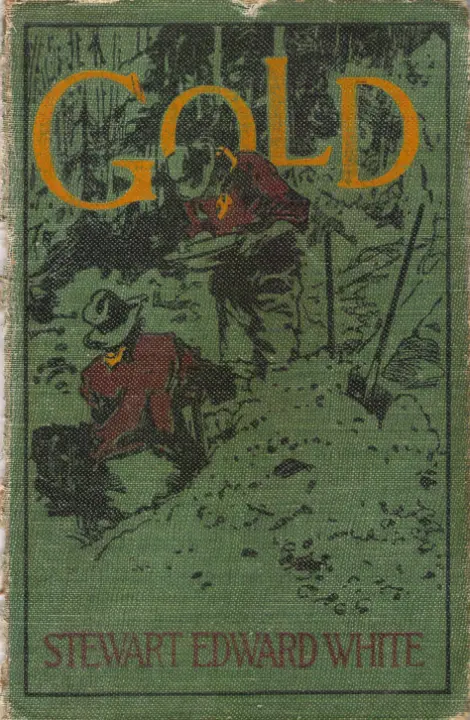
Stewart Edward White
Stewart Edward White
BEHIND THE BOOK
This eBook is for the use of anyone anywhere in the United States and most other parts of the world at no cost and with almost no restrictions whatsoever. You may copy it, give it away or re-use it under the terms of the Project Gutenberg License included with this eBook or online at www.gutenberg.org. If you are not located in the United States, you will have to check the laws of the country where you are located before using this eBook. Read the source licence.
The original source file, including credits and licence, is retained by this library. Request an original-format copy at no charge. Please include the book title and Project Gutenberg identifier #1099.
KEEP YOUR CURIOSITY GOING
Coulson Kernahan

Maurice Baring
Frances Wright
Cécile Tormay

Frederic Jesup Stimson

W. H. P. (William Henry Pope) Jarvis