THE CLASSIC COLLECTION✦The WesternersCLASSIC FREE BOOKS
The Westerners
Stewart Edward White
THE CLASSIC COLLECTION · 1908
"The Riverman" by Stewart Edward White is a novel written during the late 19th century. The story is set in 1872 on a river bend near a dam, focusing on the lives of rivermen who drive logs downstream, emphasizing their rugged lifestyle and camaraderie. The narrative explores the challenges they face, including conflicts with the dam owner, Simeon Reed, as they strive to manage the river's flow and navigate obstacles that threaten their livelihood. The opening of "The Riverman" paints a vivid picture of a bustling camp of rivermen preparing for their daily work on the river. A lively crew of men, diverse in age and character, gathers around fires, exchanging banter as they deal with an unexpected wind that hampers their progress. The central character, Jack Orde, emerges as a capable and humorous leader, attempting to rally his crew to address the issues posed by the dam's sluice-gate. The tension escalates as conflicts arise with Reed, who is staunchly protective of his property. Through detailed descriptions of the camp dynamics and the men's interactions, the narrative sets the stage for a gripping tale of resilience against nature and authority in the rough-and-tumble world of river driving.
Introduction adapted from the source catalogue; source summaries may be automatically generated.
Free to read · English · 103,779 words · No account needed
MAKE TIME FOR A GOOD BOOK
On by default. Untick to stop anonymous reading totals. Each page counts after 10 seconds in view. How this works.
Anonymous counting is on unless you have switched it off.
At this hint of evening Orde shook himself and arose. He was little nearer the readjustment he sought than he had been the previous night.
He reached home a little before six o'clock. To his surprise he found Taylor awaiting him. The lawyer had written nothing as to his return.
“I had things pretty well in shape,” he said, after the first greetings had been exchanged, “and it would do no good to stay away any longer.”
“Then the trouble is over?” asked Orde.
“I wouldn't say that,” replied Taylor; “but you can rest easy as to the title to your lands. The investigation had no real basis to it. There may have been some small individual cases of false entry; but nothing on which to ground a real attack.”
“When can I borrow on it?”
“Not for a year or two, I should say. There's an awful lot of red-tape to unwind, as there always is in such cases.”
“Oh,” said Orde in some disappointment.
Taylor hesitated, removed his eye-glasses, wiped them carefully, and
replaced them. He glanced at Orde sidelong through his keen, shrewd
eyes.
“I have something more to tell you; something that will be painful,”
said he.
Orde looked up quickly.
“Well; what is it?” he asked.
“The general cussedness of all this investigation business had me puzzled, until at last I made up my mind to do a little investigating on my own account. It all looked foolish to me. Somebody or something must be back of all this performance. I was at it all the time I was West, between times on regular business, of course. I didn't make much out of my direct efforts--they cover things up well in those matters--but at last I got on a clue by sheer accident. There was one man behind all this. He was--”
“Joe Newmark,” said Orde quietly.
“How did you know that?” cried Taylor in astonishment.
“I didn't know, Frank; I just guessed.”
“Well, you made a good guess. It was Newmark. He'd tied up the land in this trumped-up investigation so you could not borrow on it.”
“How did he find out I owned any land?” asked Orde.
“That I couldn't tell you. Must have been a leak somewhere.”
“Quite likely,” said Orde calmly.
Taylor looked at his principal in some wonder.
“Well, I must say you take it coolly enough,” said he at last.
Orde smiled.
“Do I?” said he.
“Of course,” went on Taylor after a moment, “we have a strong presumption of conspiracy to get hold of your Boom Company stock, which I believe you put up as security. But I don't see how we have any incontestable proof of it.”
Your reading position is saved on this browser. Take it to another device with a library code. Reading pages adapt to text, rather than matching a printed edition.
Stewart Edward White
Stewart Edward White
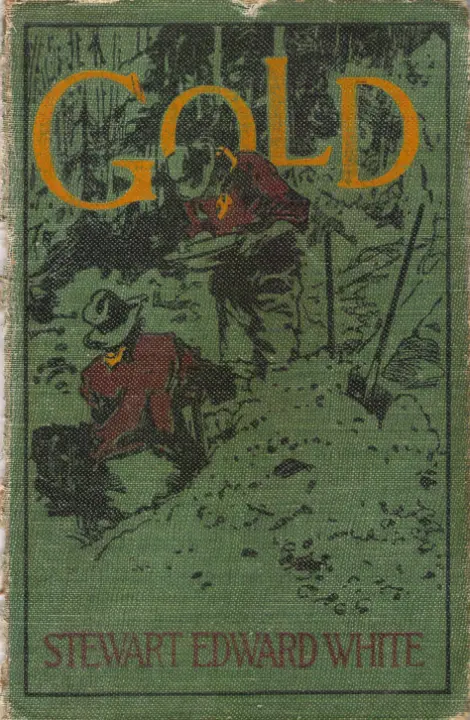
Stewart Edward White
Stewart Edward White
BEHIND THE BOOK
This eBook is for the use of anyone anywhere in the United States and most other parts of the world at no cost and with almost no restrictions whatsoever. You may copy it, give it away or re-use it under the terms of the Project Gutenberg License included with this eBook or online at www.gutenberg.org. If you are not located in the United States, you will have to check the laws of the country where you are located before using this eBook. Read the source licence.
The original source file, including credits and licence, is retained by this library. Request an original-format copy at no charge. Please include the book title and Project Gutenberg identifier #1099.
KEEP YOUR CURIOSITY GOING
Coulson Kernahan

Maurice Baring
Frances Wright
Cécile Tormay

Frederic Jesup Stimson

W. H. P. (William Henry Pope) Jarvis