THE CLASSIC COLLECTION✦The WesternersCLASSIC FREE BOOKS
The Westerners
Stewart Edward White
THE CLASSIC COLLECTION · 1908
"The Riverman" by Stewart Edward White is a novel written during the late 19th century. The story is set in 1872 on a river bend near a dam, focusing on the lives of rivermen who drive logs downstream, emphasizing their rugged lifestyle and camaraderie. The narrative explores the challenges they face, including conflicts with the dam owner, Simeon Reed, as they strive to manage the river's flow and navigate obstacles that threaten their livelihood. The opening of "The Riverman" paints a vivid picture of a bustling camp of rivermen preparing for their daily work on the river. A lively crew of men, diverse in age and character, gathers around fires, exchanging banter as they deal with an unexpected wind that hampers their progress. The central character, Jack Orde, emerges as a capable and humorous leader, attempting to rally his crew to address the issues posed by the dam's sluice-gate. The tension escalates as conflicts arise with Reed, who is staunchly protective of his property. Through detailed descriptions of the camp dynamics and the men's interactions, the narrative sets the stage for a gripping tale of resilience against nature and authority in the rough-and-tumble world of river driving.
Introduction adapted from the source catalogue; source summaries may be automatically generated.
Free to read · English · 103,779 words · No account needed
MAKE TIME FOR A GOOD BOOK
On by default. Untick to stop anonymous reading totals. Each page counts after 10 seconds in view. How this works.
Anonymous counting is on unless you have switched it off.
“The place for you is at your own house,” said Orde, his anger rising. “What do you mean by coming here and exposing my house to infection?”
Heinzman began to blubber; choked, shivered all over, and cried aloud with an expression of the greatest agony:
“You must dake me somewheres. I must talk with you and your goot wife. I haf somedings to say to you.” He in his turn grasped Orde by the arm. “I haf broke quarantine to gome and tell you. Dey are dere mit shotguns to kill me if I broke quarantine. And I haf left my daughter, my daughter Mina, all alone mit dose people to come and tell you. And now you don't listen.”
He wrung his hands dramatically, his soft pudgy body shaking.
“Come with me,” said Orde briefly.
He led the way around the house to the tool shed. Here he lit a lantern, thrust forward one nail keg, and sat down on another.
Heinzman sat down on the nail keg, almost immediately arose, walked up and down two or three times, and resumed his seat.
Orde looked at him curiously. He was half dressed, without a collar, his thin hair unkempt. The usual bright colour of his cheeks had become livid, and the flesh, ordinarily firm and elastic, had fallen in folds and wrinkles. His eyes burned bright as though from some internal fire. A great restlessness possessed him. Impulsively Orde leaned forward to touch his hand. It was dry and hot.
“What is it, Heinzman?” he asked quietly, fully prepared for the vagaries of a half delirium.
“Ach, Orde!” cried the German, “I am tortured mit HOLLENQUALLE--what you call?--hell's fire. You, whose wife comes in and saves my Mina when the others runs away. You, my best friends! It is SCHRECKLICH! She vas the noblest, the best, the most kindest--”
“If you mean Mrs. Orde's staying with Mina,” broke in Orde, “it was only what any one should have done, in humanity; and I, for one, am only too glad she had the chance. You mustn't exaggerate. And now you'd better get home where you can be taken care of. You're sick.”
“No, no, my friend,” said Heinzman, vigourously shaking his head. “She might take the disease. She might die. It vas noble.” He shuddered. “My Mina left to die all alone!”
Orde rose to his feet with decision.
“That is all right,” said he. “Carroll was glad of the chance. Now let
me get you home.”
But Heinzman's excitement had suddenly died.
“No,” said he, extending his trembling hand; “sit down. I want to talk
business.”
“You are in no condition to talk business,” said Orde.
Your reading position is saved on this browser. Take it to another device with a library code. Reading pages adapt to text, rather than matching a printed edition.
Stewart Edward White
Stewart Edward White
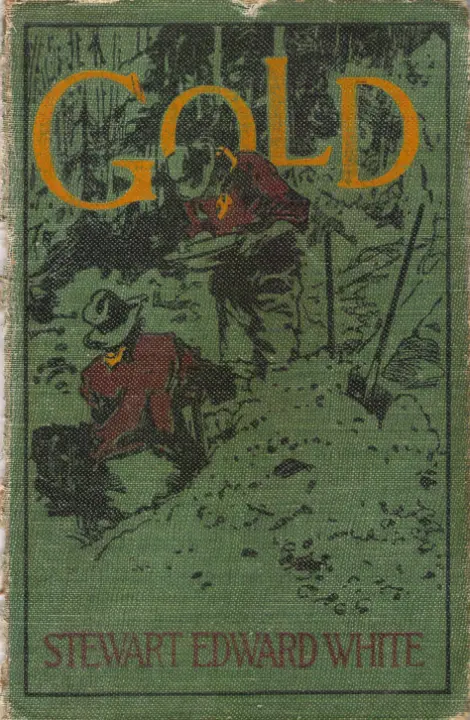
Stewart Edward White
Stewart Edward White
BEHIND THE BOOK
This eBook is for the use of anyone anywhere in the United States and most other parts of the world at no cost and with almost no restrictions whatsoever. You may copy it, give it away or re-use it under the terms of the Project Gutenberg License included with this eBook or online at www.gutenberg.org. If you are not located in the United States, you will have to check the laws of the country where you are located before using this eBook. Read the source licence.
The original source file, including credits and licence, is retained by this library. Request an original-format copy at no charge. Please include the book title and Project Gutenberg identifier #1099.
KEEP YOUR CURIOSITY GOING
Coulson Kernahan

Maurice Baring
Frances Wright
Cécile Tormay

Frederic Jesup Stimson

W. H. P. (William Henry Pope) Jarvis