THE CLASSIC COLLECTION✦The WesternersCLASSIC FREE BOOKS
The Westerners
Stewart Edward White
THE CLASSIC COLLECTION · 1908
"The Riverman" by Stewart Edward White is a novel written during the late 19th century. The story is set in 1872 on a river bend near a dam, focusing on the lives of rivermen who drive logs downstream, emphasizing their rugged lifestyle and camaraderie. The narrative explores the challenges they face, including conflicts with the dam owner, Simeon Reed, as they strive to manage the river's flow and navigate obstacles that threaten their livelihood. The opening of "The Riverman" paints a vivid picture of a bustling camp of rivermen preparing for their daily work on the river. A lively crew of men, diverse in age and character, gathers around fires, exchanging banter as they deal with an unexpected wind that hampers their progress. The central character, Jack Orde, emerges as a capable and humorous leader, attempting to rally his crew to address the issues posed by the dam's sluice-gate. The tension escalates as conflicts arise with Reed, who is staunchly protective of his property. Through detailed descriptions of the camp dynamics and the men's interactions, the narrative sets the stage for a gripping tale of resilience against nature and authority in the rough-and-tumble world of river driving.
Introduction adapted from the source catalogue; source summaries may be automatically generated.
Free to read · English · 103,779 words · No account needed
MAKE TIME FOR A GOOD BOOK
On by default. Untick to stop anonymous reading totals. Each page counts after 10 seconds in view. How this works.
Anonymous counting is on unless you have switched it off.
Abashed, the enthusiasts scrambled back. The life-saving crew took charge. It was necessary to pass the line around the end of the pier and back to the beach. This was a dangerous job, and one requiring considerable power and ingenuity, for the strain on the line imposed by the waters was terrific; and the breaking seas rendered work on the piers extremely hazardous. However, the life-saving captain took charge confidently enough. His crew began to struggle out the pier, while volunteers, under his personal direction, manipulated the reel.
A number of the curious lingered about the SPRITE. Marsh and Orde were in consultation over the smashed stern, and did not look as though they cared to be disturbed. Harvey leaned out his little square door.
“Don' know nuffin 'bout it,” said he, “'ceptin' she done rolled 'way over 'bout foh times. Yass she did, suh! I know. I felt her doin' it.”
“No,” he answered a query. “I wasn't what you-all would call scairt, that is, not really SCAIRT--jess a little ne'vous. All I had to do was to feed her slabs and listen foh my bell. You see, Cap'n Ma'sh, he was in cha'ge.”
“No, sir,” Captain Marsh was saying emphatically to his employer. “I can't figure it out except on one thing. You see it's stove from UNDERNEATH. A sea would have smashed it from above.”
“Perhaps you grounded in between seas out there,” suggested Orde.
Marsh smiled grimly.
“I reckon I'd have known it,” said he. “No, sir! It sounds wild, but it's the only possible guess. That last sea must've lifted us bodily right over the corner of the pier.”
“Well--maybe,” assented Orde doubtfully.
“Sure thing,” repeated Marsh with conviction.
“Well, you'd better not tell 'em so unless you want to rank in with Old Man Ananias,” ended Orde. “It was a good job. Pretty dusty out there, wasn't it?”
“Pretty dusty,” grinned Marsh.
They turned away together and were at once pounced on by Leopold Lincoln Bunn, the local reporter, a callow youth aflame with the chance for a big story of more than local interest.
“Oh, Captain Marsh!” he cried. “How did you get around the pier? It looked as though the wave had you caught.”
Orde glanced at his companion in curiosity.
“On roller skates,” replied Marsh.
Leopold tittered nervously.
“Could you tell me how you felt when you were out there in the worst of
it?” he inquired.
“Oh, hell!” said Marsh grumpily, stalking away.
“Don't interview for a cent, does he?” grinned Orde.
“Oh, Mr. Orde! Perhaps you--”
“Don't you think we'd better lend a hand below?” suggested Orde,
pointing to the beach.
Your reading position is saved on this browser. Take it to another device with a library code. Reading pages adapt to text, rather than matching a printed edition.
Stewart Edward White
Stewart Edward White
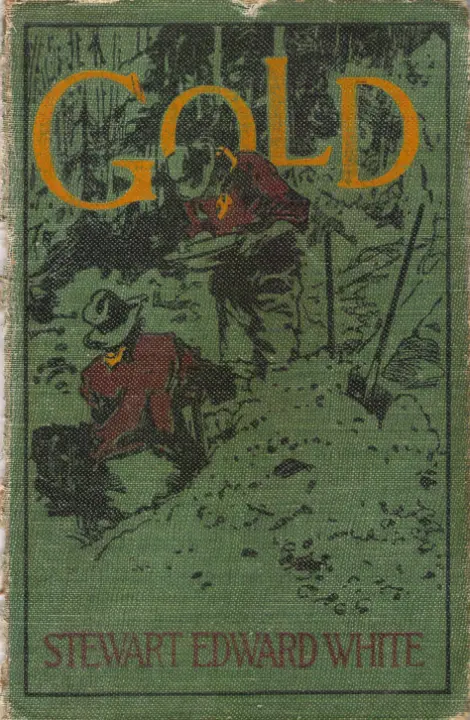
Stewart Edward White
Stewart Edward White
BEHIND THE BOOK
This eBook is for the use of anyone anywhere in the United States and most other parts of the world at no cost and with almost no restrictions whatsoever. You may copy it, give it away or re-use it under the terms of the Project Gutenberg License included with this eBook or online at www.gutenberg.org. If you are not located in the United States, you will have to check the laws of the country where you are located before using this eBook. Read the source licence.
The original source file, including credits and licence, is retained by this library. Request an original-format copy at no charge. Please include the book title and Project Gutenberg identifier #1099.
KEEP YOUR CURIOSITY GOING
Coulson Kernahan

Maurice Baring
Frances Wright
Cécile Tormay

Frederic Jesup Stimson

W. H. P. (William Henry Pope) Jarvis