THE CLASSIC COLLECTION✦The WesternersCLASSIC FREE BOOKS
The Westerners
Stewart Edward White
THE CLASSIC COLLECTION · 1908
"The Riverman" by Stewart Edward White is a novel written during the late 19th century. The story is set in 1872 on a river bend near a dam, focusing on the lives of rivermen who drive logs downstream, emphasizing their rugged lifestyle and camaraderie. The narrative explores the challenges they face, including conflicts with the dam owner, Simeon Reed, as they strive to manage the river's flow and navigate obstacles that threaten their livelihood. The opening of "The Riverman" paints a vivid picture of a bustling camp of rivermen preparing for their daily work on the river. A lively crew of men, diverse in age and character, gathers around fires, exchanging banter as they deal with an unexpected wind that hampers their progress. The central character, Jack Orde, emerges as a capable and humorous leader, attempting to rally his crew to address the issues posed by the dam's sluice-gate. The tension escalates as conflicts arise with Reed, who is staunchly protective of his property. Through detailed descriptions of the camp dynamics and the men's interactions, the narrative sets the stage for a gripping tale of resilience against nature and authority in the rough-and-tumble world of river driving.
Introduction adapted from the source catalogue; source summaries may be automatically generated.
Free to read · English · 103,779 words · No account needed
MAKE TIME FOR A GOOD BOOK
On by default. Untick to stop anonymous reading totals. Each page counts after 10 seconds in view. How this works.
Anonymous counting is on unless you have switched it off.
“Troops coming!” said Orde to Daly.
The men drew a little to one side, watching the dim line of the forest, dark against the paling sky. Shadows seemed to stir in its blackness. They heard quite distinctly the clink of metal against metal. A man rode out of the shadow and reined up by the fire. “Halt!” commanded a harsh voice. The rivermen could make out the troops--three or four score of them--standing rigid at attention. Reed, afoot now in favour of the commanding officer, pushed forward.
“Who is in charge here?” inquired the officer crisply.
“I am,” replied Orde, stepping forward.
“I wish to inquire, sir, if you have gone mad to counsel your men to resist civil authority?”
“I have not resisted civil authority,” replied Orde respectfully.
“It has been otherwise reported.”
“The reports have been false. The sheriff of this county has arrested about twenty of my men single-handed and without the slightest trouble.”
“Mr. Morris,” cried the officer sharply.
“Yes?” replied the sheriff.
“Is what this man says true?”
“It sure is. Never had so little fuss arrestin' rivermen before in my
life.”
The officer's face turned a slow brick-red. For a moment he said nothing, then exploded with the utmost violence.
“Then why the devil am I dragged up here with my men in the night?” he cried. “Who's responsible for this insanity, anyway? Don't you know,” he roared at Reed, who that moment swung within his range of vision, “that I have no standing in the presence of civil law? What do you mean getting me up here to your miserable little backwoods squabbles?”
Reed started to say something, but was immediately cut short by the
irate captain.
“I've nothing to do with that; settle it in court. And what's more, you'll have something yourself to settle with the State! About, face! Forward, march!”
The men faded into the gray light as though dissolved by it.
A deep and respectful silence fell upon the men, which was broken by Orde's solemn and dramatic declamation.
“The King of France and twice ten thousand men Marched up the hill, and then marched down again,”
he recited; then burst into his deep roar of laughter.
“Now you see, boys,” he said, digging his fists into his eyes, “if you'd put up a row, what we'd have got into. No blue-coats in mine, thank you. Well, push the grub pile, and then get at those logs. It's a case of flood-water now.”
But Reed, having recovered from his astonishment, had still his say.
Your reading position is saved on this browser. Take it to another device with a library code. Reading pages adapt to text, rather than matching a printed edition.
Stewart Edward White
Stewart Edward White
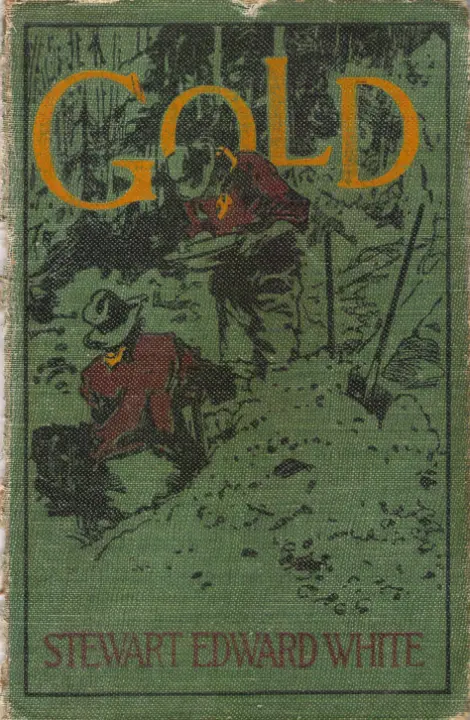
Stewart Edward White
Stewart Edward White
BEHIND THE BOOK
This eBook is for the use of anyone anywhere in the United States and most other parts of the world at no cost and with almost no restrictions whatsoever. You may copy it, give it away or re-use it under the terms of the Project Gutenberg License included with this eBook or online at www.gutenberg.org. If you are not located in the United States, you will have to check the laws of the country where you are located before using this eBook. Read the source licence.
The original source file, including credits and licence, is retained by this library. Request an original-format copy at no charge. Please include the book title and Project Gutenberg identifier #1099.
KEEP YOUR CURIOSITY GOING
Coulson Kernahan

Maurice Baring
Frances Wright
Cécile Tormay

Frederic Jesup Stimson

W. H. P. (William Henry Pope) Jarvis