THE CLASSIC COLLECTION✦The WesternersCLASSIC FREE BOOKS
The Westerners
Stewart Edward White
THE CLASSIC COLLECTION · 1908
"The Riverman" by Stewart Edward White is a novel written during the late 19th century. The story is set in 1872 on a river bend near a dam, focusing on the lives of rivermen who drive logs downstream, emphasizing their rugged lifestyle and camaraderie. The narrative explores the challenges they face, including conflicts with the dam owner, Simeon Reed, as they strive to manage the river's flow and navigate obstacles that threaten their livelihood. The opening of "The Riverman" paints a vivid picture of a bustling camp of rivermen preparing for their daily work on the river. A lively crew of men, diverse in age and character, gathers around fires, exchanging banter as they deal with an unexpected wind that hampers their progress. The central character, Jack Orde, emerges as a capable and humorous leader, attempting to rally his crew to address the issues posed by the dam's sluice-gate. The tension escalates as conflicts arise with Reed, who is staunchly protective of his property. Through detailed descriptions of the camp dynamics and the men's interactions, the narrative sets the stage for a gripping tale of resilience against nature and authority in the rough-and-tumble world of river driving.
Introduction adapted from the source catalogue; source summaries may be automatically generated.
Free to read · English · 103,779 words · No account needed
MAKE TIME FOR A GOOD BOOK
On by default. Untick to stop anonymous reading totals. Each page counts after 10 seconds in view. How this works.
Anonymous counting is on unless you have switched it off.
“It was. You take your map and see how much area has been cut already, and how much remains. That'll open your eyes. And remember all that has been done by crude methods for a relatively small demand. The demand increases as the country grows and methods improve. It would not surprise me if some day thirty or forty millions would constitute an average cut. [*] 'Michigan pine exhaustless!'--those fellows make me sick!”
* At the present day some firms cut as high as 150,000,000
feet.
“Sounds a little more reasonable,” said Taylor slowly.
“It'll sound a lot more reasonable in five or ten years,” insisted Orde, “and then you'll see the big men rushing out into that Oregon and California country. But now a man can get practically the pick of the coast. There are only a few big concerns out there.”
“Why is it that no one--”
“Because,” Orde cut him short, “the big things are for the fellow who can see far enough ahead.”
“What kind of a proposition have you?” asked Taylor after a pause.
“I can get ten thousand acres at an average price of eight dollars an
acre,” replied Orde.
“Acres? What does that mean in timber?”
“On this particular tract it means about four hundred million feet.”
“That's about twenty cents a thousand.”
Orde nodded.
“And of course you couldn't operate for a long time?”
“Not for twenty, maybe thirty, years,” replied Orde calmly.
“There's your interest on your money, and taxes, and the risk of fire
and--”
“Of course, of course,” agreed Orde impatiently, “but you're getting your stumpage for twenty cents or a little more, and in thirty years it will be worth as high as a dollar and a half.” [*]
* At the present time (1908) sugar pine such as Orde
described would cost $3.50 to $4.
“What!” cried Taylor.
“That is my opinion,” said Orde.
Taylor relapsed into thought.
“Look here, Orde,” he broke out finally, “how old are you?”
“Thirty-eight. Why?”
“How much timber have you in Michigan?”
“About ten million that we've picked up on the river since the Daly purchase and three hundred million in the northern peninsula.”
“Which will take you twenty years to cut, and make you a million dollars
or so?”
“Hope so.”
“Then why this investment thirty years ahead?”
“It's for Bobby,” explained Orde simply. “A man likes to have his son continue on in his business. I can't do it here, but there I can. It would take fifty years to cut that pine, and that will give Bobby a steady income and a steady business.”
“Bobby will be well enough off, anyway. He won't have to go into
business.”
Orde's brow puckered.
Your reading position is saved on this browser. Take it to another device with a library code. Reading pages adapt to text, rather than matching a printed edition.
Stewart Edward White
Stewart Edward White
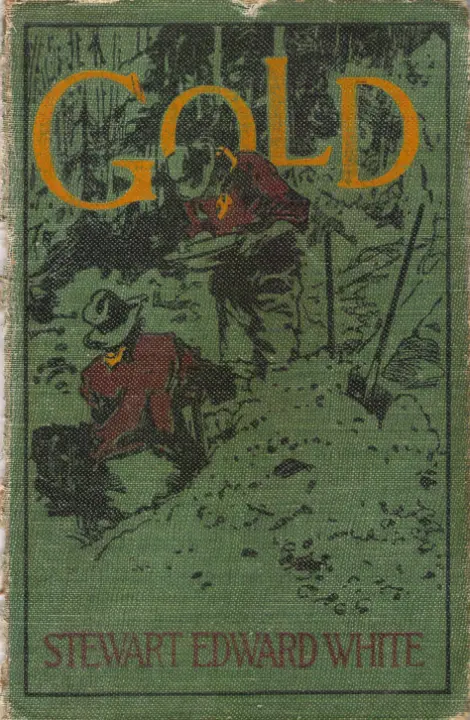
Stewart Edward White
Stewart Edward White
BEHIND THE BOOK
This eBook is for the use of anyone anywhere in the United States and most other parts of the world at no cost and with almost no restrictions whatsoever. You may copy it, give it away or re-use it under the terms of the Project Gutenberg License included with this eBook or online at www.gutenberg.org. If you are not located in the United States, you will have to check the laws of the country where you are located before using this eBook. Read the source licence.
The original source file, including credits and licence, is retained by this library. Request an original-format copy at no charge. Please include the book title and Project Gutenberg identifier #1099.
KEEP YOUR CURIOSITY GOING
Coulson Kernahan

Maurice Baring
Frances Wright
Cécile Tormay

Frederic Jesup Stimson

W. H. P. (William Henry Pope) Jarvis