THE CLASSIC COLLECTION✦The WesternersCLASSIC FREE BOOKS
The Westerners
Stewart Edward White
THE CLASSIC COLLECTION · 1908
"The Riverman" by Stewart Edward White is a novel written during the late 19th century. The story is set in 1872 on a river bend near a dam, focusing on the lives of rivermen who drive logs downstream, emphasizing their rugged lifestyle and camaraderie. The narrative explores the challenges they face, including conflicts with the dam owner, Simeon Reed, as they strive to manage the river's flow and navigate obstacles that threaten their livelihood. The opening of "The Riverman" paints a vivid picture of a bustling camp of rivermen preparing for their daily work on the river. A lively crew of men, diverse in age and character, gathers around fires, exchanging banter as they deal with an unexpected wind that hampers their progress. The central character, Jack Orde, emerges as a capable and humorous leader, attempting to rally his crew to address the issues posed by the dam's sluice-gate. The tension escalates as conflicts arise with Reed, who is staunchly protective of his property. Through detailed descriptions of the camp dynamics and the men's interactions, the narrative sets the stage for a gripping tale of resilience against nature and authority in the rough-and-tumble world of river driving.
Introduction adapted from the source catalogue; source summaries may be automatically generated.
Free to read · English · 103,779 words · No account needed
MAKE TIME FOR A GOOD BOOK
On by default. Untick to stop anonymous reading totals. Each page counts after 10 seconds in view. How this works.
Anonymous counting is on unless you have switched it off.
Immediately the weight fell on the small boats, they were dragged irresistibly backward. Even from a distance the three men on the SPRITE could make out the white-water as the oars splashed and churned and frantically caught crabs in a vain effort to hold their own. Marsh lowered his telescope, the tears streaming down his face.
“It's better than a goat fight,” said he.
Futilely protesting, the rowboats were dragged backward, turned as a whip is snapped, and strung out along the bank below.
“They'll have to have two tugs before they can close the break that
way,” commented Orde.
“Sure thing,” replied Captain Marsh.
But at that moment a black smoke rolled up over the marshes, and shortly around the bend from above came the LUCY BELLE.
The LUCY BELLE was the main excuse for calling the river navigable. She made trips as often as she could between Redding and Monrovia. In luck, she could cover the forty miles in a day. It was no unusual thing, however, for the LUCY BELLE to hang up indefinitely on some one of the numerous shifting sand bars. For that reason she carried more imperishable freight than passengers. In appearance she was two-storied, with twin smokestacks, an iron Indian on her top, and a “splutter-behind” paddle-wheel.
“There comes his help,” said Orde. “Old Simpson would stop to pick up a bogus three-cent piece.”
Sure enough, on hail from one of the rowboats, the LUCY BELLE slowed down and stopped. After a short conference, she steamed clumsily over to get hold of one end of the booms. The tug took the other. In time, and by dint of much splashing, some collisions, and several attempts, the ends of the booms were united.
By this time, however, nearly all the logs had escaped. The tug, towing a string of rowboats, set out in pursuit.
The SPRITE continued on her way until beyond sight. Then she slowed down again. The LUCY BELLE churned around the bend, and turned in toward the tug.
“She's going to speak us,” marvelled Orde. “I wonder what the dickens
she wants.”
“Tug ahoy!” bellowed a red-faced individual from the upper deck. He was dressed in blue and brass buttons, carried a telescope in one hand, and was liberally festooned with gold braid and embroidered anchors.
“Answer him,” Orde commanded Marsh.
“Hullo there, commodore! what is it?” replied the tug captain.
The red-faced figure glared down for a moment.
“They want a tug up there at Heinzman's. Can you go?”
“Sure!” cried Marsh, choking.
The LUCY BELLE sheered off magnificently.
“What do you think of that?” Marsh asked Orde.
Your reading position is saved on this browser. Take it to another device with a library code. Reading pages adapt to text, rather than matching a printed edition.
Stewart Edward White
Stewart Edward White
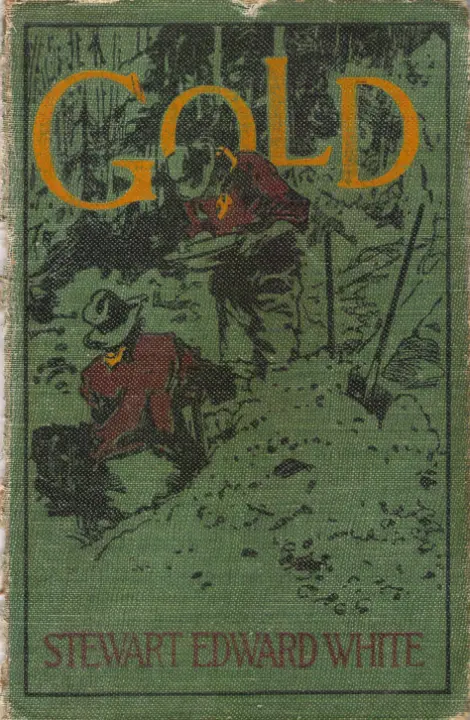
Stewart Edward White
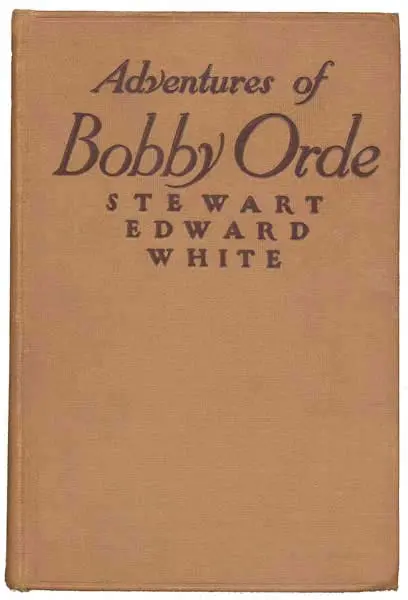
Stewart Edward White
BEHIND THE BOOK
This eBook is for the use of anyone anywhere in the United States and most other parts of the world at no cost and with almost no restrictions whatsoever. You may copy it, give it away or re-use it under the terms of the Project Gutenberg License included with this eBook or online at www.gutenberg.org. If you are not located in the United States, you will have to check the laws of the country where you are located before using this eBook. Read the source licence.
The original source file, including credits and licence, is retained by this library. Request an original-format copy at no charge. Please include the book title and Project Gutenberg identifier #1099.
KEEP YOUR CURIOSITY GOING
Coulson Kernahan

Maurice Baring
Frances Wright
Cécile Tormay

Frederic Jesup Stimson

W. H. P. (William Henry Pope) Jarvis