THE CLASSIC COLLECTION✦The WesternersCLASSIC FREE BOOKS
The Westerners
Stewart Edward White
THE CLASSIC COLLECTION · 1908
"The Riverman" by Stewart Edward White is a novel written during the late 19th century. The story is set in 1872 on a river bend near a dam, focusing on the lives of rivermen who drive logs downstream, emphasizing their rugged lifestyle and camaraderie. The narrative explores the challenges they face, including conflicts with the dam owner, Simeon Reed, as they strive to manage the river's flow and navigate obstacles that threaten their livelihood. The opening of "The Riverman" paints a vivid picture of a bustling camp of rivermen preparing for their daily work on the river. A lively crew of men, diverse in age and character, gathers around fires, exchanging banter as they deal with an unexpected wind that hampers their progress. The central character, Jack Orde, emerges as a capable and humorous leader, attempting to rally his crew to address the issues posed by the dam's sluice-gate. The tension escalates as conflicts arise with Reed, who is staunchly protective of his property. Through detailed descriptions of the camp dynamics and the men's interactions, the narrative sets the stage for a gripping tale of resilience against nature and authority in the rough-and-tumble world of river driving.
Introduction adapted from the source catalogue; source summaries may be automatically generated.
Free to read · English · 103,779 words · No account needed
MAKE TIME FOR A GOOD BOOK
On by default. Untick to stop anonymous reading totals. Each page counts after 10 seconds in view. How this works.
Anonymous counting is on unless you have switched it off.
The men arose to their feet and peered cautiously through the brush. They saw Reed, accompanied by a thick-set man whom some recognised as the sheriff of the county, approach the edge of the dam. A moment later the working crew mounted to the top, stacked their tools neatly, resumed their coats and jackets, and departed up the road in convoy of the sheriff.
A gasp of astonishment broke from the concealed rivermen.
“Well, I'll be damned!” ejaculated one. “What are we comin' to? That's the first time I ever see one lonesome sheriff gather in ten river-hogs without the aid of a gatlin' or an ambulance! What's the matter with that chicken-livered bunch, anyway?”
Orde watched them, his eyes expressionless, until they had disappeared in the fringe of the forest Then he turned to the astonished group.
“Jim,” said he, “and you, Ellis, and you, and you, and you, and you, get to work on that dam. And remember this, if you are arrested, go peaceably. Any resistance will spoil the whole game.”
The men broke into mingled cheers and laughter as the full significance of Orde's plan reached them. They streamed back to the dam, where they perched proffering advice and encouragement to those about to descend.
Immediately, however, Reed was out, his eyes blazing either side his
hawk nose.
“Here!” he cried, “quit that! I'll have ye arrested!”
“Arrest ahead,” replied Orde coldly.
Reed stormed back and forth for a moment, then departed at full speed up
the road.
“Now, boys, get as much done as possible,” urged Orde. “We better get back in the brush, or he may try to take in the whole b'iling of us on some sort of a blanket warrant.”
“How about the other boys?” inquired North.
“I gave one of them a telegram to send to Daly,” replied Orde. “Daly will be up to bail them out.”
Once more they hid in the woods; and again, after a longer interval, the mill owner and the sheriff reappeared. Reed appeared to be expostulating violently, and a number of times pointed up river; but the sheriff went ahead stolidly to the dam, summoned those working below, and departed up the road as before. Reed stood uncertain until he saw the rivermen beginning to re-emerge from the brush, then followed the officer at top speed.
Without the necessity of command, a half-dozen men leaped down on the apron. The previous crews had made considerable progress in weakening the heavy supports. As soon as these should be cut out and the backing removed, the mere sawing through of the massive sill should carry away the whole obstruction.
Your reading position is saved on this browser. Take it to another device with a library code. Reading pages adapt to text, rather than matching a printed edition.
Stewart Edward White
Stewart Edward White
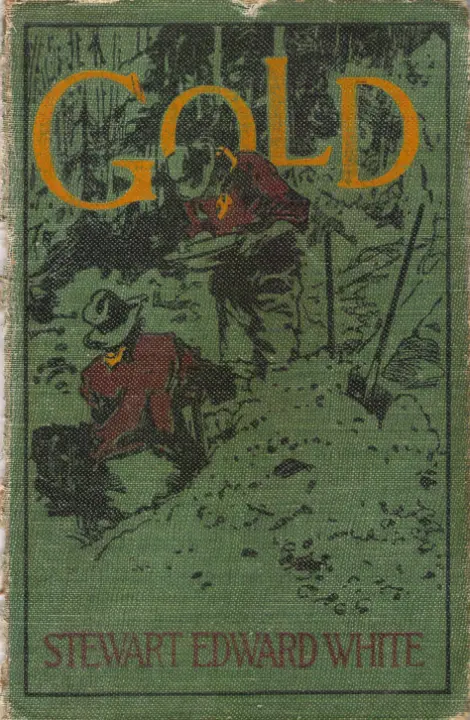
Stewart Edward White
Stewart Edward White
BEHIND THE BOOK
This eBook is for the use of anyone anywhere in the United States and most other parts of the world at no cost and with almost no restrictions whatsoever. You may copy it, give it away or re-use it under the terms of the Project Gutenberg License included with this eBook or online at www.gutenberg.org. If you are not located in the United States, you will have to check the laws of the country where you are located before using this eBook. Read the source licence.
The original source file, including credits and licence, is retained by this library. Request an original-format copy at no charge. Please include the book title and Project Gutenberg identifier #1099.
KEEP YOUR CURIOSITY GOING
Coulson Kernahan

Maurice Baring
Frances Wright
Cécile Tormay

Frederic Jesup Stimson

W. H. P. (William Henry Pope) Jarvis