
In the Days of Washington: A Story of the American Revolution
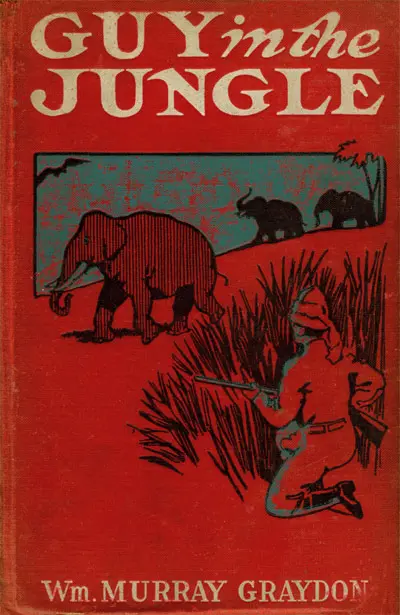
William Murray Graydon
THE CLASSIC COLLECTION · 1890
"The River of Darkness; Or, Under Africa" by William Murray Graydon is a novel written in the late 19th century. The story follows Captain Guy Chutney, a young English officer called back to duty in Africa amid rising tensions and impending conflicts. He finds himself entangled in a treacherous situation that spans from London to the dangers of the African coastline, leading to a series of harrowing events involving betrayal, slavery, and survival. At the start of the tale, Captain Chutney, just before returning to India, receives an urgent commission from the Colonial Office to deliver critical documents to Sir Arthur Ashby in Zaila, a locality beset with unrest. After a brief stop at Aden, his journey becomes perilous as he comes into contact with suspicious characters, including a Portuguese trader named Manuel Torres. The unfolding drama escalates with the theft of the official documents, the outbreak of violence in Zaila, and ultimately, Chutney's descent into slavery alongside his companion, Melton Forbes, as they grapple with the chaos around them. The prologue and the first chapter set the stage for a gripping adventure filled with danger and intrigue, indicating a deep exploration of themes such as loyalty, heroism, and the struggle against insurmountable odds.
Introduction adapted from the source catalogue; source summaries may be automatically generated.
Free to read · English · 60,823 words · No account needed
MAKE TIME FOR A GOOD BOOK
On by default. Untick to stop anonymous reading totals. Each page counts after 10 seconds in view. How this works.
Anonymous counting is on unless you have switched it off.
Believing that some terrible danger threatened, Forbes was in readiness to push the canoe back into the lake, but Guy stopped him with a wave of the hand.
"I'll be all right in a moment. My nerves went back on me; that's all."
He glanced toward the shore with a shudder, and then filled the palm of his hand with water and drank it.
"Come on," he said bravely; "don't be alarmed. It's nothing that can
harm us."
His companions followed him timidly up the sandy slope. The torch threw a bright light on the scene, and every one of them shuddered as Guy stopped and pointed before him.
On a flat, rocky plateau, three or four feet above the level of the lake, lay a gleaming mass of bones, all dried and whitened by age.
"Human skeletons, by gracious!" burst from the colonel, and it was easy to see that he spoke the truth.
Human skeletons they were, but instead of being joined together, skulls, arms, and legs lay scattered about in awful confusion.
"This is horrible," said Forbes. "Who were these unfortunates, and what could have caused such mutilation?"
Guy advanced to the center of the plateau, flashing the torch around him, and turning to his companions, he cried: "This is an island; there is water all around it."
"Look here," exclaimed Canaris eagerly; "here lies a raft of logs, half
buried in the sand."
This new discovery promised some light on the mystery, and they crowded hastily around the Greek, who was bending over the rude structure.
It lay half way up the beach, and over the lower extremities of the logs a thick layer of sand had been washed. Close by were half a dozen coarse sacks, which proved on inspection to contain skins of leopards and tigers, bright colored feathers, coffee, and aromatic gums. All were in fairly good condition.
"Here is something else," cried Forbes. "Arms, by Jove! Spears and axes, torches and paddles. Well, by gracious, what does this mean?"
An inkling of the truth flashed upon them simultaneously, and they stared at each other in frightened silence.
"This was the last load of natives to go down the river," said Canaris quietly. "Here is their raft, their trading goods. Yonder lie their bones. Their journey ended here."
"And why did it end here?" demanded the colonel.
"Yes, why?" echoed Chutney, and then no one spoke for a full minute.
"What was to prevent them from continuing on their way?" resumed the colonel finally. "They had a raft and paddles; the water was all around them. What caused their death?"
"Starvation," suggested the Greek.
Your reading position is saved on this browser. Take it to another device with a library code. Reading pages adapt to text, rather than matching a printed edition.
William Murray Graydon
William Murray Graydon
William Murray Graydon
William Murray Graydon
BEHIND THE BOOK
This eBook is for the use of anyone anywhere in the United States and most other parts of the world at no cost and with almost no restrictions whatsoever. You may copy it, give it away or re-use it under the terms of the Project Gutenberg License included with this eBook or online at www.gutenberg.org. If you are not located in the United States, you will have to check the laws of the country where you are located before using this eBook. Read the source licence.
The original source file, including credits and licence, is retained by this library. Request an original-format copy at no charge. Please include the book title and Project Gutenberg identifier #24297.
KEEP YOUR CURIOSITY GOING
Coulson Kernahan

Maurice Baring
Frances Wright
Cécile Tormay

Frederic Jesup Stimson

W. H. P. (William Henry Pope) Jarvis