
The Sun of Saratoga: A Romance of Burgoyne’s Surrender
Joseph A. (Joseph Alexander) Altsheler
THE CLASSIC COLLECTION · 1910
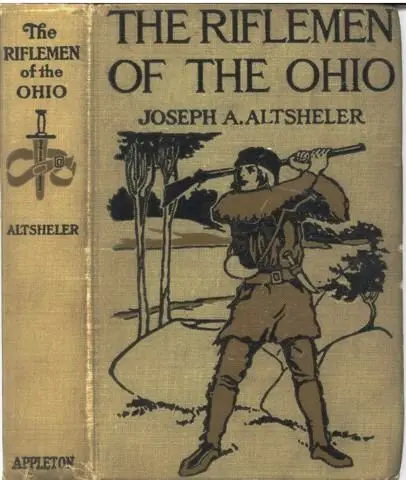
"The Riflemen of the Ohio: A Story of the Early Days along 'The Beautiful River'" by Joseph A. Altsheler is a historical novel written in the early 20th century. The story revolves around the experiences of Henry Ware and his companions as they navigate the dangers of the Ohio River while transporting supplies for settlers in the wake of conflicts with Native American tribes. The narrative captures the tension between the advancing settlers and the indigenous peoples, emphasizing the challenges faced by pioneers in a still wild and perilous landscape. At the start of the book, the fleet of boats carrying supplies enters the majestic Ohio River, prompting reflections among the main characters, including Henry Ware and Paul Cotter, who anticipate the threats posed by local tribes such as the Shawnees and Wyandots. While Henry takes on the heavy responsibility of keeping watch for dangers during their journey, Paul expresses a sense of hope about the expedition's success. The opening section escalates with the group's first encounter with the wilderness' ominous silence, signifying that unseen challenges lie ahead. After Henry and a small hunting party encounter hostile Indians, Henry is captured but remains resolute, displaying bravery and a keen awareness of his surroundings, which sets the tone for his character's development throughout the narrative.
Introduction adapted from the source catalogue; source summaries may be automatically generated.
Free to read · English · 102,631 words · No account needed
MAKE TIME FOR A GOOD BOOK
On by default. Untick to stop anonymous reading totals. Each page counts after 10 seconds in view. How this works.
Anonymous counting is on unless you have switched it off.
Timmendiquas and Heno left the lodge, but in about ten minutes Heno returned, bringing with him Hainteroh.
"Well, how's your arm, Raccoon?" said Henry, wishing to be friendly.
Raccoon did not know his English words, but he understood Henry's
glance, and he smiled and touched his arm. Then he said something in
Wyandot.
"He say arm soon be well," said old Heno. "Now you come out and see council, great talk, me on one side of you, Hainteroh on the other."
"Yes, I know you've got to guard me," said Henry, "but I won't try to
run."
They loosed his bonds, and he stepped out with them, once more to see all the people pouring toward the meadow as they had done at the time of the ball game. The crowd was greatly increased in numbers, and Henry surmised at once that many warriors had come with the chiefs from the other tribes. But he noticed, also, that the utmost concord seemed to exist among them.
When they reached the meadow they stopped at the edge, and Heno and Hainteroh stood on either side of him. The people were gathered all about, four square, and the chiefs stood on the meadow enclosed by the square.
"Now they speak to the Wyandot nation and the visiting warriors," said
Heno.
A chief of ripe years but of tall and erect figure arose and stood gravely regarding the multitude.
"That Kogieschquanohel of the clan of the Minsi of the tribe of the Lenni Lenape," said Heno, the herald. "His name long time ago Hopocan, but he change it to Kogieschquanohel, which mean in language of the Yengees Maker of Daylight. He man you call Captain Pipe."
"So that is Captain Pipe, is it?" said Henry.
Captain Pipe, as the whites called him, because his later Indian name was too long to be pronounced, was a Delaware chief, greatly celebrated in his day, and Henry regarded him with interest.
"Who is that by the side of Captain Pipe?" he asked, indicating another chief of about the same height and age.
"That Koquethagaaehlon, what you call Captain White Eyes," replied Heno. "He great Delaware chief, too, and great friend of Captain Pipe."
Henry's eyes roamed on and he saw two other chiefs whom he knew well. They were Yellow Panther, head chief of the Miamis, and Red Eagle, head chief of the Shawnees. He had no doubt that Braxton Wyatt would tell them who he was, and he knew that he could expect no mercy of any kind from them. Timmendiquas stood not far away, and in a group, as usual, were the renegades.
Your reading position is saved on this browser. Take it to another device with a library code. Reading pages adapt to text, rather than matching a printed edition.
Joseph A. (Joseph Alexander) Altsheler
Joseph A. (Joseph Alexander) Altsheler
Joseph A. (Joseph Alexander) Altsheler
Joseph A. (Joseph Alexander) Altsheler
BEHIND THE BOOK
This eBook is for the use of anyone anywhere in the United States and most other parts of the world at no cost and with almost no restrictions whatsoever. You may copy it, give it away or re-use it under the terms of the Project Gutenberg License included with this eBook or online at www.gutenberg.org. If you are not located in the United States, you will have to check the laws of the country where you are located before using this eBook. Read the source licence.
The original source file, including credits and licence, is retained by this library. Request an original-format copy at no charge. Please include the book title and Project Gutenberg identifier #25998.
KEEP YOUR CURIOSITY GOING
Cécile Tormay

Moritz Busch
Coulson Kernahan
John L. Ransom

Maurice Baring
Frances Wright