
The Sun of Saratoga: A Romance of Burgoyne’s Surrender
Joseph A. (Joseph Alexander) Altsheler
THE CLASSIC COLLECTION · 1910
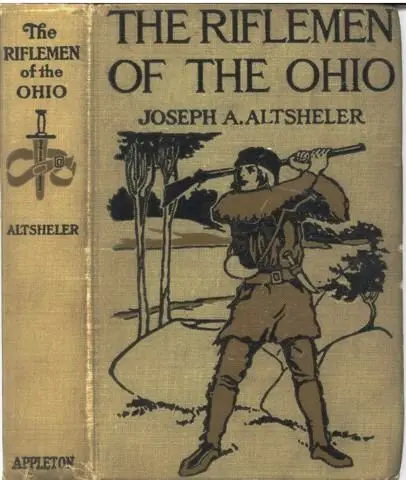
"The Riflemen of the Ohio: A Story of the Early Days along 'The Beautiful River'" by Joseph A. Altsheler is a historical novel written in the early 20th century. The story revolves around the experiences of Henry Ware and his companions as they navigate the dangers of the Ohio River while transporting supplies for settlers in the wake of conflicts with Native American tribes. The narrative captures the tension between the advancing settlers and the indigenous peoples, emphasizing the challenges faced by pioneers in a still wild and perilous landscape. At the start of the book, the fleet of boats carrying supplies enters the majestic Ohio River, prompting reflections among the main characters, including Henry Ware and Paul Cotter, who anticipate the threats posed by local tribes such as the Shawnees and Wyandots. While Henry takes on the heavy responsibility of keeping watch for dangers during their journey, Paul expresses a sense of hope about the expedition's success. The opening section escalates with the group's first encounter with the wilderness' ominous silence, signifying that unseen challenges lie ahead. After Henry and a small hunting party encounter hostile Indians, Henry is captured but remains resolute, displaying bravery and a keen awareness of his surroundings, which sets the tone for his character's development throughout the narrative.
Introduction adapted from the source catalogue; source summaries may be automatically generated.
Free to read · English · 102,631 words · No account needed
MAKE TIME FOR A GOOD BOOK
On by default. Untick to stop anonymous reading totals. Each page counts after 10 seconds in view. How this works.
Anonymous counting is on unless you have switched it off.
"Beyond a doubt you're right," said Girty. "We could never retreat now and leave them to enjoy a victory. It would encourage them too much and discourage our own people too much."
Timmendiquas gave him a lightning glance when he used the phrase "our own people," and Girty for the moment quailed. He knew that the great White Lightning did not like him, and he knew why. Timmendiquas believed that a man should be loyal to his own race, and in his heart he must regard the renegade as what he was--a traitor. But Girty, with all his crimes, was not a coward, and he was cunning, too, with the cunning of both the white man and the red. He recovered his courage and continued:
"The taking of this fleet in particular would be the greatest triumph that we could achieve, and it would be a triumph in a double way. It has vast quantities of powder, lead, cannon, pistols, bayonets, medicines, clothing, and other supplies for the people in the east, who are fighting our friends, the British. If we should take it we'd not only weaken the Americans, but also secure for ourselves the greatest prize ever offered in the west."
The eyes of all the chiefs glistened, and Girty, shrewd and watchful, noticed it. He sought continually to build up his influence among them, and he never neglected any detail. Now he reached under his buckskin hunting shirt and drew forth a soiled piece of paper.
"Braxton Wyatt here, a loyal and devoted friend of ours, has been in the south," he said. "He was at New Orleans and he knows all about this fleet. He knows how it was formed and he knows what it carries. Listen, Timmendiquas, to what awaits us if we are shrewd enough and brave enough to take it:
"One thousand rifles.
"Six hundred muskets.
"Six hundred best French bayonets.
"Four hundred cavalry sabers.
"Two hundred horse pistols, single-barreled.
"Two hundred horse pistols, double-barreled.
"Three hundred dirks.
"Six brass eighteen-pounder field pieces.
"Four brass twelve-pounder field pieces.
"Two brass six-pounder field pieces.
"Four bronze twelve-pounder field guns.
"Ten thousand rounds of ammunition for the cannon.
"Two hundred barrels of best rifle powder.
"Thirty thousand pounds of bar lead and more than two hundred thousand dollars worth of clothing, provisions, and medicines.
"Wouldn't that make your mouth water? Did any of us ever before have a chance to help at the taking of such a treasure?"
"It is not wonderful that the white men fight so well to keep what they carry," said Timmendiquas.
Your reading position is saved on this browser. Take it to another device with a library code. Reading pages adapt to text, rather than matching a printed edition.
Joseph A. (Joseph Alexander) Altsheler
Joseph A. (Joseph Alexander) Altsheler
Joseph A. (Joseph Alexander) Altsheler
Joseph A. (Joseph Alexander) Altsheler
BEHIND THE BOOK
This eBook is for the use of anyone anywhere in the United States and most other parts of the world at no cost and with almost no restrictions whatsoever. You may copy it, give it away or re-use it under the terms of the Project Gutenberg License included with this eBook or online at www.gutenberg.org. If you are not located in the United States, you will have to check the laws of the country where you are located before using this eBook. Read the source licence.
The original source file, including credits and licence, is retained by this library. Request an original-format copy at no charge. Please include the book title and Project Gutenberg identifier #25998.
KEEP YOUR CURIOSITY GOING
Cécile Tormay

Moritz Busch
Coulson Kernahan
John L. Ransom

Maurice Baring
Frances Wright