
The Sun of Saratoga: A Romance of Burgoyne’s Surrender
Joseph A. (Joseph Alexander) Altsheler
THE CLASSIC COLLECTION · 1910
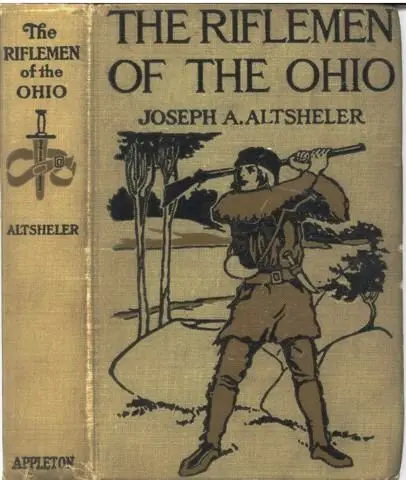
"The Riflemen of the Ohio: A Story of the Early Days along 'The Beautiful River'" by Joseph A. Altsheler is a historical novel written in the early 20th century. The story revolves around the experiences of Henry Ware and his companions as they navigate the dangers of the Ohio River while transporting supplies for settlers in the wake of conflicts with Native American tribes. The narrative captures the tension between the advancing settlers and the indigenous peoples, emphasizing the challenges faced by pioneers in a still wild and perilous landscape. At the start of the book, the fleet of boats carrying supplies enters the majestic Ohio River, prompting reflections among the main characters, including Henry Ware and Paul Cotter, who anticipate the threats posed by local tribes such as the Shawnees and Wyandots. While Henry takes on the heavy responsibility of keeping watch for dangers during their journey, Paul expresses a sense of hope about the expedition's success. The opening section escalates with the group's first encounter with the wilderness' ominous silence, signifying that unseen challenges lie ahead. After Henry and a small hunting party encounter hostile Indians, Henry is captured but remains resolute, displaying bravery and a keen awareness of his surroundings, which sets the tone for his character's development throughout the narrative.
Introduction adapted from the source catalogue; source summaries may be automatically generated.
Free to read · English · 102,631 words · No account needed
MAKE TIME FOR A GOOD BOOK
On by default. Untick to stop anonymous reading totals. Each page counts after 10 seconds in view. How this works.
Anonymous counting is on unless you have switched it off.
The elderly warrior who now bore the medicine bag and who was to lead them back home preserved a stoical face while the brief ceremonies were going on, but Henry knew that his heart was swollen with pride. He had achieved one of the greatest triumphs of an Indian's life, and the memory of it would remain with his tribe as long as he lived.
"You are now our leader, O Anue (Bear)," said the young chief in Wyandot to the successful warrior.
"I take the trust, O Timmendiquas (Lightning)," replied Anue as he stepped back to the head of the line.
But the spirit and authority of Timmendiquas were still omnipotent, despite the formal leadership of Anue, and he turned to the prisoner, regarding him a moment or two with his piercing glance.
"You have come with the great white force up Yandawezue?" he said
interrogatively.
"Yandawezue?" repeated Henry, who was not familiar with the Wyandot
tongue.
"The great river," repeated Timmendiquas, waving his hand toward the
southwest.
"Ah, I understand," said Henry. "You mean the Mississippi. Yes, we have come up it all the way from New Orleans, and we have a strong force, many men with many rifles and with cannon. We had a great battle far down the river, and we defeated all the Indians and white men, their renegade allies."
Timmendiquas, the White Lightning of the whites, the great young chief of the Wyandots, drew himself up in all the majesty of a perfectly proportioned six feet three, and the fierce, Roman-like features contracted into a scornful smile.
"No Wyandots were there," he said. "But they are here, and with them their allies, the Miamis, the Shawnees, the Ottawas, the Delawares, and the Illinois. You may be many, you may have cannon, and you may be brave, and you have come up Yandawezue, but you will find Ohezuhyeandawa" (the Ohio--in the Wyandot tongue, "something great") "closed to you."
"Ohezu--do you mean the Ohio?" asked Henry.
"In your language, the Ohio," replied the young chief with dignity, "but the Wyandots had given it its right name, Ohezuhyeandawa, long before the white people came."
"I suppose you're right in that," said Henry reflectively, "but your name for it is too long. Ohio is better. As for our fleet, I think, in spite of what you say, that it will make its way up the Ohio to Pittsburgh, although I do admit that the dangers are great."
Your reading position is saved on this browser. Take it to another device with a library code. Reading pages adapt to text, rather than matching a printed edition.
Joseph A. (Joseph Alexander) Altsheler
Joseph A. (Joseph Alexander) Altsheler
Joseph A. (Joseph Alexander) Altsheler
Joseph A. (Joseph Alexander) Altsheler
BEHIND THE BOOK
This eBook is for the use of anyone anywhere in the United States and most other parts of the world at no cost and with almost no restrictions whatsoever. You may copy it, give it away or re-use it under the terms of the Project Gutenberg License included with this eBook or online at www.gutenberg.org. If you are not located in the United States, you will have to check the laws of the country where you are located before using this eBook. Read the source licence.
The original source file, including credits and licence, is retained by this library. Request an original-format copy at no charge. Please include the book title and Project Gutenberg identifier #25998.
KEEP YOUR CURIOSITY GOING
Cécile Tormay

Moritz Busch
Coulson Kernahan
John L. Ransom

Maurice Baring
Frances Wright