THE CLASSIC COLLECTION✦The art of fictionCLASSIC FREE BOOKS
The art of fiction
Walter Besant
THE CLASSIC COLLECTION · 1890
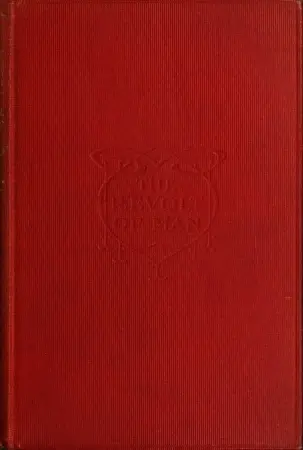
"The Revolt of Man" by Walter Besant is a novel written in the late 19th century. The story introduces readers to a future society where women have assumed control over political and social structures, supplanting men in power and governance. The narrative primarily follows two characters: Constance, the Countess of Carlyon and the current Home Secretary, and her cousin Edward, the Earl of Chester. They find themselves at the center of unfolding political tensions surrounding gender roles and societal expectations, leading to a conflict that challenges the existing order. The opening of the novel begins with a preface that reflects on the story's initial reception and the author's gratitude for advice regarding its conclusion. It then shifts to a depiction of Professor Dorothy Ingleby, a prominent figure in this matriarchal society, who is deeply frustrated with the political climate. She observes the tangible outcomes of a governance that has marginalized men and critiques the roles they are forced into. The narrative quickly introduces Constance, who is dealing with the fallout of a contentious political debate, revealing the human emotions and tragedies that underpin the stark societal changes. As tensions rise regarding marriage and personal relationships—including Constance's emerging feelings for her cousin Edward—the stage is set for an exploration of love, power dynamics, and rebellion against oppressive norms.
Introduction adapted from the source catalogue; source summaries may be automatically generated.
Free to read · English · 61,757 words · No account needed
MAKE TIME FOR A GOOD BOOK
On by default. Untick to stop anonymous reading totals. Each page counts after 10 seconds in view. How this works.
Anonymous counting is on unless you have switched it off.
The next day was Sunday, and of course Lord Chester went to church with the Professor, who was always careful to observe forms.
The congregation was large, and principally composed of men. The service was elaborate, and the singing good. Perhaps the incense was a little too strong, and there was some physical fatigue in the frequent changes of posture. Nothing, however, could have been more splendid than the procession with banners, which closed the service; nothing sweeter than the voices of the white-robed singing-girls. It was a large and beautiful church, with painted glass, pictures having lights burning before them; and the altar, on which stood the veiled figure of the Perfect Woman, was heaped with flowers.
The sermon was preached by the Dean of Westminster, whose eloquence and fervour were equalled by her scholarship. No one, except perhaps, Professor Ingleby, was better read in ecclesiastical history, or knew more about the beginnings of the New Religion. She had written a book, showing from ancient literature how the germs of the religion were dormant even in the old barbaric times of man's supremacy. Even so far back as the Middle Ages men delighted to honour Woman. Every poet chose a mistress for his devotion, and ignorantly worshipped the type in the Individual. Every knight became servant and slave to one woman, in whose honour his noblest deeds were done. Even the worship of the Divine Man became, first in Catholic countries, and afterwards in England, through a successful conspiracy of certain so-called 'ritualists,' the worship of the Mother and Child. At all times the effigies of the virtues, Faith, Hope, Love, had been figures of women. The form of woman had always stood for the type, the standard, the ideal of the Beautiful. The woman had always been the dispenser of gifts. The woman had always been richly dressed. Men worked their hardest in order to pour their treasures into the lap of woman. All the reverence, all the poetry, all the imagination with which the lower nature of man was endowed, had been freely spent and lavished in the service of woman. From his earliest infancy, women surrounded, protected, and thought for men. Why, what was this, what could this mean, but a foreshadowing, an indication, a revelation, by slow and natural means, of the worship of the Perfect Woman, dimly comprehended as yet, but manifesting its power over the heart? The Dean handled this, her favourite topic, in the pulpit this morning with singular force and eloquence. After touching on the invisible growth of the religion, she painted a time of anarchy, when men had given up their old beliefs and were like children--only children with weapons in their hands--crying out with fear in the darkness. She told how women, at last assuming their true place, substituted, little by little, the true, the only faith--the Worship of the Perfect Woman, the Feminine Divinity of Thought, Purpose, and Production. She pointed out how, by natural religion, man was evidently marked out for the second or lower creature, although, by the abuse of his superior strength, he had wrested the authority and used it for his own purposes. He was formed to execute, he was strong, he was the Agent. Woman, on the other hand, was the mother--that is to say, the Creative Thought; that is, the Sovereign Ruler. In the animal creation, again, it is the male who works, while the female sits and directs. And even in such small points as the gender of things inanimate, everything of grace, usefulness, or beauty was, and always had been, feminine. Then she argued from the natural quickness and intelligence of women, and from the corresponding dullness of men, from the lower instincts of men compared with the spiritual nature of women; and she showed how, when women took their natural place in the government of the nation, laws were for the first time framed on sound and economical principles, and for the benefit of man himself. Finally, in a brilliant peroration, she called upon her male hearers to defend, even to the death if necessary, the principles of their religion; she warned the women that a spirit of questioning and discontent was abroad; she exhorted the men to find their true happiness in submission to authority; and she drew a vivid picture of the poor wretch who, beginning with doubt and disobedience, went on to wife-beating, atheism, and despair, both of this world and the next.
Your reading position is saved on this browser. Take it to another device with a library code. Reading pages adapt to text, rather than matching a printed edition.
Walter Besant
Walter Besant

Walter Besant

Walter Besant
BEHIND THE BOOK
This eBook is for the use of anyone anywhere in the United States and most other parts of the world at no cost and with almost no restrictions whatsoever. You may copy it, give it away or re-use it under the terms of the Project Gutenberg License included with this eBook or online at www.gutenberg.org. If you are not located in the United States, you will have to check the laws of the country where you are located before using this eBook. Read the source licence.
The original source file, including credits and licence, is retained by this library. Request an original-format copy at no charge. Please include the book title and Project Gutenberg identifier #48690.
KEEP YOUR CURIOSITY GOING
Coulson Kernahan

Maurice Baring
Frances Wright
Cécile Tormay
Francis Greenleaf Allinson & Anne C. E. (Anne Crosby Emery) Allinson

Frederic Jesup Stimson