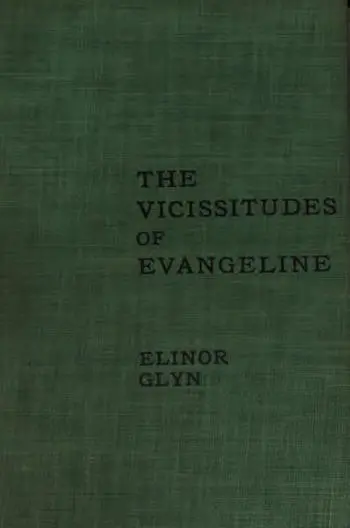
The Vicissitudes of Evangeline
Elinor Glyn
THE CLASSIC COLLECTION · 1902
"The Reflections of Ambrosine: A Novel" by Elinor Glyn is a fictional narrative written during the early 20th century. The story centers around the life of Ambrosine, a young woman with noble lineage, living a tumultuous existence with her grandmother following their relocation from Paris to England after a financial mishap involving her father. Ambrosine grapples with the confines of her social standing and her place in society, and she becomes the subject of a significant marriage arrangement that challenges her ideals and aspirations. At the start of the novel, we are introduced to Ambrosine's world through her reflections on her aristocratic heritage and the life she shares with her elderly grandmother, who is embedding strict societal norms into her upbringing. Ambrosine's life becomes even more complicated as they navigate their diminished means while seeking to maintain their genteel mannerisms. The opening chapters delve into Ambrosine’s strong sense of identity and her longing for love and companionship as she faces an impending marriage to Augustus Gurrage, a common man of questionable character. Through her interactions with her grandmother, reflections on her past, and encounters with guests like the enigmatic Marquis de Rochermont and the charming Sir Antony Thornhirst, we begin to see the burdens and responsibilities Ambrosine carries as she contemplates her future amidst societal expectations and personal desires.
Introduction adapted from the source catalogue; source summaries may be automatically generated.
Free to read · English · 67,658 words · No account needed
MAKE TIME FOR A GOOD BOOK
On by default. Untick to stop anonymous reading totals. Each page counts after 10 seconds in view. How this works.
Anonymous counting is on unless you have switched it off.
It poured rain again before the sportsmen returned, and they were more or less wet and cross. Antony went straight to his room to change, and so did the two other decent men. But the commercial friends stayed as they were, muddy boots and all, and were grouped round the fire, smelling of wet, hot tweed, when Mrs. Dodd sailed into the room.
"Wullie," she said, sternly, "you've no more sense than a child, and if it was not for me you'd have been in your coffin these five years. Go up-stairs this minute and change your boots." And off she sent him, but not without a parting shot from Miss Springle.
"Mind you put on a blue velvet smoking-suit, Mr. Dodd, dear. I do love gentlemen in smoking-suits," she said, giggling.
Tea was a terrible function. Oh, the difference to the merry tea at
Harley!
Lady Wakely, sleepily knitting and addressing an occasional observation to her neighbor; the rest of the women silent as the grave, except Miss Springle and Mrs. Dodd, who sparred together like two cats.
The men could talk of nothing but the war news which had come by the
afternoon post.
There was a gloom over the whole party. How on earth was I to escape from the oppression? They were not people of the world, who would be accustomed to each person doing what they pleased. They expected to be entertained all the time. To get away from them for a moment I would be obliged to invent some elaborate excuse.
Antony had not appeared upon the scene, or Augustus, either.
At last--at last Lady Wakely put her knitting in a bag and made a move
towards the door.
"I shall rest now," she said, in her fat, kind voice, and I accompanied her from the room, leaving the rest of my guests to take care of themselves. I felt I should throw the cups at their heads if I stayed any longer.
There, in the hall, was Antony, quietly reading the papers. His dark-blue and black silk smoking-suit was extraordinarily becoming. He looked like a person from another planet after the people I had left in the drawing-room.
He rose as we passed him.
"Some very interesting South African news," he said, addressing me,
and while I stopped to answer him Lady Wakely went up the stairs
alone.
"The draughts are dreadful here again, Comtesse," he said,
plaintively.
"Why did you not go into the library, then," I said, "or the billiard-room, or one of the drawing-rooms?"
"I thought perhaps you might pass this way and would give me your advice as to which room to choose."
Your reading position is saved on this browser. Take it to another device with a library code. Reading pages adapt to text, rather than matching a printed edition.
Elinor Glyn
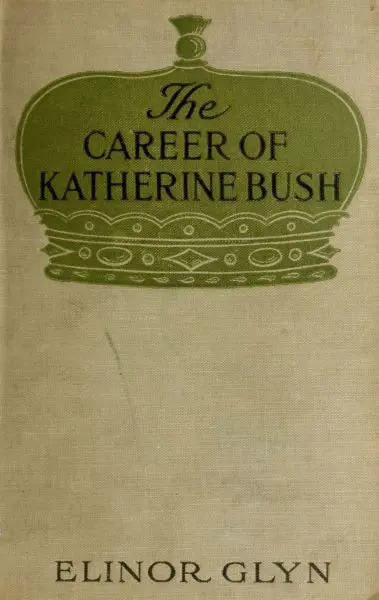
Elinor Glyn
Elinor Glyn
Elinor Glyn
BEHIND THE BOOK
This eBook is for the use of anyone anywhere in the United States and most other parts of the world at no cost and with almost no restrictions whatsoever. You may copy it, give it away or re-use it under the terms of the Project Gutenberg License included with this eBook or online at www.gutenberg.org. If you are not located in the United States, you will have to check the laws of the country where you are located before using this eBook. Read the source licence.
The original source file, including credits and licence, is retained by this library. Request an original-format copy at no charge. Please include the book title and Project Gutenberg identifier #11624.
KEEP YOUR CURIOSITY GOING
Coulson Kernahan

Maurice Baring
Frances Wright
Cécile Tormay

Frederic Jesup Stimson

W. H. P. (William Henry Pope) Jarvis