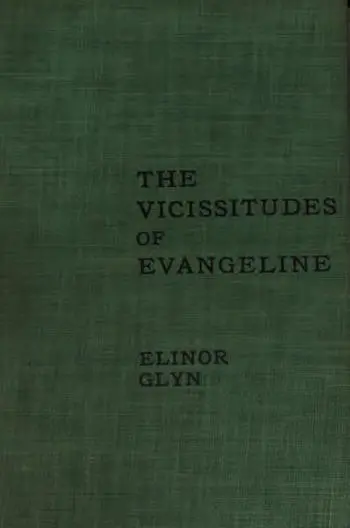
The Vicissitudes of Evangeline
Elinor Glyn
THE CLASSIC COLLECTION · 1902
"The Reflections of Ambrosine: A Novel" by Elinor Glyn is a fictional narrative written during the early 20th century. The story centers around the life of Ambrosine, a young woman with noble lineage, living a tumultuous existence with her grandmother following their relocation from Paris to England after a financial mishap involving her father. Ambrosine grapples with the confines of her social standing and her place in society, and she becomes the subject of a significant marriage arrangement that challenges her ideals and aspirations. At the start of the novel, we are introduced to Ambrosine's world through her reflections on her aristocratic heritage and the life she shares with her elderly grandmother, who is embedding strict societal norms into her upbringing. Ambrosine's life becomes even more complicated as they navigate their diminished means while seeking to maintain their genteel mannerisms. The opening chapters delve into Ambrosine’s strong sense of identity and her longing for love and companionship as she faces an impending marriage to Augustus Gurrage, a common man of questionable character. Through her interactions with her grandmother, reflections on her past, and encounters with guests like the enigmatic Marquis de Rochermont and the charming Sir Antony Thornhirst, we begin to see the burdens and responsibilities Ambrosine carries as she contemplates her future amidst societal expectations and personal desires.
Introduction adapted from the source catalogue; source summaries may be automatically generated.
Free to read · English · 67,658 words · No account needed
MAKE TIME FOR A GOOD BOOK
On by default. Untick to stop anonymous reading totals. Each page counts after 10 seconds in view. How this works.
Anonymous counting is on unless you have switched it off.
The Duke accompanied her reluctantly.
"It would be as well to know their name," he said, as he sauntered
after her trailing skirts.
"Cadwallader--Miss Martina B. Cadwallader--that is the aunt, and Miss Corrisande K. Trumpet--that is the niece," said Lady Grenellen, stalking ahead.
The windows of the long gallery where we were all sitting looked onto the court-yard, and two flys passed the angle of the turret.
"Look at the luggage!" exclaimed Babykins, and we all went to the
window.
There was, indeed, a wonderful collection--both flys laden with enormous, iron-bound trunks as big as hen-houses. A pair of smart French maids seemed buried beneath them.
The entire party of us burned with curiosity to see the owners, but long before they appeared we were conscious of their presence.
Two of the most highly pitched American voices I have ever heard were saying civil things to our host and Lady Grenellen. More highly pitched than Hephzibah's, and that is the highest, I thought, there could be in the world.
"She is awfully good-looking," whispered Babykins, who caught sight of them first as they came through the hall.
The aunt walked in front with Lady Grenellen, a tall woman with a keen, dark face of the red Indian type, with pure white hair, beautifully done, and a perfect dignity of carriage.
The heiress followed with the Duke. She is small and plump and feminine-looking, with the sweetest dimpled face and great brown eyes. Both were exquisitely dressed and carried little bags at their waists. Their manner had complete assurance, without a trace of self-consciousness.
Lady Grenellen had told us all their history. Not a possible drop of blood bluer than a navvy's could circulate in their veins, and yet their wrists were fine, their heads were small, and their general appearance was that of gentlewomen.
I seemed to see pictures and sounds of my earliest childhood as they spoke, I took to them at once.
Following the English custom, Lady Grenellen did not introduce them to any one but Babykins, who happened to step forward, and we all proceeded to lunch, which was laid at small, round tables.
The Duke wore an air of comic distress. His eyebrows were raised as though trying to understand a foreign language.
I sat with Lady Tilchester at another table, and we could not hear most of their conversation, only the sentences of the American ladies, and they sounded like some one talking down the telephone in one of the plays I saw in Paris. You only heard one side, not the answers back.
Your reading position is saved on this browser. Take it to another device with a library code. Reading pages adapt to text, rather than matching a printed edition.
Elinor Glyn
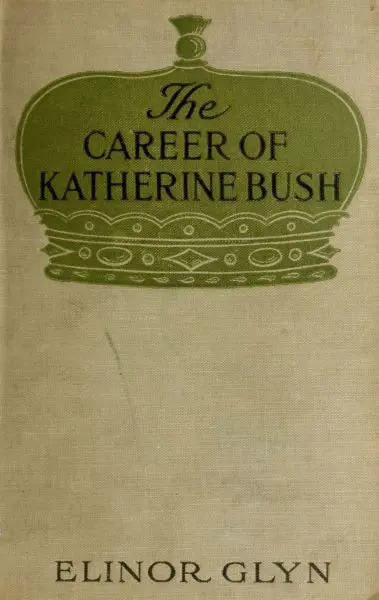
Elinor Glyn
Elinor Glyn
Elinor Glyn
BEHIND THE BOOK
This eBook is for the use of anyone anywhere in the United States and most other parts of the world at no cost and with almost no restrictions whatsoever. You may copy it, give it away or re-use it under the terms of the Project Gutenberg License included with this eBook or online at www.gutenberg.org. If you are not located in the United States, you will have to check the laws of the country where you are located before using this eBook. Read the source licence.
The original source file, including credits and licence, is retained by this library. Request an original-format copy at no charge. Please include the book title and Project Gutenberg identifier #11624.
KEEP YOUR CURIOSITY GOING
Coulson Kernahan

Maurice Baring
Frances Wright
Cécile Tormay

Frederic Jesup Stimson

W. H. P. (William Henry Pope) Jarvis