THE CLASSIC COLLECTION✦A dead man’s diaryCLASSIC FREE BOOKS
A dead man’s diary
Coulson Kernahan
THE CLASSIC COLLECTION · 1900
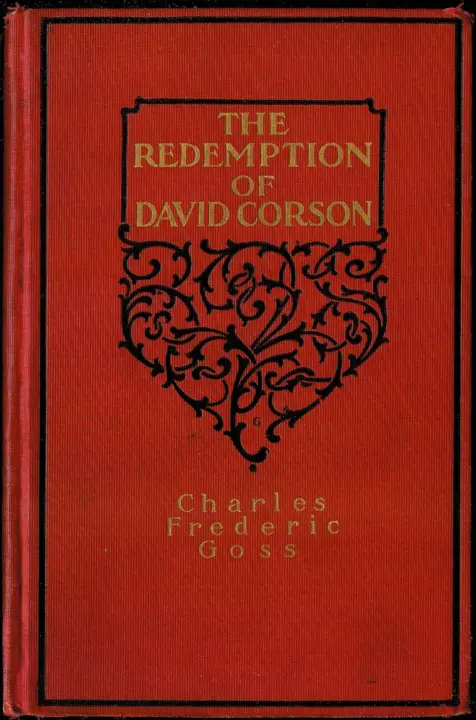
"The Redemption of David Corson" by Charles Frederic Goss is a novel written in the late 19th century. The story is set in a tranquil valley in Ohio during the mid-19th century, focusing on David Corson, a young Quaker with mystical qualities, who grapples with profound spiritual experiences and the struggles that arise from his faith and encounters with contrasting worldviews. The opening portion of the novel introduces a picturesque setting where David Corson is immersed in the beauty of the natural world. The narrative captures a quiet moment in his life as he is interrupted by a call to dinner from a nearby farmhouse, highlighting the serene yet complex life he leads. David is depicted as a mystic who experiences vivid visions of divine communication, drawing the attention of a curious young boy, Stephen. The comfort of his pastoral existence is juxtaposed with the looming reality of temptation and external influences, foreshadowing the personal and spiritual challenges that David is destined to face. As he navigates his daily life filled with simple joys and profound encounters, the reader is drawn into the foundation of his character and the depth of his upcoming trials.
Introduction adapted from the source catalogue; source summaries may be automatically generated.
Free to read · English · 101,989 words · No account needed
MAKE TIME FOR A GOOD BOOK
On by default. Untick to stop anonymous reading totals. Each page counts after 10 seconds in view. How this works.
Anonymous counting is on unless you have switched it off.
"What for?"
"Because it is mine! I am the man who proclaimed the holy faith, and, God forgive me, abandoned it even as you received it!"
The astonished lumberman handed him the Bible, and he covered it with kisses and tears. In the meantime, the crowd, excited by the spectacular elements of the drama, surged round the actors, and the preacher, reaching down, took David by the arm and raised him to the platform.
"Be quiet, my friends," he said with a gesture of command, "and when this prodigal has regained his composure we will ask him to tell us his story."
Of what was transpiring around him, David seemed to be entirely unconscious and at last the fickle crowd became impatient.
"What's de matter wid you?" said a sarcastic voice.
"Speak out! Don't snuffle," exclaimed another.
"Tip us your tale," cried a fourth.
"Go on. Go on. We're waiting," called many more.
These impatient cries at last aroused David from his waking dream, he drew his hand over his eyes, and began his story.
For a time the strange narrative produced a profound impression. Heads drooped as if in meditation upon the mystery and meaning of life; significant glances were exchanged; tears trembled in many eyes; these torpid natures received a shock which for a moment awakened them to a new life.
But it was only for a moment. They were incapable of the sustained effort of thought, of ambition, or of will. Impressions made upon their souls were like those made on the soft folds of a garment by the passing touch of a hand.
To their besotted perceptions this scene was like a play in a Bowery theater, and now that the dramatic denouement had come, they lost their interest and sauntered away singly or in little groups. In a few moments there were only three figures left in the light of the flaming torch, They were those of the lumberman, David, and Mantel, who now drew near, took his friend by the hand and pressed it with a gentle sympathy.
"Where did you come from?" asked David in surprise, as he for the first time recognized his companion.
"I have followed you all the evening," Mantel replied.
"Then you have heard the story of this book?"
"I have, and I could not have believed it without hearing."
"Can you spare us a little of your time?" said David, turning to the
lumberman.
"I owe you all the time you wish and all the service I can render," he
replied.
"You have more than paid your debt by what you have done for me
to-night, but who are you?"
Your reading position is saved on this browser. Take it to another device with a library code. Reading pages adapt to text, rather than matching a printed edition.
BEHIND THE BOOK
This eBook is for the use of anyone anywhere in the United States and most other parts of the world at no cost and with almost no restrictions whatsoever. You may copy it, give it away or re-use it under the terms of the Project Gutenberg License included with this eBook or online at www.gutenberg.org. If you are not located in the United States, you will have to check the laws of the country where you are located before using this eBook. Read the source licence.
The original source file, including credits and licence, is retained by this library. Request an original-format copy at no charge. Please include the book title and Project Gutenberg identifier #14730.
KEEP YOUR CURIOSITY GOING
Coulson Kernahan

Maurice Baring
Frances Wright
Cécile Tormay

Frederic Jesup Stimson

W. H. P. (William Henry Pope) Jarvis