THE CLASSIC COLLECTION✦A dead man’s diaryCLASSIC FREE BOOKS
A dead man’s diary
Coulson Kernahan
THE CLASSIC COLLECTION · 1900
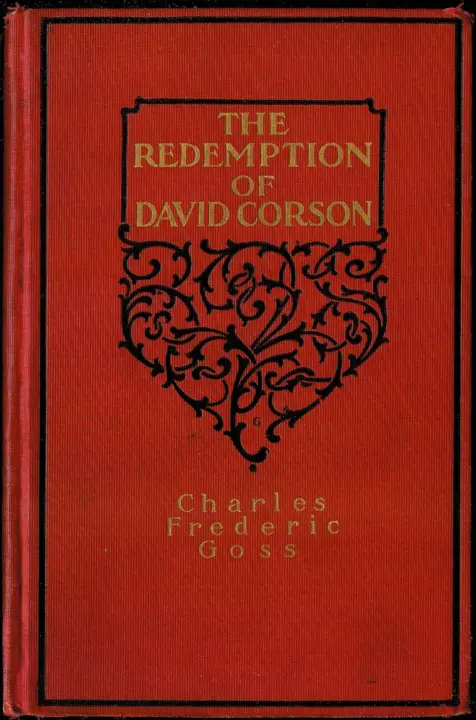
"The Redemption of David Corson" by Charles Frederic Goss is a novel written in the late 19th century. The story is set in a tranquil valley in Ohio during the mid-19th century, focusing on David Corson, a young Quaker with mystical qualities, who grapples with profound spiritual experiences and the struggles that arise from his faith and encounters with contrasting worldviews. The opening portion of the novel introduces a picturesque setting where David Corson is immersed in the beauty of the natural world. The narrative captures a quiet moment in his life as he is interrupted by a call to dinner from a nearby farmhouse, highlighting the serene yet complex life he leads. David is depicted as a mystic who experiences vivid visions of divine communication, drawing the attention of a curious young boy, Stephen. The comfort of his pastoral existence is juxtaposed with the looming reality of temptation and external influences, foreshadowing the personal and spiritual challenges that David is destined to face. As he navigates his daily life filled with simple joys and profound encounters, the reader is drawn into the foundation of his character and the depth of his upcoming trials.
Introduction adapted from the source catalogue; source summaries may be automatically generated.
Free to read · English · 101,989 words · No account needed
MAKE TIME FOR A GOOD BOOK
On by default. Untick to stop anonymous reading totals. Each page counts after 10 seconds in view. How this works.
Anonymous counting is on unless you have switched it off.
"The human heart finds shelter nowhere but in human kind."
--George Eliot.
For many days Pepeeta's life hung in the balance, her spirit hovering uncertainly along the border land of being, and it was only love that wooed it back to life.
When at length, through careful nursing, she really regained her consciousness and came up from those unfathomable abysses where she had been wandering, she opened her eyes upon the walls of a little chamber that looked out through an alcove into the living room of the Quaker house.
Dorothea had finished her afternoon's work and was seated before the great fireplace, while by her side stood Steven, speaking to her in whispers, and looking often toward the cot on which Pepeeta lay. An almost sacred stillness was in the room, for since the advent of the sufferer, even the quiet of that well-ordered household had deepened and softened.
The silence was suddenly broken by a voice feeble and tremulous, but very musical and sweet. It was Pepeeta, who gazed around her in bewilderment and asked in vague alarm, "Where am I?"
Dorothea was by her side in an instant, and taking the thin fingers in her strong hands, replied: "Thee is among friends."
Pepeeta looked long into the calm face above her, and gathered reassurance; but her memory did not at once return.
"Have I ever been in this place before? Have I ever seen your face? Has something dreadful happened? Tell me," she entreated, gazing with agitation into the calm eyes that looked down into hers.
"I cannot tell thee whether thee has ever seen us before, but we have seen thee so much for a few days that we feel like old friends," said Dorothea, pressing the hand she held, and smiling.
Pepeeta's eyes wandered about the room restlessly for a moment, and then some dim remembrance of the past came back.
"Did I come here in a great storm?" she asked.
"Thee did, indeed. The night was wild and cold."
"Did I fall on the threshold?"
"Upon the very threshold, and let us thank God for that, because if thee had fallen at the gate or in the path we should never have heard thee."
Pepeeta struggled to a sitting posture as her memory clarified, fixed her wide open eyes upon Dorothea and asked, pathetically, "Where is he?"
"I do not know who thee means," said Dorothea, laying her hand on the invalid's shoulders and trying gently to push her back upon her pillow.
"David!" she exclaimed, "David. Tell me if you know, for it seems to me I shall die if I do not hear."
Your reading position is saved on this browser. Take it to another device with a library code. Reading pages adapt to text, rather than matching a printed edition.
BEHIND THE BOOK
This eBook is for the use of anyone anywhere in the United States and most other parts of the world at no cost and with almost no restrictions whatsoever. You may copy it, give it away or re-use it under the terms of the Project Gutenberg License included with this eBook or online at www.gutenberg.org. If you are not located in the United States, you will have to check the laws of the country where you are located before using this eBook. Read the source licence.
The original source file, including credits and licence, is retained by this library. Request an original-format copy at no charge. Please include the book title and Project Gutenberg identifier #14730.
KEEP YOUR CURIOSITY GOING
Coulson Kernahan

Maurice Baring
Frances Wright
Cécile Tormay

Frederic Jesup Stimson

W. H. P. (William Henry Pope) Jarvis