THE CLASSIC COLLECTION✦A dead man’s diaryCLASSIC FREE BOOKS
A dead man’s diary
Coulson Kernahan
THE CLASSIC COLLECTION · 1900
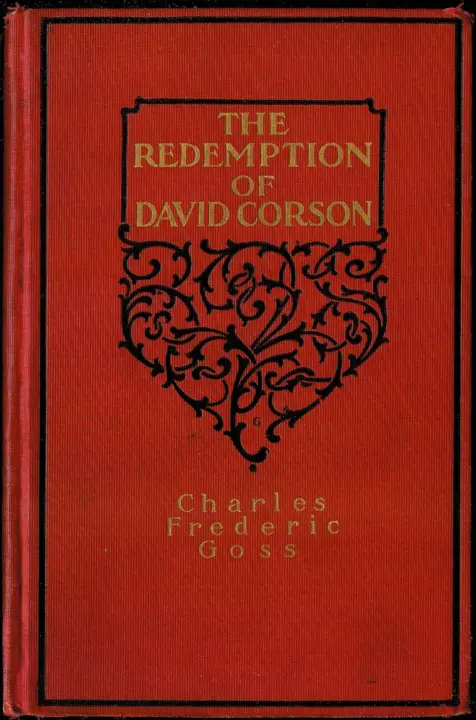
"The Redemption of David Corson" by Charles Frederic Goss is a novel written in the late 19th century. The story is set in a tranquil valley in Ohio during the mid-19th century, focusing on David Corson, a young Quaker with mystical qualities, who grapples with profound spiritual experiences and the struggles that arise from his faith and encounters with contrasting worldviews. The opening portion of the novel introduces a picturesque setting where David Corson is immersed in the beauty of the natural world. The narrative captures a quiet moment in his life as he is interrupted by a call to dinner from a nearby farmhouse, highlighting the serene yet complex life he leads. David is depicted as a mystic who experiences vivid visions of divine communication, drawing the attention of a curious young boy, Stephen. The comfort of his pastoral existence is juxtaposed with the looming reality of temptation and external influences, foreshadowing the personal and spiritual challenges that David is destined to face. As he navigates his daily life filled with simple joys and profound encounters, the reader is drawn into the foundation of his character and the depth of his upcoming trials.
Introduction adapted from the source catalogue; source summaries may be automatically generated.
Free to read · English · 101,989 words · No account needed
MAKE TIME FOR A GOOD BOOK
On by default. Untick to stop anonymous reading totals. Each page counts after 10 seconds in view. How this works.
Anonymous counting is on unless you have switched it off.
"But you can tell me something of that part of your childhood that you
do remember?"
"It is too sad! I do not want to think of anything that happened before I met you. My life began from that moment. Before, I had only dreamed."
He was intoxicated with her beauty and her love; but he carried himself carefully, for he was playing a desperate game and must keep himself under control.
"And do you think," he said, "that having awakened from this dream you can ever fall asleep again?"
"Can the bird ever go back into the shell or the butterfly into the chrysalis? No, no, it is impossible."
"But would you, if you could?"
"Perhaps I ought to want to; but I cannot."
"And do you think that we can drift on forever as we are going?"
"I do not know. I do not dare to think. I only live from day to day."
"And you still refuse to take your future into your own hands?"
"It is not mine. I must accept what has been appointed."
"And you still believe that some door will be opened through which we
may escape?"
"With all my heart."
"I wish I could share your faith."
They ceased to speak, and sat silently gazing into each other's faces, the heart of the woman rent with a conflict between desire and duty, that of the man by a tempest of evil passions. At that moment, a slow and heavy step was heard in the hallway. They looked toward the door, and in the shadows saw a man who contemplated them silently for a moment and then advanced.
David rose to meet him.
"I beg your pardon," he said, feigning embarrassment, "I had an errand with the lady, and hoped I should find her alone."
"You may speak, for the gentleman is the friend of my husband and
myself," Pepeeta said.
"I will begin, then," he responded, "by asking if you recognize me?" And at that he stepped out into the moonlight.
Pepeeta gave him a searching glance and exclaimed in surprise, "You are the judge who married me."
He let his head fall upon his breast with well-assumed humility, remained a moment in silence, looked up mournfully and said, "I would to God that I had really married you, for then I should not have been bearing this accursed load of guilt that has been crushing me for months."
At these words, Pepeeta sprang from her seat and stood before him with her hands clasped upon her breast.
"Be quick! go on!" she cried, when she had waited in vain for him to
proceed.
Your reading position is saved on this browser. Take it to another device with a library code. Reading pages adapt to text, rather than matching a printed edition.
BEHIND THE BOOK
This eBook is for the use of anyone anywhere in the United States and most other parts of the world at no cost and with almost no restrictions whatsoever. You may copy it, give it away or re-use it under the terms of the Project Gutenberg License included with this eBook or online at www.gutenberg.org. If you are not located in the United States, you will have to check the laws of the country where you are located before using this eBook. Read the source licence.
The original source file, including credits and licence, is retained by this library. Request an original-format copy at no charge. Please include the book title and Project Gutenberg identifier #14730.
KEEP YOUR CURIOSITY GOING
Coulson Kernahan

Maurice Baring
Frances Wright
Cécile Tormay

Frederic Jesup Stimson

W. H. P. (William Henry Pope) Jarvis