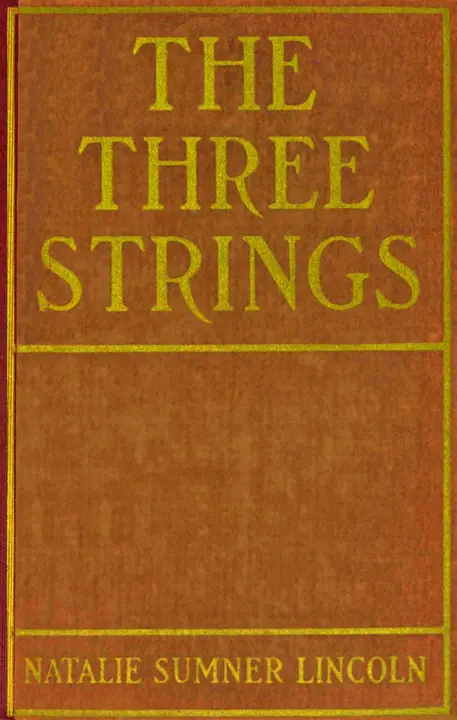
The three strings
Natalie Sumner Lincoln
THE CLASSIC COLLECTION · 1920
"The Red Seal" by Natalie Sumner Lincoln is a mystery novel likely written during the early 20th century. The narrative begins in a police court, where the complex circumstances surrounding a case of house-breaking unfold, involving the unfortunate incident of James Turnbull, a bank cashier who dies under mysterious conditions. The story intricately weaves the lives of the McIntyre twins, particularly Helen and Barbara, as they grapple with the implications of Turnbull's death and a puzzling connection to their social circle. At the start of the book, the tension builds as the courtroom drama reveals character testimonies that lead to the arrest of a man named John Smith, who is implicated in the alleged house-breaking. As the proceedings unfold, Helen McIntyre, one of the twin daughters of a wealthy colonel, intimately witnesses the trial and the unraveling events. The narrative then shifts dramatically when a sudden heart attack befalls Turnbull, who is later discovered disguised as the burglar. The opening portion culminates in Helen's emotional confrontation with the repercussions of the tragedy, hinting at deeper themes of love, deception, and societal expectations. As the characters navigate through grief and suspicion, questions arise about Turnbull's true motives and the circumstances leading to his death, setting the stage for a thrilling exploration of intrigue and human emotions.
Introduction adapted from the source catalogue; source summaries may be automatically generated.
Free to read · English · 55,232 words · No account needed
MAKE TIME FOR A GOOD BOOK
On by default. Untick to stop anonymous reading totals. Each page counts after 10 seconds in view. How this works.
Anonymous counting is on unless you have switched it off.
Coroner Penfield, as well as the jurors, followed her statement with absorbed attention. At its end he threw down his pencil and spoke briefly to the deputy coroner, who had been busily engaged in taking notes of the inquest, and then he turned to Helen.
“You heard no sound before entering the library?”
“No one walking about the house?” he persisted.
“No.” She followed the negative with a short explanation. “I lay down on my bed soon after dinner, not feeling very well, and slept through the early hours of the night.”
“At what hour did you wake up?”
“About four o'clock, or a little after.”
“Then you were awake an hour before you discovered the supposed burglar
in your library?”
“Y-yes,” Helen's hesitation was faint. “About that length of time.”
“And you heard no unusual sounds in that hour's interval?”
“I heard nothing”--her manner was slightly defiant and Kent's heart sank; if he had only thought to warn her not to antagonize the coroner.
“Where were you during that hour?”
“Lying down,” promptly. “Then, afraid I would drop off to sleep again, I went downstairs.”
Coroner Penfield consulted his notes before asking another question.
“Who lives in your house beside you and your twin sister?” he asked.
“My father, Colonel McIntyre; our house guest, Mrs. Louis C. Brewster, and five servants,” she replied. “Grimes, the butler; Martha, our maid; Jane, the chambermaid; Hope, our cook; and Thomas, our second man; the chauffeur, Harris, the scullery maid, and the laundress do not stay at night.”
“Who were at home beside yourself on Monday night and early Tuesday
morning?”
“My father and Mrs. Brewster; I believe the servants were in also,
except Thomas, who had asked permission to spend the night in
Baltimore.”
“Miss McIntyre?” Coroner Penfield put the next question in an impressive manner. “On discovering the burglar why did you not call your father?”
“My first impulse was to do so,” she answered promptly. “But on leaving the library I passed the window, saw the policeman, and called him in.” She shot a keen look at the coroner, and added softly, “The policeman was qualified to make an arrest; my father would have had to summon one had he been there.”
“Quite true,” acknowledged Penfield courteously. “Now, Miss McIntyre, why did the prisoner so obligingly walk straight into a closet on your arrival in the library?”
“I presume he was looking for a way out of the room and blundered into it,” she explained. “There are seven doors opening from our library; the prisoner may have heard me approaching, become confused, and walked through the wrong door.”
Your reading position is saved on this browser. Take it to another device with a library code. Reading pages adapt to text, rather than matching a printed edition.
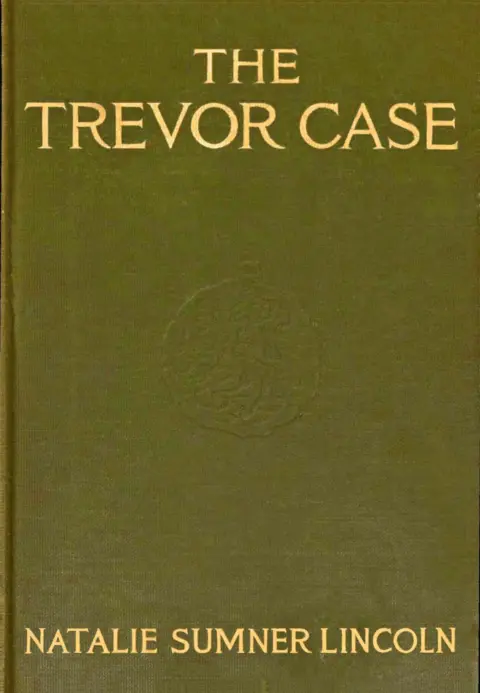
Natalie Sumner Lincoln

Natalie Sumner Lincoln
Natalie Sumner Lincoln
Natalie Sumner Lincoln
BEHIND THE BOOK
This eBook is for the use of anyone anywhere in the United States and most other parts of the world at no cost and with almost no restrictions whatsoever. You may copy it, give it away or re-use it under the terms of the Project Gutenberg License included with this eBook or online at www.gutenberg.org. If you are not located in the United States, you will have to check the laws of the country where you are located before using this eBook. Read the source licence.
The original source file, including credits and licence, is retained by this library. Request an original-format copy at no charge. Please include the book title and Project Gutenberg identifier #1747.
KEEP YOUR CURIOSITY GOING
Coulson Kernahan

Maurice Baring
Frances Wright
Cécile Tormay

Frederic Jesup Stimson

W. H. P. (William Henry Pope) Jarvis