
Constance Trescot
S. Weir (Silas Weir) Mitchell
THE CLASSIC COLLECTION · 1907
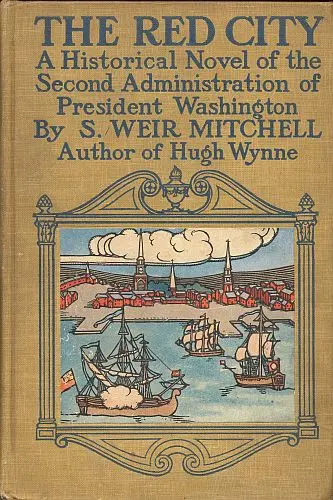
"The Red City: A Novel of the Second Administration of President Washington" by S. Weir Mitchell is a historical novel written in the early 20th century. The story is set during the early years of American democracy, focusing on the lives of émigrés from France amidst the backdrop of President Washington's administration. The main characters include René de Courval, a young French nobleman, and his mother, Madame de Courval, as they navigate their tumultuous past while seeking a new life in America. At the start of the novel, we are introduced to René and his mother aboard the brig "Morning Star", arriving in Delaware in May 1792 after fleeing the turmoil of revolutionary France. The captain of the ship and René share a light-hearted conversation about their travels. However, upon reaching land, the story takes a more serious turn as Madame de Courval reflects on their tragic past, particularly the death of her husband. This emotional revelation prompts René to recount the harrowing details that led to their escape. They arrive in Pennsylvania, filled with hopes and fears about their future in this new world, even as they are confronted with the prejudices and complexities of American society, representing both the promise and the challenges of their new beginning.
Introduction adapted from the source catalogue; source summaries may be automatically generated.
Free to read · English · 102,264 words · No account needed
MAKE TIME FOR A GOOD BOOK
On by default. Untick to stop anonymous reading totals. Each page counts after 10 seconds in view. How this works.
Anonymous counting is on unless you have switched it off.
The new-comer had paid no least attention to his hostess, but sat down at the table and fingered the jumbles, apees, and cake known as "lovers'-knots" of Nanny's make, until he discovered one to his fancy. Mrs. Swanwick gave no obvious sign of annoyance, but smilingly stirred the chocolate, while Margaret quietly removed the dish of cakes and gave the guest a slice of sweetened bread known as "Dutch loaf."
"There are fewer currants in the cake than there were last week," remarked the astronomer, for, as Schmidt said in an aside to De Courval and Hamilton, as they watched the great eat like lesser folk: "This is the famous astronomer, David Rittenhouse. He divides his thoughts between the heavens and his diet; and what else there is of him is Jacobin."
"I wish," said Hamilton, "that heaven equally engaged the rest of his party. May not I have my chocolate, Mrs. Swanwick?"
"Certainly; and might I be noticed a little?" said Mrs. Swanwick to Rittenhouse. The absent-minded philosopher looked up and said:
"I forgot. Pardon me, Citess."
Hamilton laughed merrily. "Is that the last invention?"
"It sounds like the name of some wild little animal," said the Pearl.
"Neat, that, Margaret," said Hamilton; "and might I, too, have a peach? Mr. Jefferson has emptied the basket."
Margaret rose, and with De Courval went down the garden, a fair presentment of the sexes, seen and approved by Hamilton, while Jefferson said gaily:
"The transit of Venus, Rittenhouse," for it was that observation which had given this star-gazer fame and recognition abroad.
"My compliments, sir," said Schmidt. "I regret not to have said it."
Jefferson bowed. He was at his best, for neither manners nor wit were wanting in his social hour. The astronomer, without comment, went on eating sweet bread. They drank chocolate and chatted idly of the new luxury--ice-cream, which Monsieur de Malerive made for a living, and sold on the mall we now call Independence Square. They talked, too, of the sad influx of people from San Domingo; the widow, attentive, intellectually sympathetic, a pleasant portrait of what the silver-clad Pearl would be in days to come; she, the girl, leaning against a pillar of the porch, a gray figure silently watchful, curious, behind her for background the velvets of the rival statesmen, the long broidered waistcoats, the ribbon-tied queues, and the two strongly contrasted faces. Perhaps only Schmidt recognized the grace and power of the group on the porch.
The warm August evening was near its close, and a dark storm, which hung threateningly over the Jersey shore, broke up the party. Warned by rolling thunder, the three men went away in peaceful talk.
Your reading position is saved on this browser. Take it to another device with a library code. Reading pages adapt to text, rather than matching a printed edition.
S. Weir (Silas Weir) Mitchell

S. Weir (Silas Weir) Mitchell
S. Weir (Silas Weir) Mitchell
S. Weir (Silas Weir) Mitchell
BEHIND THE BOOK
This eBook is for the use of anyone anywhere in the United States and most other parts of the world at no cost and with almost no restrictions whatsoever. You may copy it, give it away or re-use it under the terms of the Project Gutenberg License included with this eBook or online at www.gutenberg.org. If you are not located in the United States, you will have to check the laws of the country where you are located before using this eBook. Read the source licence.
The original source file, including credits and licence, is retained by this library. Request an original-format copy at no charge. Please include the book title and Project Gutenberg identifier #32942.
KEEP YOUR CURIOSITY GOING
Cécile Tormay

Moritz Busch
Coulson Kernahan
John L. Ransom

Maurice Baring
Frances Wright