
Constance Trescot
S. Weir (Silas Weir) Mitchell
THE CLASSIC COLLECTION · 1907
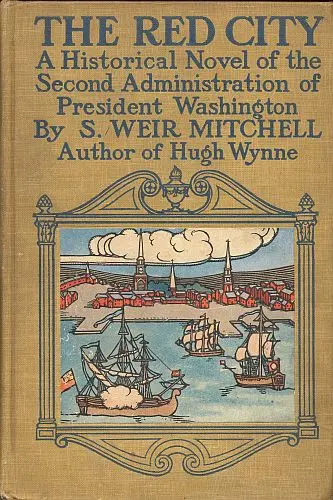
"The Red City: A Novel of the Second Administration of President Washington" by S. Weir Mitchell is a historical novel written in the early 20th century. The story is set during the early years of American democracy, focusing on the lives of émigrés from France amidst the backdrop of President Washington's administration. The main characters include René de Courval, a young French nobleman, and his mother, Madame de Courval, as they navigate their tumultuous past while seeking a new life in America. At the start of the novel, we are introduced to René and his mother aboard the brig "Morning Star", arriving in Delaware in May 1792 after fleeing the turmoil of revolutionary France. The captain of the ship and René share a light-hearted conversation about their travels. However, upon reaching land, the story takes a more serious turn as Madame de Courval reflects on their tragic past, particularly the death of her husband. This emotional revelation prompts René to recount the harrowing details that led to their escape. They arrive in Pennsylvania, filled with hopes and fears about their future in this new world, even as they are confronted with the prejudices and complexities of American society, representing both the promise and the challenges of their new beginning.
Introduction adapted from the source catalogue; source summaries may be automatically generated.
Free to read · English · 102,264 words · No account needed
MAKE TIME FOR A GOOD BOOK
On by default. Untick to stop anonymous reading totals. Each page counts after 10 seconds in view. How this works.
Anonymous counting is on unless you have switched it off.
"Indeed! I am sorry for him," said Rene.
Then Mr. Bingham, being next to Girard, said to him: "At the State Department yesterday, Mr. Secretary Randolph asked me, knowing I was to see you to-day, if you knew of any French gentleman who could act as translating clerk. Of course he must know English."
"Why not my neighbor De Courval?" said the merchant. "But he is hardly of Mr. Randolph's politics."
"And what are they?" laughed Mr. Bingham. "Federal, I suppose; but as for De Courval, he is of no party. Besides, ever since Freneau left on account of the fever, the Secretaries are shy of any more clerks who will keep them in hot water with the President. For a poet he was a master of rancorous abuse."
"And who," said Girard, "have excelled the poets in malignancy? Having your permission, I will ask our young friend." And turning to Rene, he related what had passed between him and Mr. Bingham.
Somewhat surprised, Rene said: "I might like it, but I must consult Mr. Schmidt. I am far from having political opinions, or, if any, they are with the Federals. But that would be for the Secretary to decide upon. An exile, Mr. Girard, should have no political opinions unless he means to become a citizen, as I do not."
"That seems reasonable," said Bingham, the senator for Pennsylvania, overhearing him. "Your health, De Courval, I commend to you the white grape juice. And if the place please you, let it be a receipt in full for my early contribution of mud." And laughing, he told Girard the story.
"Indeed, sir, it was a very personal introduction," returned Rene.
"I should like well to have that young man myself," said Girard in an aside to Bingham. "This is a poor bit of advancement you offer--all honor and little cash. I like the honor that attends to a draft."
The senator laughed. "Oh, Schmidt has, I believe, adopted De Courval or something like it. He will take the post for its interest. Do you know," he added, "who this man Schmidt may be?"
"I--no; but all Europe is sending us mysterious people. By and by the kings and queens will come. But Schmidt is a man to trust, that I do know."
"A good character," cried Schmidt, coming behind them. "My thanks."
"By George! It was lucky we did not abuse you," said Bingham.
"Oh, Madeira is a gentle critic, and a good dinner does fatten amiability. Come, Rene, we shall get on even terms of praise with them as we walk home."
The party broke up, joyous at having dined well.
Your reading position is saved on this browser. Take it to another device with a library code. Reading pages adapt to text, rather than matching a printed edition.
S. Weir (Silas Weir) Mitchell

S. Weir (Silas Weir) Mitchell
S. Weir (Silas Weir) Mitchell
S. Weir (Silas Weir) Mitchell
BEHIND THE BOOK
This eBook is for the use of anyone anywhere in the United States and most other parts of the world at no cost and with almost no restrictions whatsoever. You may copy it, give it away or re-use it under the terms of the Project Gutenberg License included with this eBook or online at www.gutenberg.org. If you are not located in the United States, you will have to check the laws of the country where you are located before using this eBook. Read the source licence.
The original source file, including credits and licence, is retained by this library. Request an original-format copy at no charge. Please include the book title and Project Gutenberg identifier #32942.
KEEP YOUR CURIOSITY GOING
Cécile Tormay

Moritz Busch
Coulson Kernahan
John L. Ransom

Maurice Baring
Frances Wright