
A Son of Ishmael: A Novel
L. T. Meade
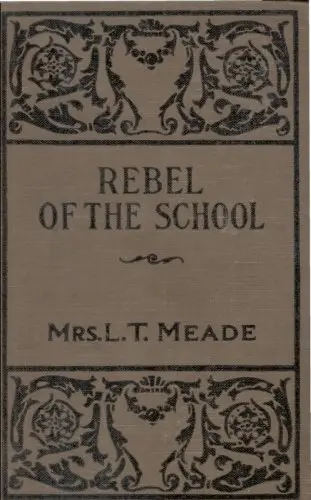
THE CLASSIC COLLECTION · 1902
"The Rebel of the School" by Mrs. L. T. Meade is a novel written in the late 19th century, focusing on the lives of schoolgirls in a Victorian educational setting. The story revolves around the experiences of Ruth Craven, a foundation girl, and the spirited Irish girl, Kathleen O'Hara, as they navigate the social dynamics and challenges of their school, the Great Shirley School. Themes of class distinction, friendship, and rebellion against societal expectations are central to the narrative. At the start of the novel, the reader is introduced to the Great Shirley School, which has a distinct class structure separating foundation girls from paying students. Ruth Craven, a foundation girl, is depicted as kind-hearted yet struggling with the prejudices of her peers, while Kathleen O'Hara, the new arrival from Ireland, bursts onto the scene with her vibrant personality and a desire to forge connections. Ruth’s admiration for Kathleen is immediate, and Kathleen's impulsive nature leads her to challenge the school's social norms as she insists on befriending Ruth despite the rigid class divisions. This opening sets the stage for the conflicts and camaraderie that will unfold as the characters confront the nuances of friendship and acceptance within their school community.
Introduction adapted from the source catalogue; source summaries may be automatically generated.
Free to read · English · 99,358 words · No account needed
MAKE TIME FOR A GOOD BOOK
On by default. Untick to stop anonymous reading totals. Each page counts after 10 seconds in view. How this works.
Anonymous counting is on unless you have switched it off.
"No, no; stay. Stay and visit with me, and tell me about the old country and the sea and the mountains," said Mrs. Weldon.
But Kathleen shook her head fiercely, and the next moment left the room.
"Poor, strange little girl," thought the good woman. "I see she is about to heap unhappiness on herself and others. What is to be done for her?"
"I like her," said Ruth. "She is very impulsive, but she is------"
"Oh, yes," said Cassandra, "she has a good heart, of course; but I foresee that she is up to all sorts of mischief. She doesn't understand our ways. Why did she leave her own country?"
Ruth was silent. She looked wistful.
"Come along, Ruthie; we will be late. I have no end of schemes in my head. I mean to help you. You will win that scholarship."
Ruth smiled. Presently she and Cassandra were crossing the common
arm-in-arm. In the interest of their own conversation they forgot
Kathleen.
When that young lady left the house she ran back to the Tennants'.
"I will write to dad to-night and tell him that I can't stay," she thought. "Oh, dear, my heart is in my mouth! I shall have a broken heart if this sort of thing goes on."
She entered the house. There sat Mrs. Tennant with a great basket of stockings before her. The remains of a rough-looking tea were on the table. The boys had disappeared.
"Come in, Kathleen," called Mrs. Tennant, "and have your tea. I want Maria to clear the tea-things away, as I have some cutting out to do; so be quick, dear."
Kathleen entered. The untidy table did not trouble her in the least; she was accustomed to things of that sort at home. She sat down, helped herself to a thick slice of bread-and-butter, and ate it, while burning thoughts filled her mind.
"Have some tea. You haven't touched any," said Mrs. Tennant.
"I'd rather have cold water, please," Kathleen replied.
She went to the sideboard, filled a glass, and drank it off.
"Mrs. Tennant," she said when she had finished, "what possessed you to live in England? You had all the world to choose from. Why did you come to a horrible place like this?"
"But I like it," said Mrs. Tennant.
"You don't look as if you did. I never saw such a worn-out poor body.
Are you awfully old?"
"You would think me so," replied Mrs. Tennant, with a smile; "but as a matter of fact I am not forty yet."
"Not forty!" said Kathleen. "But forty's an awful age, isn't it? I mean, you want crutches when you are forty, don't you?"
Your reading position is saved on this browser. Take it to another device with a library code. Reading pages adapt to text, rather than matching a printed edition.
BEHIND THE BOOK
This eBook is for the use of anyone anywhere in the United States and most other parts of the world at no cost and with almost no restrictions whatsoever. You may copy it, give it away or re-use it under the terms of the Project Gutenberg License included with this eBook or online at www.gutenberg.org. If you are not located in the United States, you will have to check the laws of the country where you are located before using this eBook. Read the source licence.
The original source file, including credits and licence, is retained by this library. Request an original-format copy at no charge. Please include the book title and Project Gutenberg identifier #15839.
KEEP YOUR CURIOSITY GOING
Coulson Kernahan

Maurice Baring
Frances Wright
Cécile Tormay

Frederic Jesup Stimson

W. H. P. (William Henry Pope) Jarvis


