
A Son of Ishmael: A Novel
L. T. Meade
THE CLASSIC COLLECTION · 1902
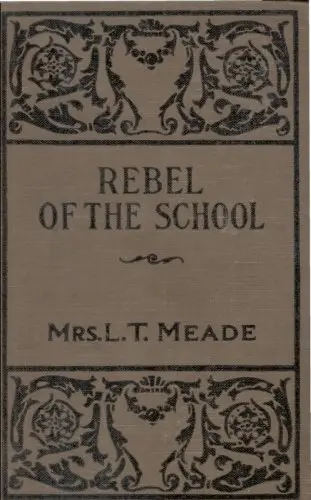
"The Rebel of the School" by Mrs. L. T. Meade is a novel written in the late 19th century, focusing on the lives of schoolgirls in a Victorian educational setting. The story revolves around the experiences of Ruth Craven, a foundation girl, and the spirited Irish girl, Kathleen O'Hara, as they navigate the social dynamics and challenges of their school, the Great Shirley School. Themes of class distinction, friendship, and rebellion against societal expectations are central to the narrative. At the start of the novel, the reader is introduced to the Great Shirley School, which has a distinct class structure separating foundation girls from paying students. Ruth Craven, a foundation girl, is depicted as kind-hearted yet struggling with the prejudices of her peers, while Kathleen O'Hara, the new arrival from Ireland, bursts onto the scene with her vibrant personality and a desire to forge connections. Ruth’s admiration for Kathleen is immediate, and Kathleen's impulsive nature leads her to challenge the school's social norms as she insists on befriending Ruth despite the rigid class divisions. This opening sets the stage for the conflicts and camaraderie that will unfold as the characters confront the nuances of friendship and acceptance within their school community.
Introduction adapted from the source catalogue; source summaries may be automatically generated.
Free to read · English · 99,358 words · No account needed
MAKE TIME FOR A GOOD BOOK
On by default. Untick to stop anonymous reading totals. Each page counts after 10 seconds in view. How this works.
Anonymous counting is on unless you have switched it off.
Ruth got up rather earlier than usual on that Saturday morning. She had a dull, stunned kind of feeling round her heart. She was glad of that; she was glad that she was not acutely sorry, or acutely glad, or acutely anxious about anything.
"If I could always be like this, nothing would matter," she said to
herself.
She dressed with her usual scrupulous neatness, and after hesitating for a moment, put on her best Sunday serge dress. It was a dark-blue serge, very neatly made. She combed back her luxurious hair and tied it with a ribbon to match the dress. She then ran downstairs.
"Why, Ruth?" said her grandmother, who was pouring some porridge into bowls, "what are you wearing that frock for?"
"I thought I would like to, granny."
"Well, to be sure. I trust to goodness you are not getting extravagant. It will be doomsday before we can get you another like it. You must remember that I saved up for it sixpence by sixpence, and it took me all my time and my best endeavors to get it."
"I know it, granny; and when I wear it I feel that you were very kind to give it me. A girl who wears a dress like this ought to be very, very good, oughtn't she, granny?"
"Well, to be sure, little woman; and so you are. There never was a better child. Sit down now and sup your porridge. It is extra good this morning, and there's a drop of cream in that jug which will give it a flavor."
Ruth sat down to the table and drew her bowl of porridge towards her. The warm, nourishing food seemed to choke her; but, all the same, she ate it with resolution."
"That's right, dear," said her grandmother. "'It's putting a bit of color into your cheeks. You are too white altogether, Ruth. I hope, my dear, you are not working too hard."
"Oh, that's all right," said Ruth, keeping back a groan.
"It's a fine thing your getting into that school," continued Mrs. Craven; "it gives you a chance. Do you know, now, when I look at you and see the pretty little girl you are turning into, and observe your lady-like ways, which every one remarks on, I think of the time when your father was your age."
"Yes, granny," said Ruth, brightening up and looking earnestly at the old lady; "you never care to talk about father, but I should greatly like to hear about him this morning."
Your reading position is saved on this browser. Take it to another device with a library code. Reading pages adapt to text, rather than matching a printed edition.
BEHIND THE BOOK
This eBook is for the use of anyone anywhere in the United States and most other parts of the world at no cost and with almost no restrictions whatsoever. You may copy it, give it away or re-use it under the terms of the Project Gutenberg License included with this eBook or online at www.gutenberg.org. If you are not located in the United States, you will have to check the laws of the country where you are located before using this eBook. Read the source licence.
The original source file, including credits and licence, is retained by this library. Request an original-format copy at no charge. Please include the book title and Project Gutenberg identifier #15839.
KEEP YOUR CURIOSITY GOING
Coulson Kernahan

Maurice Baring
Frances Wright
Cécile Tormay

Frederic Jesup Stimson

W. H. P. (William Henry Pope) Jarvis


