Reflections on the death of a porcupine and other essays
D. H. (David Herbert) Lawrence
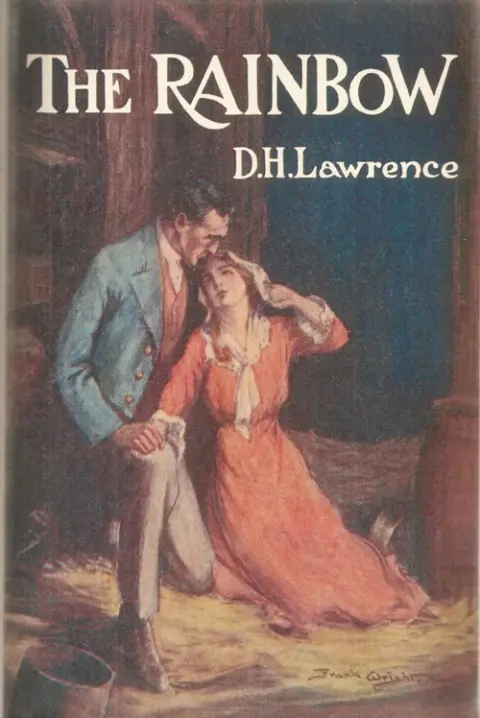
THE CLASSIC COLLECTION · 1915
"The Rainbow" by D. H. Lawrence is a novel published in 1915. It follows three generations of the Brangwen family in Nottinghamshire as they navigate love, desire, and personal fulfillment against the backdrop of England's industrial transformation. From farmer Tom Brangwen in the 1840s to his granddaughter Ursula in 1905, each generation struggles between passionate inner life and society's confining structures. Lawrence's frank treatment of sexuality sparked an obscenity trial, resulting in copies being seized and burned, banning the book in Britain for eleven years.
Introduction adapted from the source catalogue; source summaries may be automatically generated.
Free to read · English · 187,983 words · No account needed
MAKE TIME FOR A GOOD BOOK
On by default. Untick to stop anonymous reading totals. Each page counts after 10 seconds in view. How this works.
Anonymous counting is on unless you have switched it off.
“Eh, dear o’ me!” cried Tilly, becoming distracted herself. Brangwen, slow, clumsy, blind, intent, got off all the little garments, and stood the child naked in its shift upon the sofa.
“Where’s her nightie?” he asked.
Tilly brought it, and he put it on her. Anna did not move her limbs to his desire. He had to push them into place. She stood, with fixed, blind will, resistant, a small, convulsed, unchangeable thing weeping ever and repeating the same phrase. He lifted one foot after the other, pulled off slippers and socks. She was ready.
“Do you want a drink?” he asked.
She did not change. Unheeding, uncaring, she stood on the sofa, standing back, alone, her hands shut and half lifted, her face, all tears, raised and blind. And through the sobbing and choking came the broken:
“I—want—my—mother.”
“Do you want a drink?” he said again.
There was no answer. He lifted the stiff, denying body between his hands. Its stiff blindness made a flash of rage go through him. He would like to break it.
He set the child on his knee, and sat again in his chair beside the fire, the wet, sobbing, inarticulate noise going on near his ear, the child sitting stiff, not yielding to him or anything, not aware.
A new degree of anger came over him. What did it all matter? What did it matter if the mother talked Polish and cried in labour, if this child were stiff with resistance, and crying? Why take it to heart? Let the mother cry in labour, let the child cry in resistance, since they would do so. Why should he fight against it, why resist? Let it be, if it were so. Let them be as they were, if they insisted.
And in a daze he sat, offering no fight. The child cried on, the minutes ticked away, a sort of torpor was on him.
It was some little time before he came to, and turned to attend to the child. He was shocked by her little wet, blinded face. A bit dazed, he pushed back the wet hair. Like a living statue of grief, her blind face cried on.
“Nay,” he said, “not as bad as that. It’s not as bad as that, Anna, my child. Come, what are you crying for so much? Come, stop now, it’ll make you sick. I wipe you dry, don’t wet your face any more. Don’t cry any more wet tears, don’t, it’s better not to. Don’t cry—it’s not so bad as all that. Hush now, hush—let it be enough.”
Your reading position is saved on this browser. Take it to another device with a library code. Reading pages adapt to text, rather than matching a printed edition.
D. H. (David Herbert) Lawrence
D. H. (David Herbert) Lawrence
D. H. (David Herbert) Lawrence
D. H. (David Herbert) Lawrence
BEHIND THE BOOK
This eBook is for the use of anyone anywhere in the United States and most other parts of the world at no cost and with almost no restrictions whatsoever. You may copy it, give it away or re-use it under the terms of the Project Gutenberg License included with this eBook or online at www.gutenberg.org. If you are not located in the United States, you will have to check the laws of the country where you are located before using this eBook. Read the source licence.
The original source file, including credits and licence, is retained by this library. Request an original-format copy at no charge. Please include the book title and Project Gutenberg identifier #28948.
KEEP YOUR CURIOSITY GOING
Coulson Kernahan

Maurice Baring
Frances Wright
Cécile Tormay

Frederic Jesup Stimson

W. H. P. (William Henry Pope) Jarvis