Reflections on the death of a porcupine and other essays
D. H. (David Herbert) Lawrence
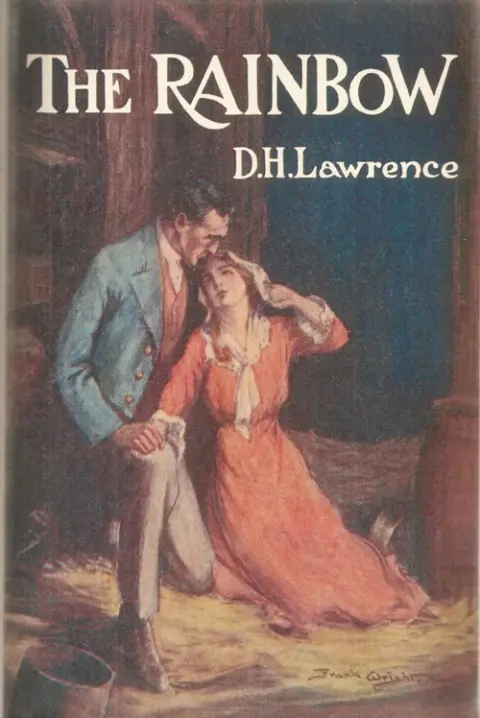
THE CLASSIC COLLECTION · 1915
"The Rainbow" by D. H. Lawrence is a novel published in 1915. It follows three generations of the Brangwen family in Nottinghamshire as they navigate love, desire, and personal fulfillment against the backdrop of England's industrial transformation. From farmer Tom Brangwen in the 1840s to his granddaughter Ursula in 1905, each generation struggles between passionate inner life and society's confining structures. Lawrence's frank treatment of sexuality sparked an obscenity trial, resulting in copies being seized and burned, banning the book in Britain for eleven years.
Introduction adapted from the source catalogue; source summaries may be automatically generated.
Free to read · English · 187,983 words · No account needed
MAKE TIME FOR A GOOD BOOK
On by default. Untick to stop anonymous reading totals. Each page counts after 10 seconds in view. How this works.
Anonymous counting is on unless you have switched it off.
“She’s poorly, my lamb, she’s poorly to-night, but she’ll be better by mornin’. Oh, don’t cry, don’t cry, love, she doesn’t want you to cry, precious little heart, no, she doesn’t.”
Tilly took gently hold of the child’s skirts. Anna snatched back her dress, and cried, in a little hysteria:
“No, you’re not to undress me—I want my mother,”—and her child’s face was running with grief and tears, her body shaken.
“Oh, but let Tilly undress you. Let Tilly undress you, who loves you, don’t be wilful to-night. Mother’s poorly, she doesn’t want you to cry.”
The child sobbed distractedly, she could not hear.
“I want—my—mother,” she wept.
“When you’re undressed, you s’ll go up to see your mother—when you’re undressed, pet, when you’ve let Tilly undress you, when you’re a little jewel in your nightie, love. Oh, don’t you cry, don’t you—”
Brangwen sat stiff in his chair. He felt his brain going tighter. He crossed over the room, aware only of the maddening sobbing.
“Don’t make a noise,” he said.
And a new fear shook the child from the sound of his voice. She cried mechanically, her eyes looking watchful through her tears, in terror, alert to what might happen.
“I want—my—mother,” quavered the sobbing, blind voice.
A shiver of irritation went over the man’s limbs. It was the utter,
persistent unreason, the maddening blindness of the voice and the
crying.
“You must come and be undressed,” he said, in a quiet voice that was
thin with anger.
And he reached his hand and grasped her. He felt her body catch in a convulsive sob. But he too was blind, and intent, irritated into mechanical action. He began to unfasten her little apron. She would have shrunk from him, but could not. So her small body remained in his grasp, while he fumbled at the little buttons and tapes, unthinking, intent, unaware of anything but the irritation of her. Her body was held taut and resistant, he pushed off the little dress and the petticoats, revealing the white arms. She kept stiff, overpowered, violated, he went on with his task. And all the while she sobbed, choking:
“I want my mother.”
He was unheedingly silent, his face stiff. The child was now incapable of understanding, she had become a little, mechanical thing of fixed will. She wept, her body convulsed, her voice repeating the same cry.
Your reading position is saved on this browser. Take it to another device with a library code. Reading pages adapt to text, rather than matching a printed edition.
D. H. (David Herbert) Lawrence
D. H. (David Herbert) Lawrence
D. H. (David Herbert) Lawrence
D. H. (David Herbert) Lawrence
BEHIND THE BOOK
This eBook is for the use of anyone anywhere in the United States and most other parts of the world at no cost and with almost no restrictions whatsoever. You may copy it, give it away or re-use it under the terms of the Project Gutenberg License included with this eBook or online at www.gutenberg.org. If you are not located in the United States, you will have to check the laws of the country where you are located before using this eBook. Read the source licence.
The original source file, including credits and licence, is retained by this library. Request an original-format copy at no charge. Please include the book title and Project Gutenberg identifier #28948.
KEEP YOUR CURIOSITY GOING
Coulson Kernahan

Maurice Baring
Frances Wright
Cécile Tormay

Frederic Jesup Stimson

W. H. P. (William Henry Pope) Jarvis