
Reflections on the death of a porcupine and other essays
D. H. (David Herbert) Lawrence
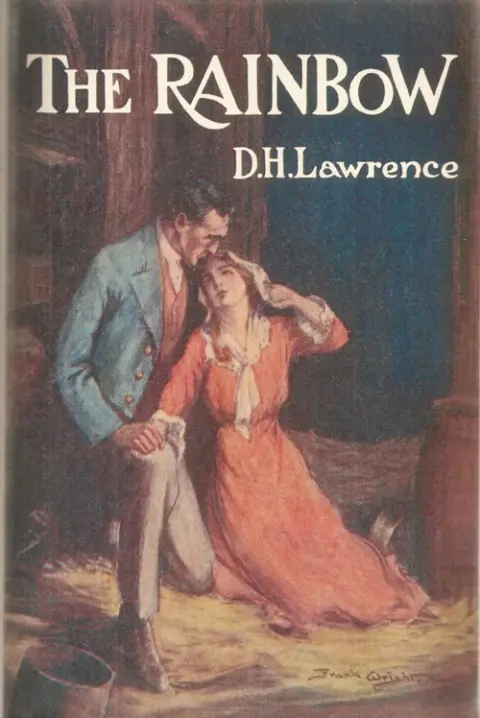
THE CLASSIC COLLECTION · 1915
"The Rainbow" by D. H. Lawrence is a novel published in 1915. It follows three generations of the Brangwen family in Nottinghamshire as they navigate love, desire, and personal fulfillment against the backdrop of England's industrial transformation. From farmer Tom Brangwen in the 1840s to his granddaughter Ursula in 1905, each generation struggles between passionate inner life and society's confining structures. Lawrence's frank treatment of sexuality sparked an obscenity trial, resulting in copies being seized and burned, banning the book in Britain for eleven years.
Introduction adapted from the source catalogue; source summaries may be automatically generated.
Free to read · English · 187,983 words · No account needed
MAKE TIME FOR A GOOD BOOK
On by default. Untick to stop anonymous reading totals. Each page counts after 10 seconds in view. How this works.
Anonymous counting is on unless you have switched it off.
Gradually breakfast was produced, and the elder girls came down into the babel, whilst half-naked children flitted round like the wrong ends of cherubs, as Gudrun said, watching the bare little legs and the chubby tails appearing and disappearing.
Gradually the young ones were captured, and nightdresses finally removed, ready for the clean Sunday shirt. But before the Sunday shirt was slipped over the fleecy head, away darted the naked body, to wallow in the sheepskin which formed the parlour rug, whilst the mother walked after, protesting sharply, holding the shirt like a noose, and the father’s bronze voice rang out, and the naked child wallowing on its back in the deep sheepskin announced gleefully:
“I’m bading in the sea, mother.”
“Why should I walk after you with your shirt?” said the mother. “Get up
now.”
“I’m bading in the sea, mother,” repeated the wallowing, naked figure.
“We say bathing, not bading,” said the mother, with her strange, indifferent dignity. “I am waiting here with your shirt.”
At length shirts were on, and stockings were paired, and little trousers buttoned and little petticoats tied behind. The besetting cowardice of the family was its shirking of the garter question.
“Where are your garters, Cassie?”
“I don’t know.”
“Well, look for them.”
But not one of the elder Brangwens would really face the situation. After Cassie had grovelled under all the furniture and blacked up all her Sunday cleanliness, to the infinite grief of everybody, the garter was forgotten in the new washing of the young face and hands.
Later, Ursula would be indignant to see Miss Cassie marching into church from Sunday school with her stocking sluthered down to her ankle, and a grubby knee showing.
“It’s disgraceful!” cried Ursula at dinner. “People will think we’re pigs, and the children are never washed.”
“Never mind what people think,” said the mother superbly. “I see that the child is bathed properly, and if I satisfy myself I satisfy everybody. She can’t keep her stocking up and no garter, and it isn’t the child’s fault she was let to go without one.”
The garter trouble continued in varying degrees, but till each child wore long skirts or long trousers, it was not removed.
On this day of decorum, the Brangwen family went to church by the high-road, making a detour outside all the garden-hedge, rather than climb the wall into the churchyard. There was no law of this, from the parents. The children themselves were the wardens of the Sabbath decency, very jealous and instant with each other.
Your reading position is saved on this browser. Take it to another device with a library code. Reading pages adapt to text, rather than matching a printed edition.
D. H. (David Herbert) Lawrence
D. H. (David Herbert) Lawrence
D. H. (David Herbert) Lawrence
D. H. (David Herbert) Lawrence
BEHIND THE BOOK
This eBook is for the use of anyone anywhere in the United States and most other parts of the world at no cost and with almost no restrictions whatsoever. You may copy it, give it away or re-use it under the terms of the Project Gutenberg License included with this eBook or online at www.gutenberg.org. If you are not located in the United States, you will have to check the laws of the country where you are located before using this eBook. Read the source licence.
The original source file, including credits and licence, is retained by this library. Request an original-format copy at no charge. Please include the book title and Project Gutenberg identifier #28948.
KEEP YOUR CURIOSITY GOING
Coulson Kernahan

Maurice Baring
Frances Wright
Cécile Tormay

Frederic Jesup Stimson

W. H. P. (William Henry Pope) Jarvis