THE CLASSIC COLLECTION✦The Countess FannyCLASSIC FREE BOOKS
The Countess Fanny
Marjorie Bowen
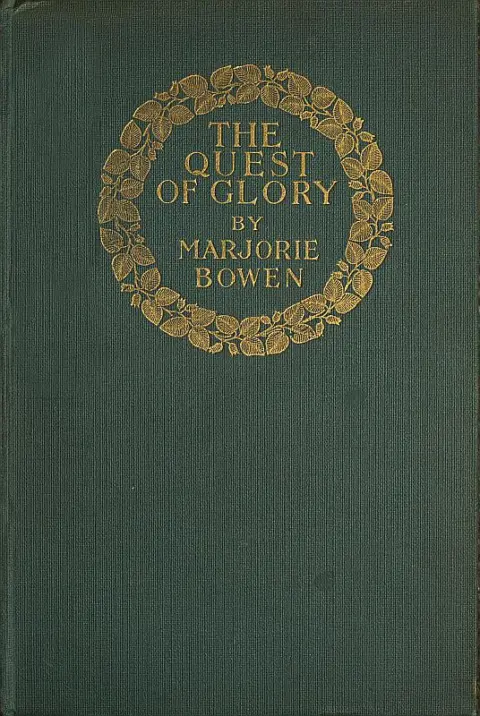
THE CLASSIC COLLECTION · 1912
"The Quest of Glory" by Marjorie Bowen is a historical novel written in the early 20th century. Set against the backdrop of the tumultuous events of the War of the Austrian Succession in the 18th century, the story explores themes of ambition, honor, and the quest for glory through its characters. The narrative follows several French officers, particularly the passionate young lieutenant Georges d’Espagnac, as they navigate the complexities of war, aspirations, and personal relationships while stationed in Prague. The opening of "The Quest of Glory" introduces us to the bleak atmosphere of Prague during a harsh winter siege in December 1742. We meet a group of French officers, each representative of different views on honor and the meaning of glory amidst their mundane and perilous military circumstances. As they share their thoughts, the youthful idealism of Georges d'Espagnac shines through. He is fervently dedicated to the pursuit of glory for France, even as the realities of war weigh heavily on him. The story's initial chapters set the stage for the unfolding drama, emphasizing the struggles and allegiances of the characters in a setting marked by both longing for valor and the bitter hardships of war.
Introduction adapted from the source catalogue; source summaries may be automatically generated.
Free to read · English · 87,825 words · No account needed
MAKE TIME FOR A GOOD BOOK
On by default. Untick to stop anonymous reading totals. Each page counts after 10 seconds in view. How this works.
Anonymous counting is on unless you have switched it off.
The tender figures and light dresses of the women were surrounded with soft shadows from the rosy firelight; Clémence held up a pink silk hand-screen which cast a full glow of radiant light over her small sweet features and pale curls.
The pretty whisper of talk was hushed as Luc entered and there was a second’s pause, caused, though he did not guess it, by the instant impression of extreme delicacy he made as he stood before the open door, the candlelight full on him, and behind him the background of the dark shadows of the hall.
He was unusually pale, and his eyes were too lustrous, too wide and bright, too deeply shadowed for health. His dark, simple, and rather careless dress, the plain waves of his smooth hair, accentuated the impression he made of something uncommon, exceptional; but this sense of difference was mainly caused by his expression, by a certain smile and flash in his eyes, by an extraordinary sweetness in the lines of the mouth and chin, by a proud look of motion in his carriage which was like swiftness arrested.
His sudden silent appearance made all who gazed at him realize in a flash his exceeding, uncommon beauty; it was as if they regarded a stranger, they even felt afraid of him.
He, all unconscious, came to the table where his mother’s tambour frame lay, and affectionately turned over the lengths of silks.
“How quickly you work!” he smiled.
Joseph, to conceal an unaccountable sense of confusion, commenced playing a little old-fashioned “coranto,” which was the only piece he knew perfectly by heart.
Clémence expressed her sense of the inexpressible in another way.
“How silent we all are!” she exclaimed, and rose.
Luc looked up instantly.
“I fear I disturbed you,” he said; she had come a few steps from the hearth, and their eyes met.
“You look strange to-night,” murmured Clémence, as if they had been
alone.
“I have come to a resolution, that is all,” he answered quietly. “Nothing so very momentous.” He smiled, and looked from the girl to his father.
“Monseigneur, I have decided to go to Paris.”
The old Marquis put down his book.
“I thought you wished to remain in Aix,” he said, in a low voice.
“I cannot,” replied Luc. “Father, I must go.”
There was a note of almost entreaty in his voice, for his mother had risen and Joseph ceased playing, and he foresaw protest and complaint; Clémence had hung her head; all the old chains tightening about him.
“I must go,” he repeated.
Your reading position is saved on this browser. Take it to another device with a library code. Reading pages adapt to text, rather than matching a printed edition.
Marjorie Bowen
Marjorie Bowen
Marjorie Bowen
Marjorie Bowen
BEHIND THE BOOK
This eBook is for the use of anyone anywhere in the United States and most other parts of the world at no cost and with almost no restrictions whatsoever. You may copy it, give it away or re-use it under the terms of the Project Gutenberg License included with this eBook or online at www.gutenberg.org. If you are not located in the United States, you will have to check the laws of the country where you are located before using this eBook. Read the source licence.
The original source file, including credits and licence, is retained by this library. Request an original-format copy at no charge. Please include the book title and Project Gutenberg identifier #48767.
KEEP YOUR CURIOSITY GOING
Cécile Tormay

Moritz Busch
Coulson Kernahan
John L. Ransom

Maurice Baring
Frances Wright