THE CLASSIC COLLECTION✦The Countess FannyCLASSIC FREE BOOKS
The Countess Fanny
Marjorie Bowen
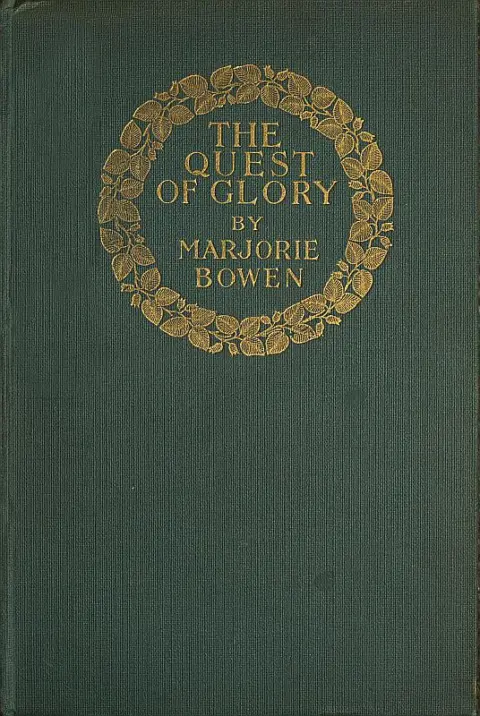
THE CLASSIC COLLECTION · 1912
"The Quest of Glory" by Marjorie Bowen is a historical novel written in the early 20th century. Set against the backdrop of the tumultuous events of the War of the Austrian Succession in the 18th century, the story explores themes of ambition, honor, and the quest for glory through its characters. The narrative follows several French officers, particularly the passionate young lieutenant Georges d’Espagnac, as they navigate the complexities of war, aspirations, and personal relationships while stationed in Prague. The opening of "The Quest of Glory" introduces us to the bleak atmosphere of Prague during a harsh winter siege in December 1742. We meet a group of French officers, each representative of different views on honor and the meaning of glory amidst their mundane and perilous military circumstances. As they share their thoughts, the youthful idealism of Georges d'Espagnac shines through. He is fervently dedicated to the pursuit of glory for France, even as the realities of war weigh heavily on him. The story's initial chapters set the stage for the unfolding drama, emphasizing the struggles and allegiances of the characters in a setting marked by both longing for valor and the bitter hardships of war.
Introduction adapted from the source catalogue; source summaries may be automatically generated.
Free to read · English · 87,825 words · No account needed
MAKE TIME FOR A GOOD BOOK
On by default. Untick to stop anonymous reading totals. Each page counts after 10 seconds in view. How this works.
Anonymous counting is on unless you have switched it off.
“Luc!” cried the younger, and the other gave a great start.
Luc stepped from the window and crossed to his father. He went simply on his knees before him and kissed his hands, while the old Marquis murmured, “You never wrote to me! You never wrote to me!”
“No,” added the younger brother reproachfully, “you never wrote to us,
Luc.”
Luc admitted that he had not, beyond the first letter that told of his
return from Bohemia.
“I did not know if I should be able to come to Aix,” he said, “forgive
me, Monseigneur.”
“You have got leave now, my child?” cried the old Marquis, grasping
his shoulder.
“Yes, my father, I have some leisure now,” he answered rather sadly.
“Come into the house,” said his brother, who was much moved. “I can hardly believe it is you--you have changed a great deal in nine years.”
They entered the house--the Marquise was abroad; the servants were roused. Luc heard the orders for the preparation of his chamber and the stabling of his horse with a thrill of pure pleasure; it seemed that he had been very long away from home.
His father made him sit by his right at the long black table that was now covered with wine glasses and dishes of fruit, and kept his eyes fixed on him with an earnest look of affection.
“You are very pale and thin,” he said.
The brother touched the young soldier’s hand lovingly. “Have you been
ill, Luc?” he asked.
Luc blushed; he was conscious of his frail appearance, of his occasional cough, of his languid movements.
“Yes, I was ill at Eger,” he admitted reluctantly, “after the retreat
from Prague.”
The other two men were silent. By that retreat M. de Belleisle’s name had become accursed through France: in ten days he had lost nearly twenty-two thousand men. The scandal and horror of it had brought M. de Fleury to patch a hasty peace with Austria.
“And do you recall,” added Luc sadly, “Hippolyte de Seytres, Marquis de Caumont, whom I wrote of to you very often? He was my ‘sous lieutenant.’ I heard last week that he had died in Prague just before the garrison capitulated in January.”
“I am sorry for de Caumont!” exclaimed the old Marquis, thinking of
the father.
“He was only eighteen,” said Luc, “and a sweet nature. M. d’Espagnac, also, who came from Provence, died in my arms. I became delirious with death.”
“It was very terrible?” questioned his father gravely.
Your reading position is saved on this browser. Take it to another device with a library code. Reading pages adapt to text, rather than matching a printed edition.
Marjorie Bowen
Marjorie Bowen
Marjorie Bowen
Marjorie Bowen
BEHIND THE BOOK
This eBook is for the use of anyone anywhere in the United States and most other parts of the world at no cost and with almost no restrictions whatsoever. You may copy it, give it away or re-use it under the terms of the Project Gutenberg License included with this eBook or online at www.gutenberg.org. If you are not located in the United States, you will have to check the laws of the country where you are located before using this eBook. Read the source licence.
The original source file, including credits and licence, is retained by this library. Request an original-format copy at no charge. Please include the book title and Project Gutenberg identifier #48767.
KEEP YOUR CURIOSITY GOING
Cécile Tormay

Moritz Busch
Coulson Kernahan
John L. Ransom

Maurice Baring
Frances Wright