THE CLASSIC COLLECTION✦The Countess FannyCLASSIC FREE BOOKS
The Countess Fanny
Marjorie Bowen
THE CLASSIC COLLECTION · 1912
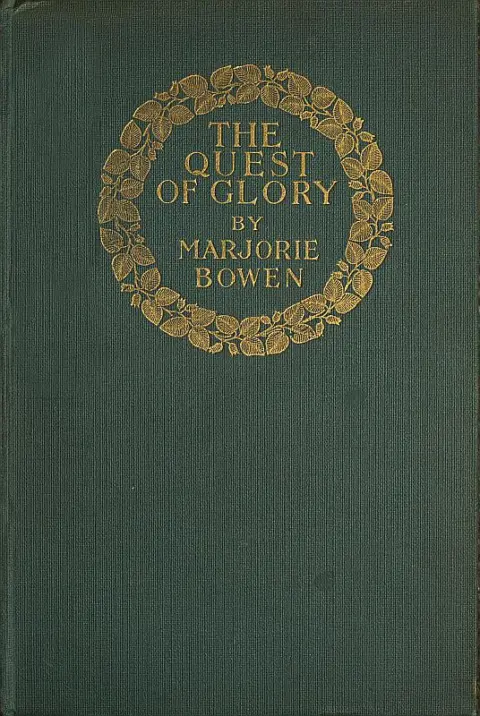
"The Quest of Glory" by Marjorie Bowen is a historical novel written in the early 20th century. Set against the backdrop of the tumultuous events of the War of the Austrian Succession in the 18th century, the story explores themes of ambition, honor, and the quest for glory through its characters. The narrative follows several French officers, particularly the passionate young lieutenant Georges d’Espagnac, as they navigate the complexities of war, aspirations, and personal relationships while stationed in Prague. The opening of "The Quest of Glory" introduces us to the bleak atmosphere of Prague during a harsh winter siege in December 1742. We meet a group of French officers, each representative of different views on honor and the meaning of glory amidst their mundane and perilous military circumstances. As they share their thoughts, the youthful idealism of Georges d'Espagnac shines through. He is fervently dedicated to the pursuit of glory for France, even as the realities of war weigh heavily on him. The story's initial chapters set the stage for the unfolding drama, emphasizing the struggles and allegiances of the characters in a setting marked by both longing for valor and the bitter hardships of war.
Introduction adapted from the source catalogue; source summaries may be automatically generated.
Free to read · English · 87,825 words · No account needed
MAKE TIME FOR A GOOD BOOK
On by default. Untick to stop anonymous reading totals. Each page counts after 10 seconds in view. How this works.
Anonymous counting is on unless you have switched it off.
He thought now that the soil felt dry, and turned to get water. In that moment the door opened and a man stepped into the room.
“Who are you, Monsieur?” asked Luc pleasantly.
The other swept off his hat.
“Do you not know me, Monsieur le Marquis?”
Luc strained his eyes.
“Come a little nearer. Ah!”--as the other obeyed--“Monsieur de
Richelieu!”
“Yes.”
The Duke glanced round the plaster walls, the raftered ceiling, the shabby furniture. Then his bold dark eyes rested on the meagre figure of Luc, clothed in garments still too good for his surroundings, and he flushed, and a shade came over his broad low brow.
“Do you live here?” he asked.
“Yes, Maréchal.”
Luc indicated a chair, and M. de Richelieu seated himself. The splendour of his velvets, laces, brilliants, and all his extravagant appointments, looked strange enough in this room. His charming face was red between the flowing curls, and he gazed at Luc with an expression of amazement.
“Yesterday,” he said, “M. de Voltaire brought your book to the Hôtel d’Antin, and I was reading it last night. Good God—a man of your quality! I wish you could have accepted the Spanish appointment.”
Luc seated himself on the low chair by the hearth, on which a few
sticks were burning.
“I wished so also,” he said quietly. “But you see for yourself, Monseigneur, that my health would not permit.”
The Maréchal seemed unable to find words.
Luc leant forward and narrowed his weak eyes.
“Have you come to offer me patronage, Monsieur?” he asked.
The Duke answered with a noble air--
“It would not be possible for anyone to offer M. de Vauvenargues patronage. I heard from M. de Voltaire that you were here, and I came to be instructed in philosophy.”
“A Maréchal de France comes to be instructed in philosophy in a garret!” smiled Luc; “and from one with whom he discovered long since that he had nothing in common!”
The Duke looked down at his open hand, that he lightly struck with his gauntlet, which was heavily embroidered with wreaths of roses, of gold ribbon, and of violets.
“We have something in common,” he said--“Madame la Comtesse Koklinska.”
Luc rose and leant against the mean mantelshelf.
“Yes, we have that memory in common,” he answered calmly.
“When did you see her last?” asked the Duke.
“She is dead,” said Luc, looking at him.
M. de Richelieu glanced up swiftly. There was a curious sense of stillness in the room. When the Duke spoke, his tone was also low.
“When did she die?”
Your reading position is saved on this browser. Take it to another device with a library code. Reading pages adapt to text, rather than matching a printed edition.
Marjorie Bowen
Marjorie Bowen
Marjorie Bowen
Marjorie Bowen
BEHIND THE BOOK
This eBook is for the use of anyone anywhere in the United States and most other parts of the world at no cost and with almost no restrictions whatsoever. You may copy it, give it away or re-use it under the terms of the Project Gutenberg License included with this eBook or online at www.gutenberg.org. If you are not located in the United States, you will have to check the laws of the country where you are located before using this eBook. Read the source licence.
The original source file, including credits and licence, is retained by this library. Request an original-format copy at no charge. Please include the book title and Project Gutenberg identifier #48767.
KEEP YOUR CURIOSITY GOING
Cécile Tormay

Moritz Busch
Coulson Kernahan
John L. Ransom

Maurice Baring
Frances Wright