THE CLASSIC COLLECTION✦The Countess FannyCLASSIC FREE BOOKS
The Countess Fanny
Marjorie Bowen
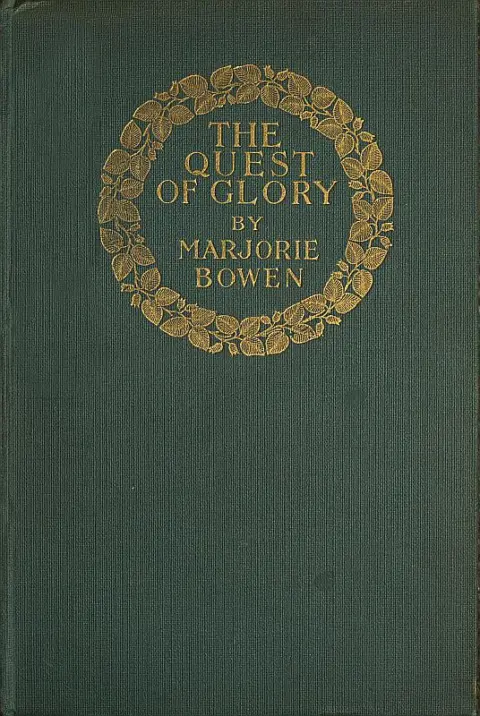
THE CLASSIC COLLECTION · 1912
"The Quest of Glory" by Marjorie Bowen is a historical novel written in the early 20th century. Set against the backdrop of the tumultuous events of the War of the Austrian Succession in the 18th century, the story explores themes of ambition, honor, and the quest for glory through its characters. The narrative follows several French officers, particularly the passionate young lieutenant Georges d’Espagnac, as they navigate the complexities of war, aspirations, and personal relationships while stationed in Prague. The opening of "The Quest of Glory" introduces us to the bleak atmosphere of Prague during a harsh winter siege in December 1742. We meet a group of French officers, each representative of different views on honor and the meaning of glory amidst their mundane and perilous military circumstances. As they share their thoughts, the youthful idealism of Georges d'Espagnac shines through. He is fervently dedicated to the pursuit of glory for France, even as the realities of war weigh heavily on him. The story's initial chapters set the stage for the unfolding drama, emphasizing the struggles and allegiances of the characters in a setting marked by both longing for valor and the bitter hardships of war.
Introduction adapted from the source catalogue; source summaries may be automatically generated.
Free to read · English · 87,825 words · No account needed
MAKE TIME FOR A GOOD BOOK
On by default. Untick to stop anonymous reading totals. Each page counts after 10 seconds in view. How this works.
Anonymous counting is on unless you have switched it off.
After a few moments she came back and crossed to the wide hearth, where a meagre fire burned. An iron saucepan of soup stood on the tiles; she placed it on the fire, Luc the while looking at her. When she rose from her knees, she was once more face to face with him.
“You are staying here?” she asked.
“Yes.”
“Probably I shall not see you again,” she said. “I put on the habit of a novice to-morrow.”
“I wish,” answered Luc, “I found it so easy to leave the world, but while I breathe I cannot. Even this confinement irks me. If I live, I shall go back to my ambitions.”
“Something is wrong,” said Carola; “you or I--or God.”
“Why?” he answered, with a grave gentleness. “I thought you had found
happiness.”
“I have found an opiate, Monsieur.”
They were both silent; then she turned towards the door.
Her splendid dress was as incongruous here as it had been in the wet fields; it jarred on Luc to see her in such surroundings.
He turned suddenly and followed her. “You beautiful, foolish woman,” he cried, “what are you doing in a convent? Go back to Versailles.”
“Is that your advice to me?” she asked slowly.
“Advice! I know not--but this is death.”
“Yes, death,” answered Carola.
She lifted the latch of the door.
“Will you pray for me?” smiled Luc.
“Yes.”
“Then put your prayers this way--that if I am stricken I may die.”
“Death for both of us, then, it seems,” she replied. “How suddenly it has come, Monsieur.”
Luc pressed his hands to his bosom.
“My God, my God!” he cried fiercely, “I want to live or die--do you not understand? I have seen them--half blind, crawling, hideous.”
“But your spirit would be always beautiful,” said Carola gently, “and always triumphant.”
They stood looking at each other, the width of the room between them. A bar of clear sunlight fell through the half-open door across her gown and across the floor. The sounds from the carpenter’s shed came distinctly, and then presently the cold call of the convent bell. Luc remained in an attitude of arrested movement, with his hands at his heart and his deep eyes on her. Unnatural beauty rested on his absorbed face, which was flushed and quivering.
“Monsieur,” said Carola, “when you have attained--but words are useless; and after all, I do not think that you will ever forget me.”
“No, Clémence,” he answered, with great sweetness.
“You will remember me for my name’s sake.”
She opened the door a little wider; she was a thing of gorgeous colours and delicate shape against the whitewashed wall.
Your reading position is saved on this browser. Take it to another device with a library code. Reading pages adapt to text, rather than matching a printed edition.
Marjorie Bowen
Marjorie Bowen
Marjorie Bowen
Marjorie Bowen
BEHIND THE BOOK
This eBook is for the use of anyone anywhere in the United States and most other parts of the world at no cost and with almost no restrictions whatsoever. You may copy it, give it away or re-use it under the terms of the Project Gutenberg License included with this eBook or online at www.gutenberg.org. If you are not located in the United States, you will have to check the laws of the country where you are located before using this eBook. Read the source licence.
The original source file, including credits and licence, is retained by this library. Request an original-format copy at no charge. Please include the book title and Project Gutenberg identifier #48767.
KEEP YOUR CURIOSITY GOING
Cécile Tormay

Moritz Busch
Coulson Kernahan
John L. Ransom

Maurice Baring
Frances Wright