THE CLASSIC COLLECTION✦The Countess FannyCLASSIC FREE BOOKS
The Countess Fanny
Marjorie Bowen
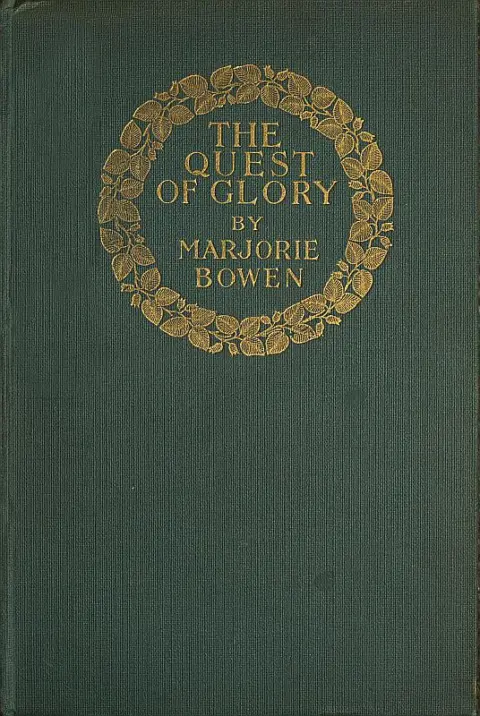
THE CLASSIC COLLECTION · 1912
"The Quest of Glory" by Marjorie Bowen is a historical novel written in the early 20th century. Set against the backdrop of the tumultuous events of the War of the Austrian Succession in the 18th century, the story explores themes of ambition, honor, and the quest for glory through its characters. The narrative follows several French officers, particularly the passionate young lieutenant Georges d’Espagnac, as they navigate the complexities of war, aspirations, and personal relationships while stationed in Prague. The opening of "The Quest of Glory" introduces us to the bleak atmosphere of Prague during a harsh winter siege in December 1742. We meet a group of French officers, each representative of different views on honor and the meaning of glory amidst their mundane and perilous military circumstances. As they share their thoughts, the youthful idealism of Georges d'Espagnac shines through. He is fervently dedicated to the pursuit of glory for France, even as the realities of war weigh heavily on him. The story's initial chapters set the stage for the unfolding drama, emphasizing the struggles and allegiances of the characters in a setting marked by both longing for valor and the bitter hardships of war.
Introduction adapted from the source catalogue; source summaries may be automatically generated.
Free to read · English · 87,825 words · No account needed
MAKE TIME FOR A GOOD BOOK
On by default. Untick to stop anonymous reading totals. Each page counts after 10 seconds in view. How this works.
Anonymous counting is on unless you have switched it off.
He held an agate-handled cane and his hat under his arm. All the appointments of his person were costly and modish; he wore patches, jewellery, and fine ruffles.
“I have surprised you, M. le Marquis,” he observed, with a deepening of his smile and in a voice changeful and melodious.
Luc sprang to his feet; he knew face and figure from a dozen prints, from a hundred descriptions.
“Voltaire!” he cried.
The stranger bowed.
“I am welcome?” he asked.
“I am honoured beyond expression,” stammered Luc, with simple and
genuine self-abasement.
M. de Voltaire looked sharply at the man who had sent him such remarkable letters, and of whom he had had such a remarkable account from M. de Richelieu.
He was surprised to see one so young, so delicately beautiful, so timid in manner, for Luc stood blushing like a child, and his sensitive features expressed vast confusion. The great man seated himself and threw back his head.
“M. de Richelieu gave me your address,” he remarked; “but I did not wait for his company to make the acquaintance of one of whom I have formed such a high opinion.”
“Monsieur,” answered Luc earnestly, “I fear I have been presumptuous in forcing myself on your notice; but for the interest you have taken in me I am passionately grateful.”
M. de Voltaire was secretly, immensely gratified. He had not climbed from an attorney’s clerk to be a friend of kings without meeting very severe rebuffs on the way. Even now, courted as he was, the nobles he consorted with reminded him often enough, in covert ways, that he was not ‘born.’ But here was a Marquis, a soldier, who sincerely bowed down to him. He had been greatly flattered when he received Luc’s first letter; now his vast vanity, quick to take offence, quick to respond to admiration, was even more flattered by the young noble’s ardent homage.
And a finer feeling than vanity moved M. de Voltaire’s great generous heart; he thought that he saw in this frail, boyish-looking, blushing, slightly awkward soldier a kindred soul.
On his part Luc was struggling with an overwhelming sense of humility in being thus suddenly sought out by the man whom, of all others, he most admired and respected.
“Oh, Monsieur!” he exclaimed, “you cannot guess how much I have hoped to one day meet you.”
“A soldier,” smiled M. de Voltaire, “and yet you found time for philosophy and the arts!”
Luc, who was standing like a scholar before his master, answered in
nervous haste--
“I know nothing about either, Monsieur, nothing----”
The great man interrupted.
Your reading position is saved on this browser. Take it to another device with a library code. Reading pages adapt to text, rather than matching a printed edition.
Marjorie Bowen
Marjorie Bowen
Marjorie Bowen
Marjorie Bowen
BEHIND THE BOOK
This eBook is for the use of anyone anywhere in the United States and most other parts of the world at no cost and with almost no restrictions whatsoever. You may copy it, give it away or re-use it under the terms of the Project Gutenberg License included with this eBook or online at www.gutenberg.org. If you are not located in the United States, you will have to check the laws of the country where you are located before using this eBook. Read the source licence.
The original source file, including credits and licence, is retained by this library. Request an original-format copy at no charge. Please include the book title and Project Gutenberg identifier #48767.
KEEP YOUR CURIOSITY GOING
Cécile Tormay

Moritz Busch
Coulson Kernahan
John L. Ransom

Maurice Baring
Frances Wright