THE CLASSIC COLLECTION✦An outlaw’s diary: the CommuneCLASSIC FREE BOOKS
An outlaw’s diary: the Commune
Cécile Tormay
THE CLASSIC COLLECTION · 1907
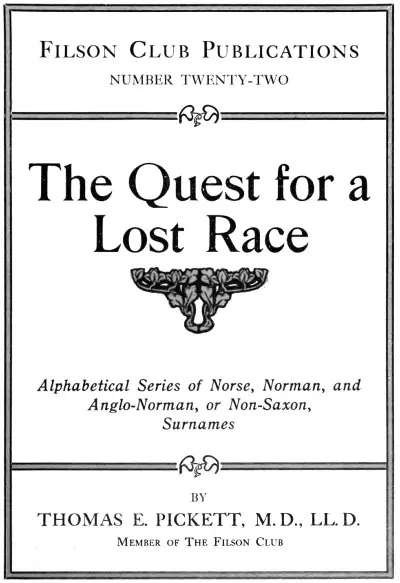
"The Quest for a Lost Race" by Thomas Edward Pickett is a historical account written in the early 20th century. This work presents the theory proposed by ethnologist Paul B. Du Chaillu, which claims that contemporary English-speaking people are more closely descended from Scandinavians than from Teutonic tribes. The author discusses the cultural, historical, and genealogical implications of this theory, particularly in relation to Kentuckians. At the start of the text, Pickett describes the welcoming atmosphere of Maysville, Kentucky, where the prominent explorer Du Chaillu was once celebrated for his discoveries. He captures the essence of this community and their deep-rooted traditions, as they participated in a heated discussion regarding their ancestry and cultural identity. The narrative explores Du Chaillu's experiences in Kentucky, drawing parallels between the social customs and traits of Kentuckians and those of their Scandinavian ancestors. Through this lens, the book sets the stage for a broader examination of race, identity, and cultural heritage in American society, particularly in the context of historical migrations.
Introduction adapted from the source catalogue; source summaries may be automatically generated.
Free to read · English · 57,017 words · No account needed
MAKE TIME FOR A GOOD BOOK
On by default. Untick to stop anonymous reading totals. Each page counts after 10 seconds in view. How this works.
Anonymous counting is on unless you have switched it off.
Bagehot, for Bagot.
Bagot. A baronial family (Normandy); came to England at the Conquest. Henry Bagod, ancestor of house of Stafford.
Bailey, Baillie, from the Norman office of Le Bailli. The Baillies of Scotland a branch of De Quincys.
Baine, Bayne.
Baird. Ralph Baiart in Normandy before the Conquest. Godfrey Baiard in 1165 held a barony in Northumberland. From this line descended George Washington, the great American General.
Baker, Normandy, 1086; England, 1086.
Baldwin, Normandy, William Baldwinus, 1180; Robert, 1183; England,
1116.
Ballance, for Valence, Normandy, 1210.
Bally, for Baly.
Bamfyld, from Baionville, near Caen, 1093. In Thirteenth Century held lands of the Honour of Wallingford.
Banard, for Bainard, Banyard.
Bancroft, from Boncraft, near Warrington, Cheshire. See Butler.
Band, from Calvus or Le Band, England, 1083.
Bangs, for Banks.
Banks, from Banc, near Honfleur; England, 1130. The eminent savant, Sir Joseph Banks, a descendant.
Banner, 1180, Normandy, Le Baneor.
Bannester, from Banastre, now Beneter, near Estampes.
Banyard. Vide Beaumont.
Barbot, Normandy, 1188.
Barbour, from St. Barbe sur Gaillon, Normandy, where was situated the celebrated Abbey St. Barbara. (Vide British Family Surnames (Barber) London.) Barbour, a hamlet in Dumbartonshire. St. Barbe is on the Roll of Battle Abbey. William de St. Barbara, Bishop of Durham, 1143 A. D. Le Barbier, Court of Husting, London, 1258. John Barbour, a churchman and Archdeacon of Aberdeen (1357): traveled in France (temp. Edward III): employed in a high capacity in civil affairs: historian, poet, and Auditor of the Exchequer. James Barbour, born in Orange County, Virginia, U. S. Senator (1815-1825): Secretary of War: Minister to the Court of St. James. Philip Pendleton Barbour, brother of James Barbour, Associate Justice of the United States Supreme Court. John S. Barbour (Virginia), member of Congress (1823-1833). James Barbour (Kentucky), Assistant State Auditor (under Helm): President Lexington and Danville R. R.: Cashier Branch Bank of Kentucky. Doctor Lewis Green Barbour of Louisville, late of Central University, is a finished scholar.
Bardo, for Bardolph.
Bardolph, England, 1165. Held lands in Normandy (Honour of Montfort).
Barefoot, Barfot, Normandy, 1180; England soon after.
Barker. Bercarius, Normandy, 1180. Le Bercher (England).
Barker. Norman French La Bercher. English surnames Barcarius and Le Barkere. William le Barcur.
Barnes, a form of Berners from Bernieres, near Falaise; England,
1086.
Barnett. Barnet (Barney), Bernai, Normandy.
Barnewall, from the Norman family De Barneval, England, 1086
(Domesday).
Barney, armorially identified with Berney.
Barold, Vide Barrell.
Baron, from Baron, near Caen, England, 1165.
Barough, armorially identified with Barrow.
Barr, from La Barre in the Cotentin. Tiger de Barra (Normandy, 1180).
Barr. La Barr, Normandy; Norman-French, De la Barre.
Barrable, for Barbal, Normandy, 1180.
Barre, armorially identified with Barry.
Barrell, Richard Barel, Normandy, 1180. See Battle Abbey Roll.
Barrett. (Domesday) Baret.
Barrett. John Buret, 1195. Walter de la Burette, Devon, 1272.
Barrington, or De Barenton, from Barenton, near Candebec, Normandy.
Your reading position is saved on this browser. Take it to another device with a library code. Reading pages adapt to text, rather than matching a printed edition.
BEHIND THE BOOK
This eBook is for the use of anyone anywhere in the United States and most other parts of the world at no cost and with almost no restrictions whatsoever. You may copy it, give it away or re-use it under the terms of the Project Gutenberg License included with this eBook or online at www.gutenberg.org. If you are not located in the United States, you will have to check the laws of the country where you are located before using this eBook. Read the source licence.
The original source file, including credits and licence, is retained by this library. Request an original-format copy at no charge. Please include the book title and Project Gutenberg identifier #47627.
KEEP YOUR CURIOSITY GOING
Cécile Tormay

Moritz Busch
John L. Ransom
Frances Wright
Cécile Tormay

Mabel Potter Daggett