THE CLASSIC COLLECTION✦The art of fictionCLASSIC FREE BOOKS
The art of fiction
Walter Besant
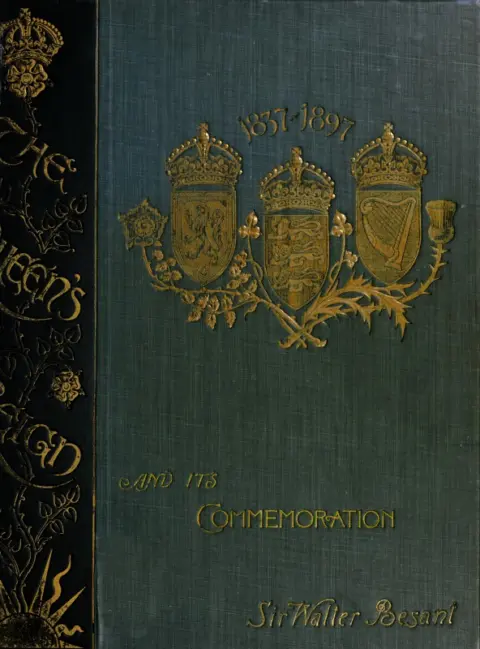
THE CLASSIC COLLECTION · 1897
"The Queen's Reign and Its Commemoration" by Sir Walter Besant is a historical account written in the late 19th century. The book reflects on the transformative effects of Queen Victoria’s reign from 1837 to 1897, exploring socio-political changes, the evolution of societal norms, and the character of the English people. Besant offers an analysis of the various social strata and reforms that defined this significant period in British history. The opening of the book sets the stage for a contemplative exploration of the Victorian transformation, beginning with a reflection on the prior discontent within society at the start of Queen Victoria's reign. Besant contemplates the expectations of societal reforms stemming from the previous generations and outlines the major shifts resulting from significant legislation and events that shaped the socio-political landscape. He introduces the ethos of the time, acknowledging the absence of loyalty to the Crown among the working class and foreshadowing the Queen’s eventual role in revitalizing respect and loyalty to the monarchy, a theme that is to be elaborated throughout the work. Besant also emphasizes that the volume will not provide a mere biography of the Queen but rather a broader analysis of the societal changes that signaled the modern evolution of Britain during her reign.
Introduction adapted from the source catalogue; source summaries may be automatically generated.
Free to read · English · 33,235 words · No account needed
MAKE TIME FOR A GOOD BOOK
On by default. Untick to stop anonymous reading totals. Each page counts after 10 seconds in view. How this works.
Anonymous counting is on unless you have switched it off.
“I saw the people that were therein, and how they dwelt after the manner of the Zidonians, quiet and secure, and had no dealings with any man.”--BOOK OF JUDGES.
Let us leave London, and visit a certain English country town--a market town--as it was in the year 1837. We will then consider the place as it is to-day.
In 1837 it is a quiet town with no industries except those created by the requirements of an agricultural centre. This not only causes a certain amount of activity and trade, but also gives rise to such industries as saddlery, farm implements, etc. The town consists chiefly of two or three streets running parallel, the larger and more important being the High Street. In the middle of the High Street is a square or place, where once a week is held a market, at which all kinds of things are exposed for sale, from poultry to shoe laces. A corn exchange, a branch bank, the town hall, one or two shops, and the principal inn, fill up the square. The inn boasts a large wooden porch, whose pillars are painted to resemble stone. A covered way leads to the stables and stableyard. Within, there is a hall, imperfectly lighted, in which one finds a fly-blown map of the country, a huge pike in a glass case, a stuffed otter, doors leading to the coffee-room and commercial room, a glass partition separating the bar-parlour, with the bar itself in front, and a broad, low staircase leading to the upper rooms. Here, on market day, the farmers hold their ordinary, with deep and long potations to follow. Here the lodge of Freemasons holds its monthly meetings in the winter, with a cheerful time of refreshment after labour. Here the county balls are held twice a year. There is a close, confirmed smell always lingering in the house; it suggests not so much beer and tobacco, which belong to a humbler house of entertainment, as hot brandy and water. The cold meats displayed under glass beside the bar look as if they were imbibing and assimilating that smell. If the windows were sometimes open, one feels, it would make that cold chicken fresher, and would enliven that cold roast beef. When you order dinner at this hostelry let it be of the simplest. Avoid their soup, of which they have but one kind; be careful as to their fish, which has not only travelled fifty miles by train, but has also waited longer than is good for it; but you may trust them entirely in the matter of roast beef and mutton, fowls and “birds.” As regards wine, you will avoid most carefully claret; it is a thick and strong liquid, very heavily “fortified” with brandy. No one in England, as yet, has learned what claret means; they buy it, and they pour brandy into it. Their sherry is a fiery compound, which you must regard with an uncomfortable suspicion; this also has been “treated” with brandy. In the year 1837, if you ask for champagne (which is extremely unusual) you expect a wine sweet and cloying, pink in colour, and served in long narrow glasses which make it look very pretty. In 1837 we all, even among those who have travelled, belong to the age of sweet champagne. We regard the wine, not as the exhilarator-in-chief at human banquets, but as a feminine luxury, suitable for weddings, christenings, Christmas Day, and such other family gatherings in which women take their parts. For ourselves, we shall order what is expected of us, namely stout, with our dinner,--good, thick, foaming stout,--which is without doubt the finest drink ever invented as a companion to beefsteak or to a roast leg of mutton. We shall perhaps, for the good of the house, have a pint of the fiery sherry with the admirable apple pie, seasoned with cloves, which they will presently bring us; and then, for the serious business of the evening, we shall call the landlord and consult him. Which is it to be? Does he recommend the 1820? Has he, perchance, a few bottles left of 1798, though that is almost past praying for? Does he think the 1828 sufficiently matured? Would he recommend that he should set before us some of his Tawny? These questions--these difficulties--are recognised as matters of the greatest importance. There are two of us, we are moderate men; a bottle a head is our humble limit, we must not throw away this moderation upon an inferior bottle. Finally, we yield to him. In port, this landlord, we know from former experience, hath a conscience; he brings us, not the most expensive wine, as a low-class practitioner would do, but the wine which he thinks will please us best. He carries the bottle in his own arms, as if it were a baby; he draws the cork as an actor on the stage opens a letter--with importance; he decants it as if it were liquid elixir, leaving off at the precise moment when a drop from the turbid dregs of the bottle might sully the perfect purity of the splendid purple which he calls upon you to admire, holding the decanter before the light. We take our two bottles; we sit down to dinner at six, so that when the bottles are empty it is no more than nine. We ring the bell and order brandy and water before we go to bed. We hold up the bottle to the light. It is the light of candles, not gas; no nasty, new-fangled gas is allowed in this old inn; and, indeed, those who have once used wax candles can never desire any better or softer light.
Your reading position is saved on this browser. Take it to another device with a library code. Reading pages adapt to text, rather than matching a printed edition.
Walter Besant
Walter Besant

Walter Besant

Walter Besant
BEHIND THE BOOK
This eBook is for the use of anyone anywhere in the United States and most other parts of the world at no cost and with almost no restrictions whatsoever. You may copy it, give it away or re-use it under the terms of the Project Gutenberg License included with this eBook or online at www.gutenberg.org. If you are not located in the United States, you will have to check the laws of the country where you are located before using this eBook. Read the source licence.
The original source file, including credits and licence, is retained by this library. Request an original-format copy at no charge. Please include the book title and Project Gutenberg identifier #58786.
KEEP YOUR CURIOSITY GOING
Cécile Tormay

Moritz Busch
John L. Ransom
Frances Wright
Cécile Tormay

Mabel Potter Daggett