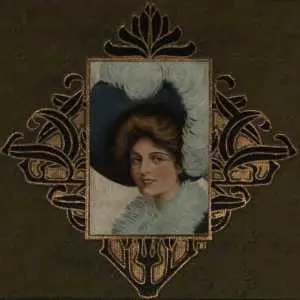
The Gypsy Queen’s Vow
May Agnes Fleming
THE CLASSIC COLLECTION · 1886
"The Queen of the Isle" by May Agnes Fleming is a novel written in the late 19th century. The story revolves around Campbell's Isle, a small yet strikingly beautiful island with a history steeped in legend and a reputation for ghostly sightings, as we are introduced to its current inhabitants, Guy Campbell and his sister Sibyl. Young Guy, who is set against the backdrop of his family's storied past, grapples with his reckless inheritance while becoming entangled with a mysterious passenger named Richard Grove. At the start of the tale, we are drawn into the eerie atmosphere of Campbell's Isle, where the ghostly history and legends linger over its inhabitants. As the narrative unfolds, we meet various characters steeped in their own mysteries, such as the devoted old servant Aunt Moll and the enigmatic young girl Christie, whose origins raise questions. The opening chapters set the stage for unfolding dramas, including Richard Grove’s tragic backstory and the supernatural elements introduced by the cursed narrative of the past, merging suspense and romance. The heart of the plot begins to emerge as Sibyl and Guy Campbell navigate their lives amid the island's haunting charm, accompanied by the intriguing presence of Grove and the apparitions that disrupt their world.
Introduction adapted from the source catalogue; source summaries may be automatically generated.
Free to read · English · 109,495 words · No account needed
MAKE TIME FOR A GOOD BOOK
On by default. Untick to stop anonymous reading totals. Each page counts after 10 seconds in view. How this works.
Anonymous counting is on unless you have switched it off.
Sibyl laughed, and paused for a moment in thought. She would infinitely have preferred remaining on the island with Willard, but it would never do to allow them to think that was her reason; and after all, a week would soon pass. Had Christie been home, no persuasions could have induced her to go; but in her absence there was nothing to fear. Then, too, Willard, so long accustomed to her presence, would miss her so much when she was gone that doubtless his love would be increased rather than diminished.
Involuntarily, while thinking of him, her eyes wandered to where he stood. Again the sharp-sighted Mrs. Brantwell observed it, and again she broke out impatiently:
"Lord bless me! Mr. Drummond, just turn round, will you, and tell Sibyl she may go. Nothing earthly will induce her to come till you give permission. I'm sure if you were her father she couldn't be more afraid of displeasing your lordship."
"Miss Campbell needs no permission of mine. I am only too happy to think she will have an opportunity of enjoying herself so well," said Willard, with a grave bow.
"Well, I'm sure that's a mercy to be thankful for. Now, perhaps, you will come, Sibyl," said the plain-spoken old lady; "and as for you, sir, I shall expect to see you at the parsonage every day with Master Guy."
"I shall be most happy," said Willard, his face brightening a little, while Sibyl's eyes sparkled with anticipation.
"Well, now, run and get ready," said Mrs. Brantwell, turning to Sibyl.
Sibyl soon reappeared, dressed for her journey. And then, as the afternoon was far advanced, the whole party descended to the beach. The adieus were spoken, the boat pushed off, leaving the two young men alone on the sands.
"I must go over to Westbrook dock-yard this afternoon," said Guy,
"where the Evening Star is now lying. What do you say to coming with
me?"
"I prefer remaining here," said Willard, who had not yet recovered his good humor, after what he was pleased to call Sibyl's desertion.
"Well, then, I'll remain with you," said Guy, who was the soul of
frankness and good temper.
"By no means!" said Drummond, hastily. "Do not stay on my account. I have a slight headache still, and will retire to my room."
"But it seems hardly courteous to leave you altogether alone."
"Nonsense, my dear fellow. I insist upon it. I hope you do not think of standing on ceremony with me?"
"So be it, then," said Captain Campbell, gayly, as he sprang into his boat, pushed off, and shot like an arrow out into the water.
Your reading position is saved on this browser. Take it to another device with a library code. Reading pages adapt to text, rather than matching a printed edition.
May Agnes Fleming
May Agnes Fleming
May Agnes Fleming
May Agnes Fleming
BEHIND THE BOOK
This eBook is for the use of anyone anywhere in the United States and most other parts of the world at no cost and with almost no restrictions whatsoever. You may copy it, give it away or re-use it under the terms of the Project Gutenberg License included with this eBook or online at www.gutenberg.org. If you are not located in the United States, you will have to check the laws of the country where you are located before using this eBook. Read the source licence.
The original source file, including credits and licence, is retained by this library. Request an original-format copy at no charge. Please include the book title and Project Gutenberg identifier #72860.
KEEP YOUR CURIOSITY GOING
Coulson Kernahan

Maurice Baring
Frances Wright
Cécile Tormay

Frederic Jesup Stimson

W. H. P. (William Henry Pope) Jarvis