
The Writing of News A Handbook with Chapters on Newspaper Correspondence and Copy Reading
Charles G. (Charles Griffith) Ross
THE CLASSIC COLLECTION · 1921
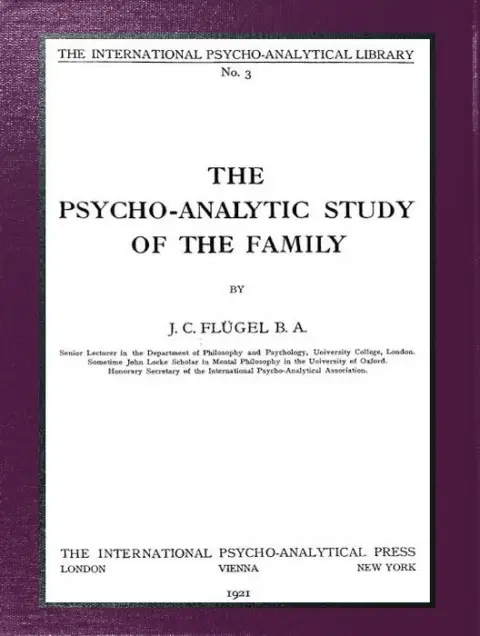
"The Psycho-Analytic Study of the Family" by J. C. Flugel is a scientific publication written in the early 20th century. This work explores the psychological dynamics within family relationships, particularly through the lens of psycho-analysis, offering insights on the roles of love, hate, and unconscious motivations that shape family interactions and individual development. The text promises to illuminate how these early familial ties influence personality formation and potentially affect broader social relationships. The opening of this work introduces the reader to the fundamental relationship between psychological development and family dynamics. Flugel outlines the need for a comprehensive understanding of the emotions and conflicts that arise in family settings, suggesting that these elements not only influence individual character but also shape societal norms. The author emphasizes the significance of early attachments, such as those between parents and children, and introduces key psycho-analytic concepts like repression and the Oedipus complex, indicating their relevance to normal and abnormal psychological development. This initial section sets the stage for a deeper exploration of psychological processes, arguing that understanding family dynamics is crucial for addressing larger moral and social challenges of the time.
Introduction adapted from the source catalogue; source summaries may be automatically generated.
Free to read · English · 98,844 words · No account needed
MAKE TIME FOR A GOOD BOOK
On by default. Untick to stop anonymous reading totals. Each page counts after 10 seconds in view. How this works.
Anonymous counting is on unless you have switched it off.
On the other hand, it is perhaps necessary to emphasise the advantages to be derived from the formation, by each individual member of the family, of his own friendships and companionships as distinct from those which are, so to speak, found for him by his family. Thus, it is far from desirable that members of the same family should always accompany one another to social gatherings, places of entertainment or instruction, or on visits to friends. On the contrary, they will often benefit by being freed from each other's society on these occasions, and no restraints should, as a rule, be placed upon habits of independent occupation or enjoyment or upon choice of associates. Nor should the individual members of the family be expected on every occasion to render a detailed account of all their activities outside the family circle, nor to confine these activities rigorously to certain days or hours. Much family friction can often be avoided by the simple process of bestowing a latchkey! As regards extreme cases, moreover, it should be realised that wherever there is unusual difficulty in the relations between an individual and the other members of his family, a removal from the family environment is the surest, perhaps the only, method of avoiding disaster.
Above all it is necessary, throughout the process of development and education, to aim at the attainment of a due measure of self-respect and self-reliance, avoiding the pitfalls of too great self-satisfaction on the one hand and an unreasonable sense of inferiority on the other. It is here, more than elsewhere, that considerable differentiation in the treatment of individuals is required. Those who are inclined to be too well pleased with themselves will usually benefit by a somewhat rougher treatment, and will need to have their deficiencies brought home to them. Those who lack self-confidence, or who have an unduly low estimate of their attainments or capacities, will need encouragement and reassurance. In the former case some very appreciable degree of parental authority may be called for, in the latter any treatment savouring of harshness is for the most part tragically out of place.]
Abandonment of infantile tendencies, 83.
Abdication, 131.
Abnormalities of development, 48 ff., 61 ff., 88 ff., 102, 188,
191, 218, 219, 241.
Aborigines, 91, 140, 194 ff., 229.
Abortion, 160.
Abraham, K., 51, 92, 106, 148, 150, 185.
Ach, N., 7.
Acheron, 69.
Adam, 148.
Adaptation to reality, 68, 215, 216, 219 ff.
Adler, A., 14.
Admiration, 98, 110, 123, 124, 139, 186, 227.
Adolescence, 51, 149, 192, 233.
Adonis, 72.
Africa, 194, 197.
Age:
As a factor in love, 28 ff., 89, 106, 207, 208.
Classes, 87.
Old, 239 ff.
Aged, care of, 240.
Agoraphobia, 67.
Agriculture, 147.
All-Father, 136, 137.
Alma Mater, 125.
"Alternation of generations", 63.
Altruism, 188.
Amazon, Indians of the, 194.
Ambivalency, 129 ff., 141, 143, 149, 150.
American Indians, 193, 194, 196.
American Psychological Association, 2.
Americans, 127, 170, 195.
Amnesia, infantile, 77, 83.
Amniotic fluid, 77.
A-moral, 21.
Anæsthetics, 167.
"Anagogic" symbolism, 37, 38.
Anal Libido, 192.
Ancestor Worship, 135 ff.
Ancestors, 86, 124, 135 ff.
Andamanese, 197.
Andromeda, 109.
Angel Clare, 116.
Anger, 9, 177, 222.
See also Hate.
Animals, 137 ff., 149 ff., 200, 202, 239.
Animism, 134, 135, 152, 153.
Annunzio, G. d', 92.
Your reading position is saved on this browser. Take it to another device with a library code. Reading pages adapt to text, rather than matching a printed edition.
BEHIND THE BOOK
This eBook is for the use of anyone anywhere in the United States and most other parts of the world at no cost and with almost no restrictions whatsoever. You may copy it, give it away or re-use it under the terms of the Project Gutenberg License included with this eBook or online at www.gutenberg.org. If you are not located in the United States, you will have to check the laws of the country where you are located before using this eBook. Read the source licence.
The original source file, including credits and licence, is retained by this library. Request an original-format copy at no charge. Please include the book title and Project Gutenberg identifier #58654.
KEEP YOUR CURIOSITY GOING
Charles G. (Charles Griffith) Ross
Hannah Webster Foster

Emily Lawless
Edwin Hamlin Carr

Charles De Lano Hine
Andrew Ure