
Dead letters
Maurice Baring
THE CLASSIC COLLECTION · 1870
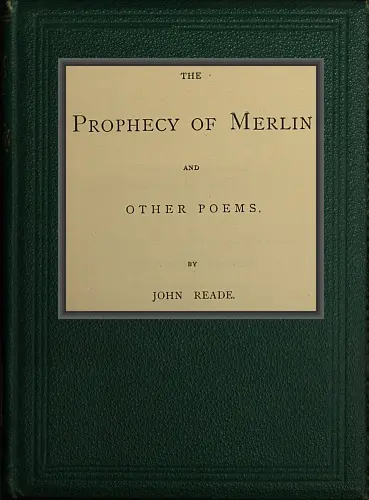
"The Prophecy of Merlin and Other Poems" by John Reade is a collection of poems written in the late 19th century. The central poem features Sir Bedivere, a knight from the Arthurian legend, in a poignant narrative exploring themes of loss, prophecy, and the legacy of King Arthur. The work captures the essence of longing for noble ideals and the cyclical nature of time, emphasizing the inevitable passage of heroes and the hope for their return in future generations. The opening of the collection presents a deeply emotional scene where Sir Bedivere, lamenting the departure of King Arthur to Avalon, grapples with his sorrow and the weight of loneliness. As he mourns, he encounters Merlin, who soothes his wounds and offers prophetic insights about Arthur's enduring legacy and the future of Britain. This dialogue reveals Merlin’s wisdom as he speaks of impending conflicts and the eventual return of a righteous ruler, ultimately foreshadowing Britain’s future under Queen Victoria and a new age of peace marked by the name of Arthur. This set of verses combines mythological resonance with historical reflection, setting a rich, contemplative tone for the poems that follow.
Introduction adapted from the source catalogue; source summaries may be automatically generated.
Free to read · English · 28,992 words · No account needed
MAKE TIME FOR A GOOD BOOK
On by default. Untick to stop anonymous reading totals. Each page counts after 10 seconds in view. How this works.
Anonymous counting is on unless you have switched it off.
Thus spake she ’mid her tears, and, all around,
The listening chorus of her maidens wept.
(From the Agamemnon of Æschylus, v. 255.)
CL.--Word of joy this morning brings
From the bosom of the night,
Higher joy than Hope’s gay wings
Circled in her farthest flight!
Troy is taken, Troy is fallen
By the victor Argive’s might!
CH.--Troy has fallen dost thou tell me?
Have I heard thy words aright?
CL.--Hearken! I repeat the words,--
Troy is held by Grecian lords.
CH.--Ah! what gladness fills my heart,
And my tears with rapture start!
CL.--Yes, thine eyes thy feeling shew.
CH.--This by what proof dost thou know?
CL.--The gods, that never would deceive,
Brought these tidings.
CH.--Dost believe
In the fickle shapes of dreams?
CL.--Nay; the dozings of the mind
Leave in me no trace behind.
CH.--Some wild rumour, then, meseems?
CL.--Dost thou think me but a child,
Thus and thus to be beguiled?
CH.--How long, then, is it since proud Ilion fell?
CL.--Since but the night that bore this morning’s light.
CH.--And who this message hither brought so well?
CL.--Hephæstus, sending forth his beacon bright From Ida’s summit; then, from height to height With blaze successive, beacon kindling beacon, Bore us the tidings. Ida glanced it forth To Lemnos, even to th’ Hermæan rock; And next steep Athos, dear to Zeus, received From Lemnos the bright flame, which, in its strength Joyous, pursued its onward course, and flew O’er the broad shoulders of Oceanus, Giving its gleams all-golden, like the sun, To those that on Makistos kept high watch. Nor dallying he, nor won by ill-timed sleep, Assumed his part of messenger; and far Over Euripus speeds the signal flame, Telling their tasks to the Messapian guards, Who answered with a blaze that straightway lit The heather on old Graia’s mountain-tops. Then in full-gleaming strength, like a fair moon, The beacon-light shot o’er Asopus plain, And lit with answering fire Cithæron’s cliff, Whose emulous watch made brighter still the blaze. Thence darted on the fiery messenger Over Gorgopis lake and up the sides Of Ægiplanctus, whence (the waiting wards Heaping no niggard pile), a beard-like flame Streamed onward till it touched the cliff that spies The billows of the blue Saronic sea; But paused not in its course, until it reached The heights of Arachnæum, over there. And thence it strikes upon these palace-roofs,-- Far offspring of the light of fallen Troy.
(Iliad iii. 161.)
Your reading position is saved on this browser. Take it to another device with a library code. Reading pages adapt to text, rather than matching a printed edition.
BEHIND THE BOOK
This eBook is for the use of anyone anywhere in the United States and most other parts of the world at no cost and with almost no restrictions whatsoever. You may copy it, give it away or re-use it under the terms of the Project Gutenberg License included with this eBook or online at www.gutenberg.org. If you are not located in the United States, you will have to check the laws of the country where you are located before using this eBook. Read the source licence.
The original source file, including credits and licence, is retained by this library. Request an original-format copy at no charge. Please include the book title and Project Gutenberg identifier #55170.
KEEP YOUR CURIOSITY GOING
Maurice Baring
Francis Greenleaf Allinson & Anne C. E. (Anne Crosby Emery) Allinson

Eric Mackay
Edmund Gosse
Sophia Margaretta Hensley
Stuart Dodgson Collingwood