
Dead letters
Maurice Baring
THE CLASSIC COLLECTION · 1870
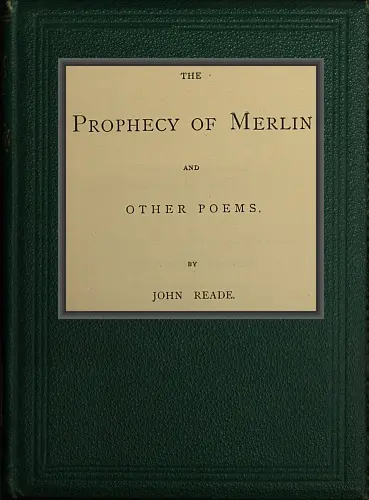
"The Prophecy of Merlin and Other Poems" by John Reade is a collection of poems written in the late 19th century. The central poem features Sir Bedivere, a knight from the Arthurian legend, in a poignant narrative exploring themes of loss, prophecy, and the legacy of King Arthur. The work captures the essence of longing for noble ideals and the cyclical nature of time, emphasizing the inevitable passage of heroes and the hope for their return in future generations. The opening of the collection presents a deeply emotional scene where Sir Bedivere, lamenting the departure of King Arthur to Avalon, grapples with his sorrow and the weight of loneliness. As he mourns, he encounters Merlin, who soothes his wounds and offers prophetic insights about Arthur's enduring legacy and the future of Britain. This dialogue reveals Merlin’s wisdom as he speaks of impending conflicts and the eventual return of a righteous ruler, ultimately foreshadowing Britain’s future under Queen Victoria and a new age of peace marked by the name of Arthur. This set of verses combines mythological resonance with historical reflection, setting a rich, contemplative tone for the poems that follow.
Introduction adapted from the source catalogue; source summaries may be automatically generated.
Free to read · English · 28,992 words · No account needed
MAKE TIME FOR A GOOD BOOK
On by default. Untick to stop anonymous reading totals. Each page counts after 10 seconds in view. How this works.
Anonymous counting is on unless you have switched it off.
Such was the warrior’s prayer; and in the arms
Of his dear wife he placed the little child.
She clasped the treasure to her fragrant breast,
Tearfully smiling. And her husband’s soul
Was touched with pity, and he nursed her hand,
And called her by her name: “Andromache,
My love, fret not thyself too much for me!
No man descends to Hades ere his time,
And none whoe’er is born escapes his fate,
Whether his heart be cowardly or brave.
But, love, returning home, apply thyself
To household duties, and thy handmaidens
Despatch to theirs, the distaff and the loom.
For war must be the business of men,
And of all men that have been born in Troy,
This war has need of none so much as me.”
Thus having spoken, noble Hector placed
The waving helmet on his head again.
And, silently, Andromache returned
(Oft looking back through her fast-gushing tears)
To the fair mansion of her warrior spouse.
And there, amid her handmaidens, she wept; And they wept, too, mourning their lord as dead, While yet he lived: for, though he lived, they said They knew that he would never more return, Exulting in his prowess, from the war.
(Homer’s Iliad xxii. 437-515.)
But she whom he had loved, Andromache,
Knew not of Hector’s death, for none had come
To tell her of his stay without the walls.
She in the lofty palace sat retired
Within her chamber, working at the loom,--
Weaving a purple vest, with varied flowers
Embroidered.
But, as she her fair-haired maids
Enjoined to place upon the blazing fire
The spacious caldron, that the soothing bath
Might be for Hector ready when he came
Home from the battle, knowing not that he,
Betrayed by blue-eyed Pallas, bleeding lay
Beneath Achilles’ hand, she heard the sound
Of weeping and of wailing on the walls;
And her limbs trembled, and the shuttle fell
Upon the ground.
Then cried she to her maids:
“Come, quickly, follow me, that we may see
What thing has happened, for I surely heard
My mother’s voice. My heart within my breast
Bounds to my lips,--my knees are stiff with fear,--
And--oh! I dread some ill to Priam’s house.
Ah, me! I fear me much, great Peleus’ son
Has severed my brave Hector from the town,
And drives him to the plain; and soon his life
Will be the forfeit of his manly rage.
Never would he abide amid the crowd,
But must be ever foremost in the war,--
In valour without peer.”
She said, and flew
Forth from the palace, like a frenzied one,
With throbbing heart; and her maids followed her.
But when she reached the tower, amid the throng,
She stood upon the wall, and gazed around,
Until she saw her Hector dragged along
With foul dishonour by the prancing steeds
Towards the Grecian ships; and, at the sight,
Night, as of death, darkened her tearful eyes.
Swooning, she fell, and scattered in her fall
The ornaments that bound her captive hair,
Wondrous in beauty, band, and wreath, and veil,
And fillet, Golden Aphrodite’s gift,
What day brave Hector led Andromache
Forth from her father’s house, Eëtion.
Her sisters, who were nigh, with gentle care
Received her sinking form, and by her side
Waited in fear lest she should wake no more.
But when, at last, the parted life returned
And the full sense of misery, she wept
Among her kinsfolk, and, with choking sobs,
Called Hector’s name:
“Ah, wretched me! my Hector,
Surely a cruel fate has followed us
Since we were born,--thou, in this city, Troy,
In Priam’s palace,--I, in far-off Thebes,
Where Placus rears on high his woody crest,
The hapless daughter of a hapless king!
Oh! would that I had never seen the sun!
For now to Pluto’s dark and drear abode
Thou hast descended, leaving me alone,
A mournful widow in thy empty halls.
And he who was his hapless parents’ pride,
Our infant son, shall see thy face no more,
Nor ever more delight thy loving eyes,
Since thine are closed in death.
Unhappy boy!
If even he escape the Grecian sword,
Travail and woes must be henceforth his lot,
And stranger hands shall reap his father’s fields,--
The woful day of orphanage has made
His life all friendless and companionless,--
The constant prey of grief, upon his cheek
The tears shall never dry,--and he must beg
With suppliant mien bread from his father’s guests,
Scarce heeded, or, if heeded, poorly fed.
His pampered peer in age, whose ev’ry need
Both parents well supply, with cruel hands
Thrusting him from the feast, will rudely say:
‘Away! begone! thy father feasts not here.’
Then to his widowed mother, all in tears,
My boy will come, my sweet Astyanax,
Who, erstwhile, fondled on his father’s knee,
Shared in the choicest titbits of the board;
And when, at eve, his childish prattle ceased,
Lulled by his tender nurse, his little head
Reposed on downy pillow, and his cheek
Glowed with the silent pleasure of his heart.
Now is he doomed to pain, his father gone,
Whose valour won his name Astyanax,
‘The City’s King,’--for Hector was of Troy,
Its gates and lofty walls, the chief defence.
And thou, my Hector, liest all unclad
Far from thy kin, beside the high-prowed ships,--
Of ravenous dogs and coiling worms the prey,--
While in thy desert halls neglected lie
The soft, fair garments that were wrought for thee,
Alas! in vain, by hands that love had taught.
These now must only deck thy funeral pyre,
In mournful honour to thy cherished name--
The glory and the strength of fallen Troy.”
Your reading position is saved on this browser. Take it to another device with a library code. Reading pages adapt to text, rather than matching a printed edition.
BEHIND THE BOOK
This eBook is for the use of anyone anywhere in the United States and most other parts of the world at no cost and with almost no restrictions whatsoever. You may copy it, give it away or re-use it under the terms of the Project Gutenberg License included with this eBook or online at www.gutenberg.org. If you are not located in the United States, you will have to check the laws of the country where you are located before using this eBook. Read the source licence.
The original source file, including credits and licence, is retained by this library. Request an original-format copy at no charge. Please include the book title and Project Gutenberg identifier #55170.
KEEP YOUR CURIOSITY GOING
Maurice Baring
Francis Greenleaf Allinson & Anne C. E. (Anne Crosby Emery) Allinson

Eric Mackay
Edmund Gosse
Sophia Margaretta Hensley
Stuart Dodgson Collingwood