THE CLASSIC COLLECTION✦The hermit of Turkey HollowCLASSIC FREE BOOKS
The hermit of Turkey Hollow
Arthur Cheney Train
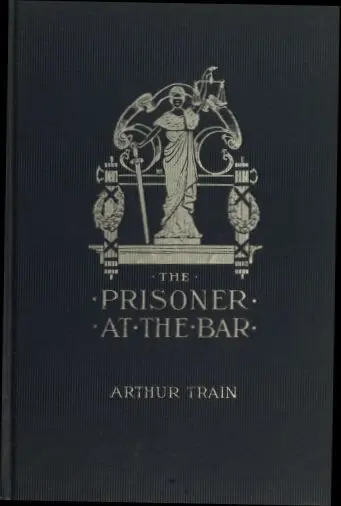
THE CLASSIC COLLECTION · 1906
"The Prisoner at the Bar: Sidelights on the Administration of Criminal Justice" by Arthur Train is a nonfiction account written in the early 20th century. The book aims to provide a detailed and engaging exploration of the criminal justice system, highlighting the processes from arrest to conviction and examining the perspectives of the various participants, including the police, lawyers, and the accused. At the start of this work, Train introduces the complexities surrounding the concept of crime, emphasizing that public perception is often shaped by sensational media coverage rather than an understanding of the legal processes involved. He argues that many commonly held beliefs about crime and criminals are oversimplified or erroneous, and he seeks to provide clarity on the administration of criminal justice. The opening discusses the definition of a crime and highlights the intricacies of legal terminology, illustrating differences between various types of crimes and their implications. Train sets the stage for a comprehensive discussion on how individuals can be categorized as criminals and the societal implications of such classifications.
Introduction adapted from the source catalogue; source summaries may be automatically generated.
Free to read · English · 111,596 words · No account needed
MAKE TIME FOR A GOOD BOOK
On by default. Untick to stop anonymous reading totals. Each page counts after 10 seconds in view. How this works.
Anonymous counting is on unless you have switched it off.
Dummies, 318-322
attempt to induce witness to identify, 321, 322
most famous case of, 321
District Attorney (see Prosecutor), power to act when magistrate
discharges, 47, 48
copies papers forwarded from magistrate and subpoenas witnesses for
Grand Jury, 87
prepares calendar for Grand Jury, 87
draws indictments, 87
preliminary examination of witnesses by, 117
a quasi-judicial officer, 167, 168
limitations placed upon, by laws of evidence and procedure, 165, 168
District Attorney, should move defendant's discharge if convinced of
innocence, 168
has same latitude in summing up as defendant's attorney 168
in presentation of case, People should have same rights as an
individual, 168
should win confidence of jury, 169
function of, 304
can rebut defense more easily where it has been exposed before
magistrate, 312
necessity of examination of jury by, 323
Electric chair, jury send to, only in atrocious cases, 213
Ellis, William H., case of, 315, 316
Elmira, release from, 165
sentence to, indeterminate, 165
Evidence, character of defendant provable only when put in issue by
himself, 161, 166
defendant's right to give, himself, 161-162
but no inference to be drawn from defendant's failure to testify,
160, 162
rule permitting defendant to testify practically forces him to do
so, 163
good character of complainant and witnesses only provable on attack, 167
amount of strictly accurate testimony very small, 225
"refreshing recollection," in practice absurd, 235
method of refreshing recollection, 235
(See Witnesses)
Ex Parte, proceeding before Grand Jury is, 90, 99
Felix, John, case of, 15
Felonies, The Trial of, Chapter IX
(See District Attorney, Prosecutor, Defendants, etc.)
distinction between felonies and misdemeanors often without merit, 30
number of persons arrested for, 85
should be prosecuted by information, 100
rapidity of trials for, 152, 154
description of trials for, 150
attempted suicide, 171
compounding, by agreeing not to prosecute, 349
Foster, Judge Warren W., 216
"Franklin Syndicate, The," 26
Fursman, Judge, 321
General Sessions, Court of, appeal to, from magistrate's courts, 47
procedure in, 119, 150, 151
description of (see Felonies), 150
Goff, Recorder, 86, 290
Habeas Corpus, for prisoners held in police court, 43
to test magistrate's jurisdiction, 47
only remedy for illegal commitment, 49
writ of, often secured for delay, 317
Hackett, Orlando J., case of, 290
Hadfield's Case, 358
Harris, Carlyle W., case of, 263, 264
Hawkins, Sir Henry, on want of uniformity in sentences, 189, 190
Homicide, typical case of manslaughter, 8
large proportion of defendants charged with, plead guilty to
manslaughter, 174
charge of court in cases of, 243
verdicts in cases of, 246
sentence in cases of murder fixed by law, 261
larger proportion of women indicted convicted of, than men, 334
Howe, "Bill," 297, 298, 323
Howe & Hummel, 322
Hummel, Abraham, 321, 322
Imprisonment, pending appeal, advisability of, 346
Impulse. See Irresistible.
Indeterminate sentence, definition of, 273
constitutionality of, upheld by courts, 274
distinguished from commutation, 274
Indictments, found by Grand Jury, 81
"true bills," 82
number of, found, 85
drawn by District Attorney, 87
form of, 87, 88
for larceny, 88, 89
invalid, when, 91
defendant may move to dismiss, when, 91, 92
ratio of women to men indicted, 292
not "pigeon-holed" or "lost" in New York County, 314
motion to dismiss, 317
for forgery, 331
Your reading position is saved on this browser. Take it to another device with a library code. Reading pages adapt to text, rather than matching a printed edition.
Arthur Cheney Train
Arthur Cheney Train
Arthur Cheney Train
Arthur Cheney Train
BEHIND THE BOOK
This eBook is for the use of anyone anywhere in the United States and most other parts of the world at no cost and with almost no restrictions whatsoever. You may copy it, give it away or re-use it under the terms of the Project Gutenberg License included with this eBook or online at www.gutenberg.org. If you are not located in the United States, you will have to check the laws of the country where you are located before using this eBook. Read the source licence.
The original source file, including credits and licence, is retained by this library. Request an original-format copy at no charge. Please include the book title and Project Gutenberg identifier #58534.
KEEP YOUR CURIOSITY GOING

Charles G. (Charles Griffith) Ross
Hannah Webster Foster

Emily Lawless
Edwin Hamlin Carr

Charles De Lano Hine
Andrew Ure