THE CLASSIC COLLECTION✦The hermit of Turkey HollowCLASSIC FREE BOOKS
The hermit of Turkey Hollow
Arthur Cheney Train
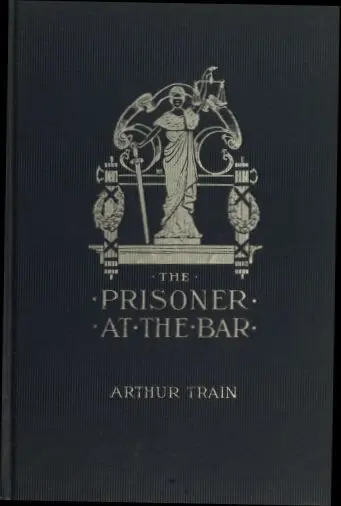
THE CLASSIC COLLECTION · 1906
"The Prisoner at the Bar: Sidelights on the Administration of Criminal Justice" by Arthur Train is a nonfiction account written in the early 20th century. The book aims to provide a detailed and engaging exploration of the criminal justice system, highlighting the processes from arrest to conviction and examining the perspectives of the various participants, including the police, lawyers, and the accused. At the start of this work, Train introduces the complexities surrounding the concept of crime, emphasizing that public perception is often shaped by sensational media coverage rather than an understanding of the legal processes involved. He argues that many commonly held beliefs about crime and criminals are oversimplified or erroneous, and he seeks to provide clarity on the administration of criminal justice. The opening discusses the definition of a crime and highlights the intricacies of legal terminology, illustrating differences between various types of crimes and their implications. Train sets the stage for a comprehensive discussion on how individuals can be categorized as criminals and the societal implications of such classifications.
Introduction adapted from the source catalogue; source summaries may be automatically generated.
Free to read · English · 111,596 words · No account needed
MAKE TIME FOR A GOOD BOOK
On by default. Untick to stop anonymous reading totals. Each page counts after 10 seconds in view. How this works.
Anonymous counting is on unless you have switched it off.
Court officers as plea getters, 173
Cowing, Rufus B., Judge, 255
Crime, What is Crime? Chapter I, definition of, 1
relation of, to wrongs, 1, 2, 3
artificial character of laws defining, 4
mala prohibita and mala in se, 6
little significance in mere name of crimes, 6
arbitrary nature of acts made crimes, 7
relation of, to insanity, 22
theory that crime is a disease overworked, 23
criminal instinct in all, 23
commercial crime favored by law, 24, 30, 223
Crimes, definition of, limiting it to those who "make a living" thereby is inadequate, 28 fundamental cause of, disrespect for law, 30, 334 attitude of jury toward commercial crime, 210, 211 What Fosters Crime? Chapter XVII not on increase in proportion to growth of population, 334 fostered by idea that criminal justice is slow and uncertain, 335, 336 by constitutional safeguards, 335, 336 by defects in our criminal law and procedure, 338 by attitude of "yellow" press, 338 by belief that higher courts reverse on technical grounds, 339 by acquittal of guilty by sentimental juries, 340-342 restraints on, 344-346 fear of present criminal prosecution and punishment greatest restraint on, 344-346 may be deliberate or the result of accident or impulse, 345
Criminal Courts Building, description of, 115
Criminal law, adapted especially to punishment of crimes of violence, 16 impression of ordinary citizen concerning, 149, 335 at present tends to retard and defeat justice, 336 present state of, result of exaggerated regard for personal liberty, 336 English system of, better than ours, 336 leaves many technical avenues of escape, 338
Criminal responsibility (see Insanity and the Law, Chapter XVIII), 350
test of, 353
unchanged since case of McNaughten, 353
questions propounded by House of Lords to the judges, with their
answers, 354
delusions in the law of insanity, significance of, 355, 356
doubtful interpretation to be given to words "wrong" and "know," 357
Hadfield's case, 358
Criminal responsibility, present New York test does not recognize any lack of inhibitory capacity, 359 test is imperfect, inadequate, and vague, 357, 359 difficult of application, 357 juries disregard it except in extreme cases, 360-366 expert testimony in insanity cases discounted by jury, 360, 361 requirements of proposed new tests, 366-368 Alabama test, 368 the "defense" of insanity often confused with claim of present insanity, 369 present insanity determined by commission, 369-376 mental condition at time of crime should be likewise determined, 369-376 defendant may refuse to permit examination, 370 present ineffectuality of law in New York, 370-376 could be easily remedied, 372-374 plea of insanity should be made compulsory, 373 defendants so pleading should be remanded for observation by permanent, salaried, expert commission, as in Germany and elsewhere, 373, 374 probable unconstitutionality of other suggested remedies, 374
Your reading position is saved on this browser. Take it to another device with a library code. Reading pages adapt to text, rather than matching a printed edition.
Arthur Cheney Train
Arthur Cheney Train
Arthur Cheney Train
Arthur Cheney Train
BEHIND THE BOOK
This eBook is for the use of anyone anywhere in the United States and most other parts of the world at no cost and with almost no restrictions whatsoever. You may copy it, give it away or re-use it under the terms of the Project Gutenberg License included with this eBook or online at www.gutenberg.org. If you are not located in the United States, you will have to check the laws of the country where you are located before using this eBook. Read the source licence.
The original source file, including credits and licence, is retained by this library. Request an original-format copy at no charge. Please include the book title and Project Gutenberg identifier #58534.
KEEP YOUR CURIOSITY GOING

Charles G. (Charles Griffith) Ross
Hannah Webster Foster

Emily Lawless
Edwin Hamlin Carr

Charles De Lano Hine
Andrew Ure